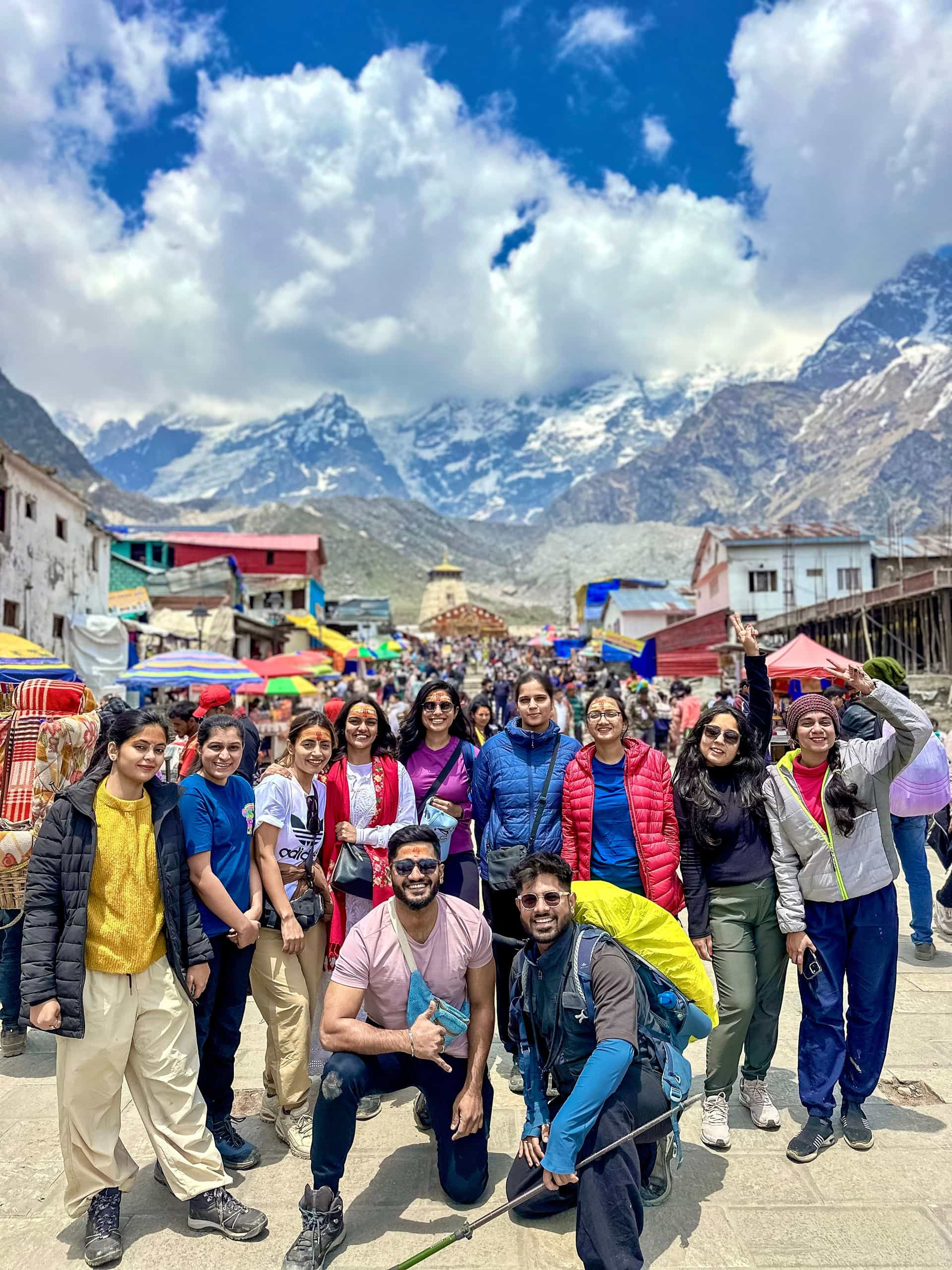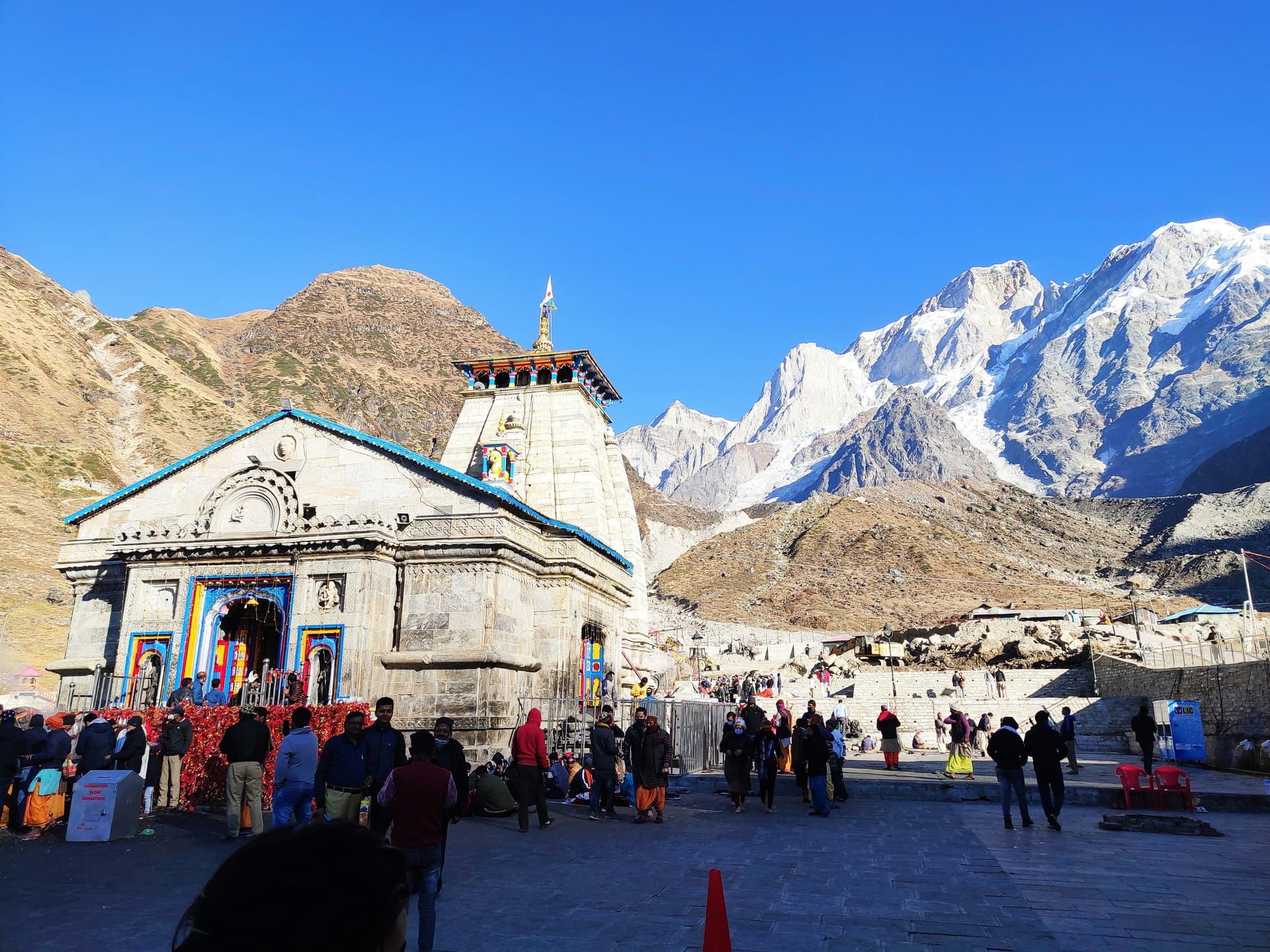
High in the Garhwal Himalayas of Uttarakhand, surrounded by towering snow-covered peaks and glacial rivers, stands one of the most sacred temples in India: Kedarnath Temple.
Reaching Kedarnath is not simply a temple visit. It is a journey through winding mountain roads, alpine valleys, and ancient pilgrimage trails that have been followed by devotees for centuries. Located at an altitude of 3,583 meters, the temple is one of the twelve Jyotirlingas of Lord Shiva and an important part of the sacred Char Dham Yatra.
Every year thousands of pilgrims undertake the journey to this remote Himalayan shrine, trekking through dramatic landscapes before finally arriving at the stone temple standing beneath the mighty Kedarnath peak.
This Kedarnath travel guide explains everything you need to know for planning the pilgrimage, including how to reach Kedarnath, the trekking route, registration requirements, travel tips and the best time to visit.
Where is Kedarnath Located?
Kedarnath Temple is located in the Rudraprayag district of Uttarakhand within the Garhwal Himalayas.
The temple lies near the source of the Mandakini River and is surrounded by dramatic Himalayan peaks including Kedarnath Peak and Kedar Dome. Because of its remote high-altitude location, reaching Kedarnath requires a combination of road travel and trekking.
Travelers exploring the region can also read our Uttarakhand travel guide to discover more destinations across the state.
Why the Journey to Kedarnath is Unique
Unlike many temple visits in India, reaching Kedarnath requires a physical journey through the Himalayas.
Pilgrims travel through mountain roads, cross river valleys and finally trek through alpine terrain before reaching the temple. The effort involved in the journey is often seen as part of the spiritual experience. For many pilgrims, the moment they first see the temple rising beneath the towering Himalayan peaks becomes the most powerful moment of the entire pilgrimage.
Distance of Kedarnath from Major Cities
Pilgrims usually begin their journey from major gateway cities in northern India.
City | Distance to Kedarnath Base (Gaurikund) |
| Rishikesh | ~220 km |
| Haridwar | ~240 km |
| Dehradun | ~250 km |
| Delhi | ~450 km |
From these cities travelers continue the journey by road toward the Kedarnath trek starting point.
Why Kedarnath is Spiritually Significant
Kedarnath holds deep spiritual importance in Hindu tradition.
According to legend, the temple was established by the Pandavas, who sought forgiveness from Lord Shiva after the Kurukshetra war. The philosopher-saint Adi Shankaracharya later revived the temple in the 8th century. His samadhi lies behind the temple complex.
Kedarnath also gained worldwide attention after surviving the devastating Himalayan floods of 2013, when much of the surrounding valley was damaged but the temple structure remained intact. Travelers planning the full pilgrimage can explore our Char Dham Yatra guide to understand the sacred route.
How to Reach Kedarnath
Traveling to Kedarnath usually involves three stages.
1. Reaching the Gateway Cities
Most travelers begin their journey from:
- Haridwar
- Rishikesh
- Dehradun
By Air
The nearest airport is Jolly Grant Airport.
By Train
Major railway stations include Haridwar, Rishikesh and Dehradun.
2. Road Journey to Sonprayag
From Haridwar or Rishikesh, travelers drive approximately 200–230 km to reach Sonprayag.
Private vehicles are usually parked at Sonprayag. From here pilgrims must take local shuttle vehicles to reach Gaurikund, which is the official starting point of the Kedarnath trek.
3. Final Ascent: Trek or Helicopter
From Gaurikund pilgrims begin the final journey to Kedarnath.
Options include:
- trekking the mountain trail
- helicopter services from nearby helipads
Helicopter services usually operate from Phata, Sersi and Guptkashi during the pilgrimage season.
Kedarnath Trek Guide
The trek to Kedarnath is one of the most famous pilgrimage treks in India.
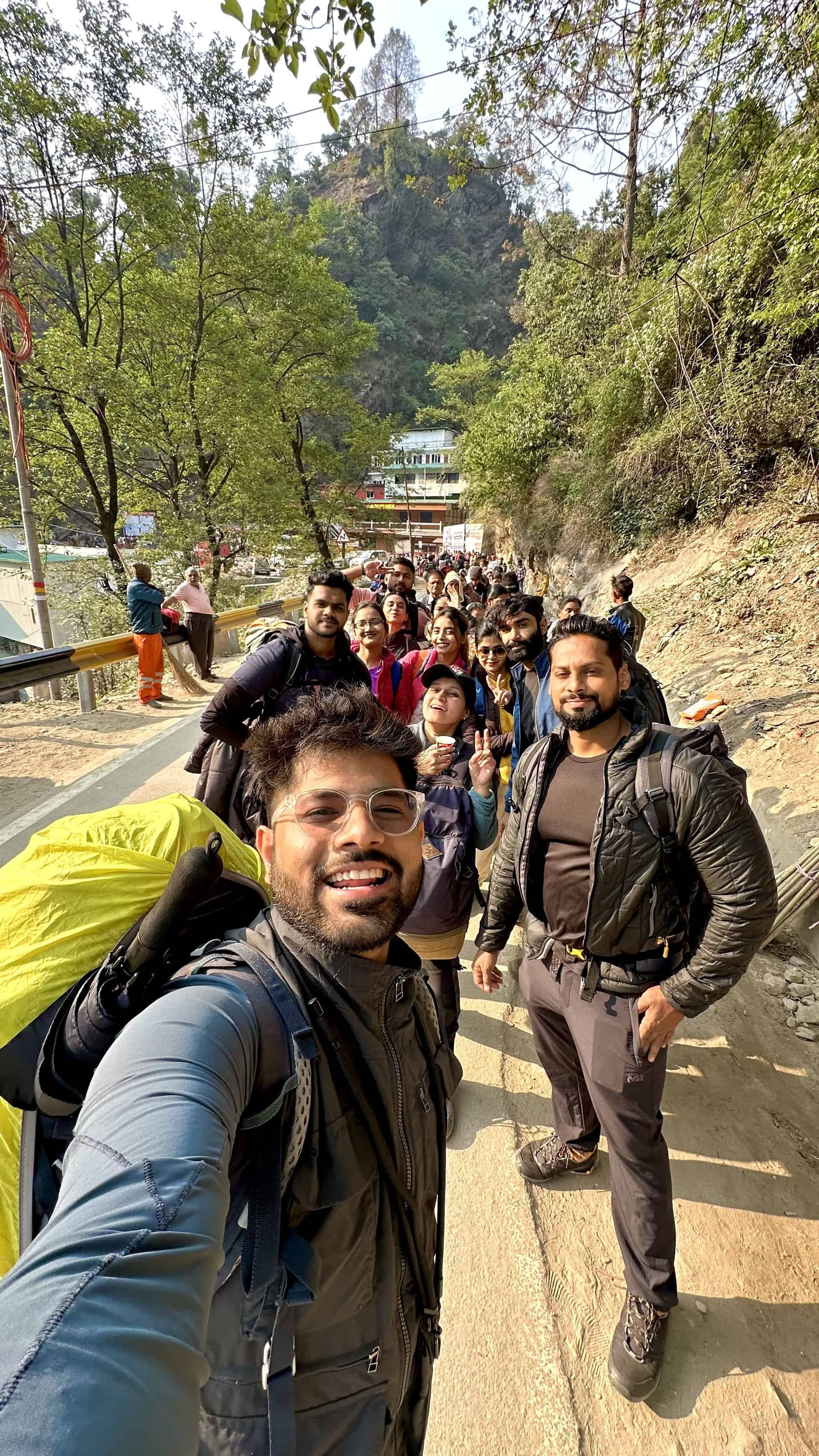
Starting from Gaurikund, the trail gradually climbs through forests, river valleys, and dramatic Himalayan landscapes. Along the route pilgrims pass rest stops, tea stalls, and scenic viewpoints overlooking the Mandakini River.
Trek Details
Distance: 16–18 km (one way)
Difficulty: Moderate
Time Required: 6–8 hours for most trekkers
Trek Route
Gaurikund
→ Jungle Chatti
→ Bheembali
→ Linchauli
→ Kedarnath Temple
Mode | Approx Cost | Suitable For |
| Walking | Free | Pilgrims and trekkers |
| Pony | ₹2,500 – ₹5,000 | Elderly travelers |
| Palki | ₹8,000 – ₹12,000 | Travelers with mobility issues |
| Helicopter | ₹8,000 – ₹12,000 | Faster travel |
Many pilgrims choose organized travel arrangements, such as Kedarnath tour packages to simplify logistics.
Best Time to Visit Kedarnath
The temple remains closed during winter due to heavy snowfall and the pilgrimage season usually runs from April or May until October.
For example, the temple is scheduled to open on April 22 during the 2026 season.
Season | Experience |
| May – June | Pleasant weather but crowded |
| July – August | Monsoon season with landslide risk |
| September – October | Clear Himalayan views and fewer crowds |
Travelers can explore our Best Time to Visit Uttarakhand guide for seasonal travel insights.
Mandatory Registration for Kedarnath
Pilgrims must complete Char Dham registration before starting the journey. Travelers receive a QR-based Yatra pass, which is verified at checkpoints along the route.
You can read our Char Dham registration guide for step-by-step instructions. Travelers planning the pilgrimage can also explore the Char Dham Yatra cost guide to estimate travel expenses.
What to Pack for the Kedarnath Trek
Because Kedarnath is located in the high Himalayas, weather conditions can change quickly.
Pilgrims should carry essential items such as:
- warm clothing and thermal layers
- rain protection like a poncho or waterproof jacket
- sturdy trekking shoes with good grip
- basic medicines for cold, fever or stomach issues
- water bottle and light snacks
- a small backpack for the trek
Proper packing helps travelers handle sudden weather changes and long trekking hours.
Accommodation in Kedarnath
Accommodation near Kedarnath Temple is generally basic due to the temple’s remote high-altitude location in the Himalayas. Pilgrims can stay in guest houses, lodges and temporary tents operated by local authorities such as GMVN (Garhwal Mandal Vikas Nigam), as well as by private operators near the temple area. Many travelers also prefer to stay in nearby towns such as Guptkashi, Sonprayag or Gaurikund before starting the trek. During peak pilgrimage months, especially May and June, booking accommodation in advance is recommended.
Places to Visit Near Kedarnath
Travelers visiting Kedarnath often explore nearby destinations in the Garhwal Himalayas.
Popular places include:
- Badrinath Temple
- Guptkashi
- Chopta
Travel Tips for Visiting Kedarnath
- allow time for altitude acclimatization
- Start trekking early in the morning
- Carry warm clothing and rain protection
- Wear proper trekking shoes
- Drink water frequently during the trek
At this altitude oxygen levels are lower than in the plains, so gradual acclimatization is important.
Planning Your Kedarnath Journey
Traveling to Kedarnath Temple is more than just a trek through the Himalayas. It is a journey along ancient pilgrimage routes surrounded by some of the most dramatic landscapes in India. The path to Kedarnath passes through river valleys, mountain forests and high-altitude trails before finally reaching the temple nestled beneath towering Himalayan peaks.
For many pilgrims, the moment of standing before the temple after completing the trek becomes the most memorable part of the entire journey. Travelers planning the pilgrimage often prefer organized travel arrangements such as Kedarnath tour packages, which can help simplify transportation, permits, and accommodation planning in this remote Himalayan region.