Goa is easy to associate with beaches, nightlife and beach shacks, but the coastline is only one part of the experience. Move inland and you find centuries-old churches, Portuguese-era neighborhoods, forts overlooking the sea, forested waterfalls, spice plantations and villages that feel far removed from the busy beach belt.
The real challenge is not finding places to visit. It is figuring out which ones are actually worth your time.
This guide brings together Goa's most worthwhile beaches, heritage sites, forts, natural attractions and local experiences, with enough context to help you decide what deserves a place in your itinerary.
Places to Visit in Goa at a Glance
Experience | Places to Consider |
| Beaches | Baga, Calangute, Anjuna, Vagator, Morjim, Arambol, Palolem, Agonda |
| Heritage | Old Goa, Basilica of Bom Jesus, Se Cathedral, Fontainhas |
| Forts | Fort Aguada, Chapora Fort, Reis Magos Fort |
| Nature | Dudhsagar, Netravali, waterfalls, spice plantations |
| Local experiences | Panaji, markets, villages and Goan food |
| Offbeat Goa | Divar, Chorao and the hinterland |
Beaches in Goa
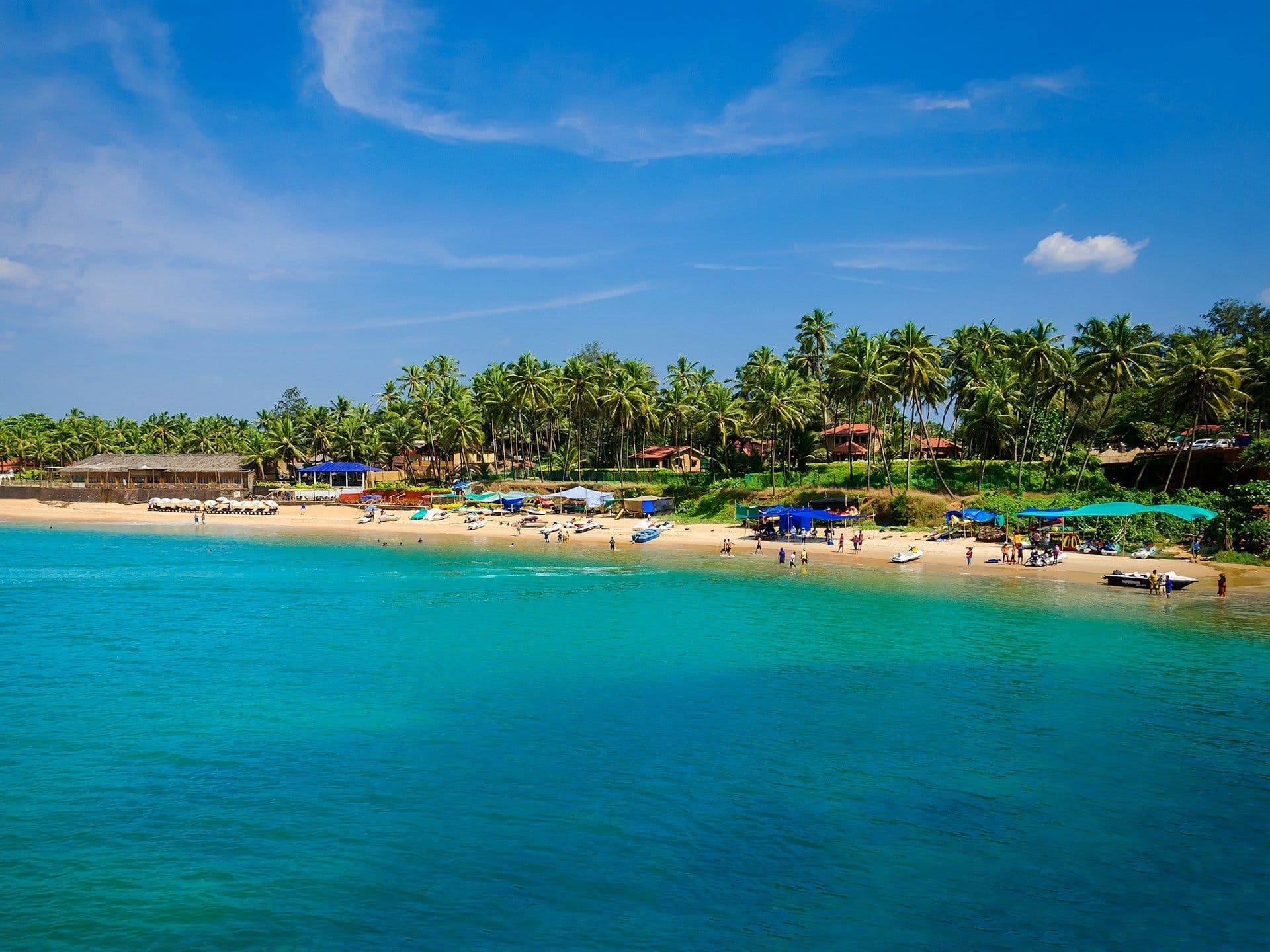
Goa's beaches are not all the same. Some are built around restaurants, activities and nightlife, while others are better suited to a slower coastal escape.
Baga and Calangute are among the most developed beach areas, with easy access to restaurants, shopping, water activities and entertainment. They are practical choices if you want convenience and plenty happening around you.
Anjuna and Vagator have a more distinctive character, combining rocky coastline, sunset views, cafes and nightlife. The area is particularly associated with Goa's electronic music and party scene.
Further north, Morjim, Ashwem and Arambol offer longer stretches of sand and a more relaxed atmosphere. Arambol stands out for its bohemian character, sunset gatherings and alternative travel scene.
In South Goa, Palolem and Agonda are known for their scenic coastal settings. Palolem's curved bay is particularly attractive for travelers looking for a picturesque beach, while Agonda offers a quieter setting.
Colva and Benaulim are more developed South Goa options, with convenient access to accommodation, restaurants and other facilities.
If beaches are the main focus of your trip, our dedicated Best Beaches in Goa guide can cover individual beaches, their atmosphere and what makes each one different in greater detail.
Heritage Places in Goa
Goa's Portuguese-era history is particularly visible around Old Goa and Panaji. These areas offer a completely different experience from the state's beach belt, with churches, historic homes, narrow streets and centuries-old architecture.
Old Goa
Old Goa was once the capital of Portuguese India and is now one of the state's most important heritage areas.
The historic area brings several churches, chapels and monuments together, making it possible to explore much of Goa's colonial heritage in one sightseeing circuit.
What makes Old Goa particularly worthwhile is the concentration of major religious and historic landmarks in a relatively compact area. Since these remain active religious spaces, dress respectfully and follow any photography restrictions or instructions at individual sites.
Basilica of Bom Jesus
The Basilica of Bom Jesus is one of Old Goa's most recognizable landmarks and is closely associated with the heritage of St. Francis Xavier.
Its historic architecture and religious significance make it one of the essential stops in an Old Goa sightseeing circuit.
What distinguishes it from the other churches nearby is its strong association with St. Francis Xavier and its importance in Goa's Catholic heritage. It is easy to combine with Se Cathedral during the same visit.
Se Cathedral
Se Cathedral is one of the largest historic churches in Old Goa and stands directly opposite the Basilica of Bom Jesus.
Its imposing scale and Portuguese-era architecture make it an important part of the Old Goa heritage circuit.
What makes it different from the Basilica is primarily its size and architectural presence. Visiting both gives you a better understanding of the scale and character of Old Goa's historic church complex.
Fontainhas
Fontainhas is Panaji's historic Latin Quarter, known for colorful facades, narrow lanes and traditional homes reflecting Goa's Portuguese architectural influence.
It is best explored slowly on foot, particularly if you enjoy architecture and street-level details rather than conventional monuments.
What makes Fontainhas different is that it is still a residential neighborhood. Visitors should avoid entering private properties, photographing people or interiors without permission, or treating private verandas and doorways as photo props.
Forts in Goa
Goa's forts combine history with some of the state's most memorable coastal and river viewpoints.
Fort Aguada
Fort Aguada overlooks the Arabian Sea from the northern edge of the Mandovi estuary and was built as part of Goa's Portuguese defensive system.
The fort is worth visiting for its preserved structures, elevated coastal setting and views over the Arabian Sea.
What makes the wider Aguada complex interesting is that the experience goes beyond a single viewpoint, with the historic fort, lighthouse and lower heritage area forming part of the same broader precinct. It fits naturally into a North Goa sightseeing route.
Chapora Fort
Chapora Fort sits above the Vagator coastline and is one of Goa's most recognizable viewpoints.
The walk to the top is relatively short but includes uneven and steep sections, so comfortable footwear is useful.
Its connection with Dil Chahta Hai helped turn the fort into a pop-culture landmark, but the main reason to visit today is the panoramic setting above the coastline.
There are no major intact structures inside the fort, so the attraction is primarily the view, setting and historical character rather than exploring a preserved palace or building complex.
Reis Magos Fort
Reis Magos Fort sits along the Mandovi River and offers a quieter alternative to some of Goa's more visited forts.
Its elevated position provides views across the river, while the preserved fortification gives you a better sense of Goa's defensive history.
What makes it different from Fort Aguada and Chapora is its riverfront setting and quieter atmosphere, making it a useful addition to a Panaji or North Goa sightseeing route.
Nature and Waterfalls in Goa
Goa's inland areas offer a very different experience from its beaches, particularly if you want forests, waterfalls and agricultural landscapes.
Dudhsagar Waterfalls
Dudhsagar is one of Goa's most recognizable natural attractions, with a dramatic waterfall surrounded by forest.
The scale of the waterfall and its forest setting make it one of the more memorable nature experiences in the state.
Access is regulated and can change with weather and seasonal conditions. Walking along the railway tracks to reach Dudhsagar is not a permitted way to visit. Check the current permitted access arrangements before planning your trip.
Netravali and Other Waterfalls
Goa has several waterfall and forest experiences beyond Dudhsagar, particularly in its eastern and southern areas.
Netravali Wildlife Sanctuary offers a combination of forest landscapes, wildlife and inland scenery, making it useful for travelers who want something beyond Goa's developed coastline.
Smaller waterfalls and forest spots can also become particularly attractive after the monsoon, when the landscape is greener and water flows are stronger.
Spice Plantations
The spice plantations around Ponda offer a slower inland experience, with plantation walks, traditional food and an opportunity to see Goa's agricultural side.
They are particularly useful as a half-day experience when you want to break up a beach-heavy itinerary with something more cultural and rural.
Wildlife and Forest Areas
Goa's protected areas provide opportunities to experience forests and wildlife beyond the developed coastline.
Bhagwan Mahavir Wildlife Sanctuary and Netravali Wildlife Sanctuary are among the options for travelers who want to spend more time in Goa's natural landscape.
These areas are better suited to travelers who have enough time for an inland excursion rather than those following a tightly packed beach itinerary.
Markets and Local Experiences
Some of Goa's most interesting experiences are not individual monuments. Spending time around its markets, neighborhoods and villages can show you a side of the state that is easy to miss on a conventional sightseeing route.
Panaji
Panaji is worth exploring for its historic architecture, local restaurants, markets and access to Fontainhas.
It works particularly well as a central Goa sightseeing stop because you can combine the city's heritage areas with nearby attractions rather than treating it only as a place to pass through.
Markets
Goa's markets offer opportunities to shop for local products, clothing, handicrafts, souvenirs and food.
Mapusa Market is one of the better-known local markets and offers a more everyday local atmosphere than many tourist-oriented shopping areas.
Markets vary by location and day, so check current timings before making one a fixed part of your itinerary.
Villages and Hinterland
Goa's villages offer a quieter side of the state, with traditional homes, churches, temples, farms and local landscapes.
What makes the hinterland different is the slower pace and the chance to see how much of Goa exists beyond the developed coastline.
This is particularly worthwhile if you have already covered the major beaches and want a more local, less tourist-focused experience.
Local Food Experiences
Goan food is another way to experience the destination beyond its attractions.
Try regional dishes such as fish curry rice, cafreal, xacuti, vindaloo and bebinca at local restaurants or traditional eateries.
Food is particularly useful for filling the gaps between sightseeing stops because it lets you experience the destination without adding another attraction to your itinerary.
Offbeat Places in Goa
If you have extra time beyond the main tourist circuit, a few quieter destinations can add something genuinely different to your Goa trip.
Divar Island
Divar is known for its village setting, traditional homes and slower pace.
Reaching the island by ferry and exploring its quieter roads offers a sharp contrast to Goa's developed beach belt.
What makes Divar worth considering is the combination of village life, traditional architecture and a slower island experience without the beach-party atmosphere associated with parts of North Goa.
Chorao Island
Chorao is another island in the Mandovi River and is particularly interesting for travelers who enjoy village landscapes and birdlife.
The island is home to the Salim Ali Bird Sanctuary, making it a useful addition for travelers looking for a nature-focused experience beyond beaches and waterfalls.
Its combination of ferry access, village surroundings and birdlife makes it distinctly different from Goa's more conventional tourist attractions.
A Few Things to Know Before Goa Sightseeing
A little planning can make sightseeing in Goa much easier, particularly because attractions are spread across different parts of the state.
- Dudhsagar access is regulated: Do not attempt to reach the waterfall by walking along railway tracks. Check permitted access arrangements before visiting.
- Old Goa is an active religious area: Dress respectfully and follow photography restrictions or instructions at individual churches.
- Fontainhas is residential: Respect private homes, residents and restricted areas while exploring the neighborhood.
- Plan attractions geographically: Combining nearby places is generally more practical than repeatedly traveling between North and South Goa.
- Allow extra travel time: Traffic and road conditions can make journeys between different parts of Goa considerably longer than they appear on a map.
Plan Your Goa Trip
Goa offers much more than a collection of beaches. You can combine its coastline with historic churches, forts, waterfalls, local food, villages and quieter inland experiences to create a more varied trip.
The places you choose will depend on your interests, available time and where you decide to stay. Once you know what you want to see, our Goa Travel Guide can help you turn those attractions into a practical trip plan.
If you are ready to turn your Goa plans into a holiday, explore our Goa tour packages.