Best Time to Visit South Korea from India: Season-by-Season Guide (2025)
Quick Answer: Best Month by Travel Goal
Travel Goal | Best Month(s) | Why |
| Cherry blossoms | Late March – early April | Peak bloom window; Jeju earliest, Seoul follows |
| Autumn foliage | Late October – mid November | Maples peak across Seoul, Gyeongju, Seoraksan |
| Fewer crowds | June, September, February | Shoulder months with good weather |
| Budget travel | January, February, June | Lowest flight fares and hotel rates |
| Beach & coastal (Busan) | July – August | Haeundae Beach season; warm sea |
| Snow & winter scenery | December – January | Pyeongchang ski resorts; Hallasan snow |
| First-time visitors | April, October | Best weather, full visual reward, manageable crowds |
If you want to understand how seasonal changes affect your budget, you can explore the detailed South Korea travel cost guide.
South Korea Month-by-Month: What to Expect
Month | Avg Temp (Seoul) | Crowd Level | Flight Cost (India) | Verdict |
| January | -3°C to 3°C | Low | ₹ Low | Good for budget; cold |
| February | -1°C to 6°C | Low | ₹ Low | Cherry blossom prep; quiet |
| March | 4°C to 13°C | Medium–High | ₹ Medium | Jeju blossoms begin |
| April | 11°C to 19°C | Very High | ₹ High | Peak cherry blossom; book early |
| May | 17°C to 24°C | Medium–High | ₹ Medium–High | Late blossoms; excellent weather |
| June | 21°C to 28°C | Low–Medium | ₹ Low–Medium | Pre-monsoon; good value |
| July | 24°C to 30°C | Medium | ₹ Medium | Monsoon; Busan beach season |
| August | 25°C to 31°C | Medium | ₹ Medium | Hottest month; humid |
| September | 19°C to 26°C | Medium | ₹ Medium | Excellent transitional weather |
| October | 11°C to 20°C | High | ₹ Medium–High | Early autumn foliage; best month |
| November | 4°C to 13°C | Medium–High | ₹ Medium | Peak foliage late Nov; cooling |
| December | -2°C to 6°C | Low | ₹ Low–Medium | Christmas in Seoul; ski season begins |
Spring (March to May): Cherry Blossoms & Peak Season
Spring is South Korea's most photographed season — and the most competitive to visit. Here is what Indian travelers actually need to know to experience it properly.
Cherry Blossom Timing: Exact Windows
Cherry blossoms do not bloom on a fixed date. They shift each year based on winter temperatures. Here is the typical pattern:
- Jeju Island: Mid to late March (earliest in South Korea)
- Busan & southern mainland: Late March to early April
- Seoul: Late March to first week of April (peak typically 3–7 days)
- Northern regions (Seoraksan): Mid April
The bloom lasts just 7–10 days at each location. Peak bloom is when roughly 70% of flowers are open — usually 4–5 days after the first blooms appear. Petal fall (hanami/yeojin) happens within a week of peak bloom, leaving bare branches.
For Indian travelers: Check the Korea Meteorological Administration's annual blossom forecast — released each February — before finalising your April dates. A difference of 4 days in your travel window can mean the difference between full bloom and bare trees.
If you are planning how to structure your days here, following a practical South Korea itinerary helps you experience the city without rushing between places. To explore neighborhoods, routes and experiences in detail, you can refer to this complete Seoul travel guide.
Best Cherry Blossom Spots
- Yeouido Hangang Park (Seoul): The most popular location — a riverside park where cherry trees line the banks for over 5 km. Gets extremely crowded on weekends during bloom week.
- Gyeongbokgung Palace grounds (Seoul): Cherry trees inside the palace walls combine the blossom with Joseon-era architecture — one of the most photographed combinations in the country.
- Jinhae (near Busan): South Korea's largest cherry blossom festival (Gunhangje Festival) — an entire city district lined with cherry trees. Bloom typically peaks 1 week before Seoul. Book accommodation months in advance.
- Naksan Park (Seoul): A hilltop park along the old city wall — less crowded than Yeouido, excellent views over the blossomed city.
- Gyeongju: UNESCO-listed ancient capital where blossoms frame burial mounds, temples, and historic streets.
Spring Weather
- March: Cool to mild — 4°C to 13°C. Bring a medium-weight jacket.
- April: Warm and pleasant — 11°C to 19°C. Light jacket in the morning, comfortable in the afternoon.
- May: Warm — 17°C to 24°C. Light layers. Very comfortable for full-day walking.
Spring Pros and Cons
Pros: Most scenic season; peak energy in cities; Jinhae and Yeouido cherry festivals; comfortable temperatures for walking.
Cons: Highest demand and hotel prices of the year; popular spots get crowded from 10 AM onwards; book flights and accommodation 2–3 months in advance for April travel; cherry bloom timing is unpredictable year-to-year.
Summer (June to August): Monsoon & Coastal Travel
Summer is South Korea's most misunderstood season. It is not the worst time to visit — but it requires different expectations and planning.
Monsoon Season (Jangma)
South Korea's rainy season (called jangma) typically runs from late June to late July. It does not rain all day every day — more accurately, heavy rain falls for several hours a day, often in bursts. The rest of the day can be perfectly clear.
What this means practically: carry a compact foldable rain jacket, not an umbrella (wind makes umbrellas difficult), and plan indoor activities for afternoon downpours. Mornings are often the driest and best for outdoor sightseeing.
Summer by the Numbers
- June: 21°C to 28°C — warm, pre-monsoon, some humidity but manageable. The best underrated month for South Korea travel.
- July: 24°C to 30°C — monsoon peak. Hot and humid. Busan beach season begins.
- August: 25°C to 31°C — hottest month. Intense humidity in Seoul. Coastal areas and air-conditioned attractions are your friends.
What Works Well in Summer
Busan: South Korea's coastal city genuinely comes alive in summer. Haeundae Beach, Gwangalli Beach, and the Busan seafood markets are at their most active. The city has a completely different energy in July–August compared to other seasons.
Indoor Seoul: World-class museums, shopping centres like COEX Mall, K-pop entertainment experiences (HYBE Insight, SM Town), and the underground shopping districts are all extremely comfortable in summer.
Jeju: Beaches and waterfalls are in full flow. The Hallasan hike is harder in the heat but doable with early starts.
Summer Pros and Cons
Pros: Lowest international tourist numbers (Korean summer holidays are domestic); lower hotel prices than spring/autumn; Busan beach season; vibrant street food scenes; K-culture events and concerts.
Cons: Humidity is genuinely tiring for multi-location days; monsoon rain disrupts outdoor plans; less scenic than spring or autumn for photography.
Autumn (September to November): Foliage & Best Value
Autumn is the most underrated season for South Korea travel — and arguably the best overall for Indian travelers who cannot travel in April.
Autumn Foliage Timing
Autumn colour in South Korea follows a predictable pattern that moves from north to south and from higher elevations downward:
- Seoraksan National Park (northeast): First week of October — typically the earliest dramatic colour in the country
- Gyeongju: Mid to late October — deep red maples around ancient ruins and temples
- Seoul (Bukhansan, Namsan, Gyeongbokgung): Late October to first week of November
- Jeju Island: November — the latest colour, mild and extended
October is the sweet spot. The first two weeks give you the beginning of colour with reasonable crowds. The last two weeks of October into early November offer peak colour — comparable in beauty to spring's cherry blossoms but with a slower, more atmospheric feel.
Best Autumn Colour Spots
- Seoraksan National Park: The most dramatic autumn scenery in South Korea — granite peaks turning orange and red, accessible via cable car or hiking trails. About 3 hours from Seoul by bus.
- Gyeongju Bulguksa Temple: A UNESCO-listed Buddhist temple surrounded by maple trees. Mid-October is extraordinary here.
- Changdeokgung Secret Garden (Seoul): Tickets for the Secret Garden go on sale daily — the formal 78-acre garden is at its most beautiful in late October.
- Namsan Park (Seoul): N Seoul Tower at sunset during autumn foliage is one of Seoul's most spectacular views.
- Hana Arboretum & Olympic Park (Seoul): Less touristy options for city foliage, excellent for photography without crowds.
Autumn Weather
- September: 19°C to 26°C — clear skies, low humidity, excellent for all-day walking. The most comfortable temperatures of the year.
- October: 11°C to 20°C — crisp and dry. Light jacket required in the morning and evening.
- November: 4°C to 13°C — noticeably cooler, especially in the north. A warm mid-layer is needed by late November.
Autumn Pros and Cons
Pros: Most comfortable walking temperatures; dramatic foliage scenery; clearer skies than spring; Chuseok (if falls in September) creates a cultural experience; slightly lower prices than spring peak.
Cons: Foliage peak weeks (late October) see high demand for accommodation near popular parks; book Seoraksan accommodation early; Chuseok can cause transport congestion if it falls during your dates (check calendar in advance).
Winter (December to February): Cold, Quiet & Budget-Friendly
Winter is South Korea's most honest season — you get the country without the crowd filters, at its quietest and often most affordable.
Winter by the Numbers
- December: -2°C to 6°C — cold but manageable. Seoul has a strong Christmas atmosphere with light installations.
- January: -5°C to 3°C — the coldest month. Pack thermal layers, a proper winter coat, and wind-resistant accessories.
- February: -1°C to 6°C — begins to warm slightly. Late February can feel like winter's last week.
Jeju in winter is notably milder than the mainland — temperatures stay around 5°C to 12°C, making it one of the most pleasant options for winter travel in South Korea.
What Works Well in Winter
Ski resorts: South Korea has world-class ski resorts within 2 hours of Seoul. Pyeongchang (host of the 2018 Winter Olympics) and Vivaldi Park are the most popular. Ski lift day passes cost approximately ₹4,500–₹7,000. Equipment rental is available on-site.
Winter street food: South Korea's street food transforms in winter. Hotteok (sweet filled pancakes), bungeoppang (fish-shaped pastries filled with red bean), tteokbokki in steaming sauce, and pojangmacha (outdoor tent restaurants) serving soju and anju — these are experiences that do not exist in the same way in warmer months.
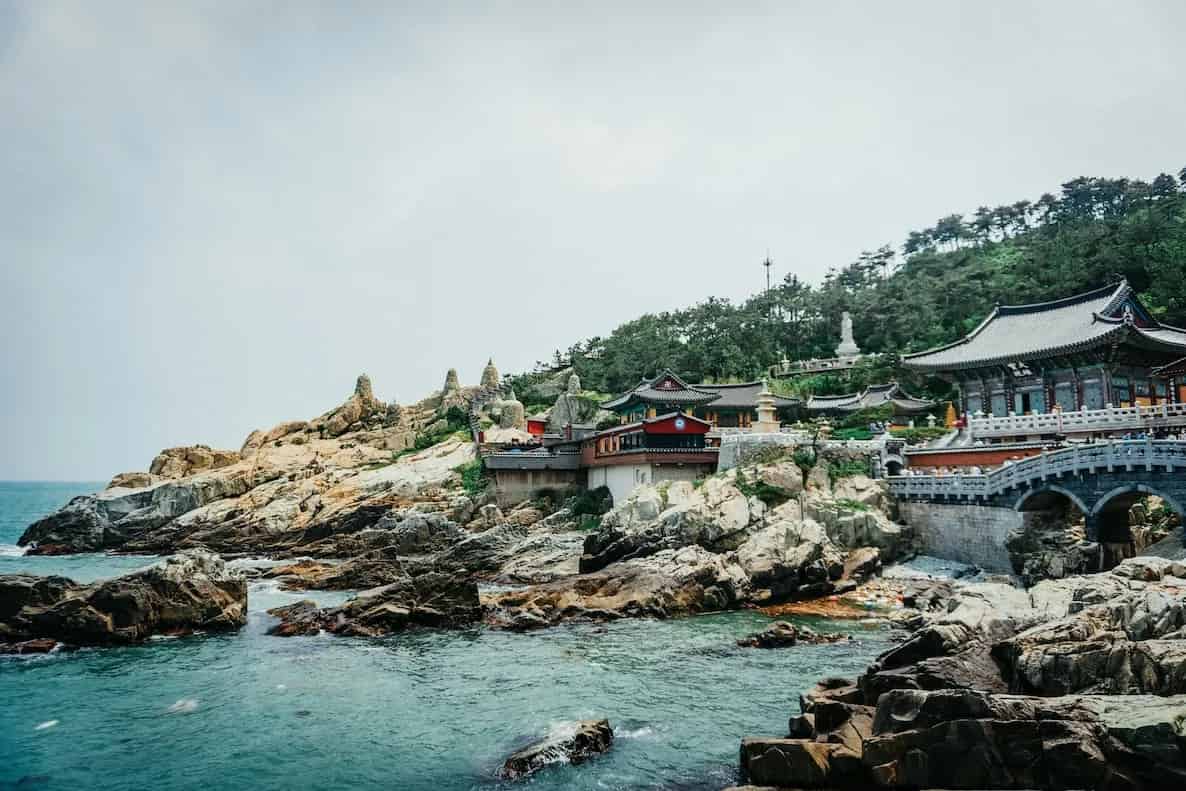
Temple stays: Winter is the best time for a temple stay (templestay program) — when the grounds are quiet, snow occasionally covers the courtyard, and the experience is deeply reflective. Available at major temples including Jogyesa (Seoul), Bulguksa (Gyeongju), and Magoksa (Chungnam).
Seoul's indoor scene: K-pop entertainment experiences, museums, spas (jjimjilbang visits are particularly popular in cold months), and Korea's extraordinary café culture are all fully accessible year-round.
Hallasan in Winter
Jeju's Hallasan Mountain is a completely different experience in winter — summit trails are sometimes snow-covered and occasionally closed. The lower trails (Eorimok, Yeongsil) offer beautiful snow scenery accessible to most fitness levels. Check trail status on the Hallasan National Park website before visiting.
Winter Pros and Cons
Pros: Lowest flight fares and hotel prices of the year; no crowds at major attractions; ski resorts; unique winter street food; temple stays at their most atmospheric; Jeju is pleasant year-round.
Cons: Seoul can reach -10°C with wind chill — proper winter clothing is essential; some outdoor attractions are less rewarding; shorter daylight hours (sunset around 5:30 PM in December–January).
Best Time Based on Travel Style
First-Time Visitors from India
Best: April or October Both offer the visual payoff that makes South Korea memorable — cherry blossoms in April, autumn colour in October. Weather is comfortable for full-day walking. Everything is open and at its best. April gets more crowded but is slightly more spectacular; October is more relaxed with comparable beauty.
Couples & Romantic Trips
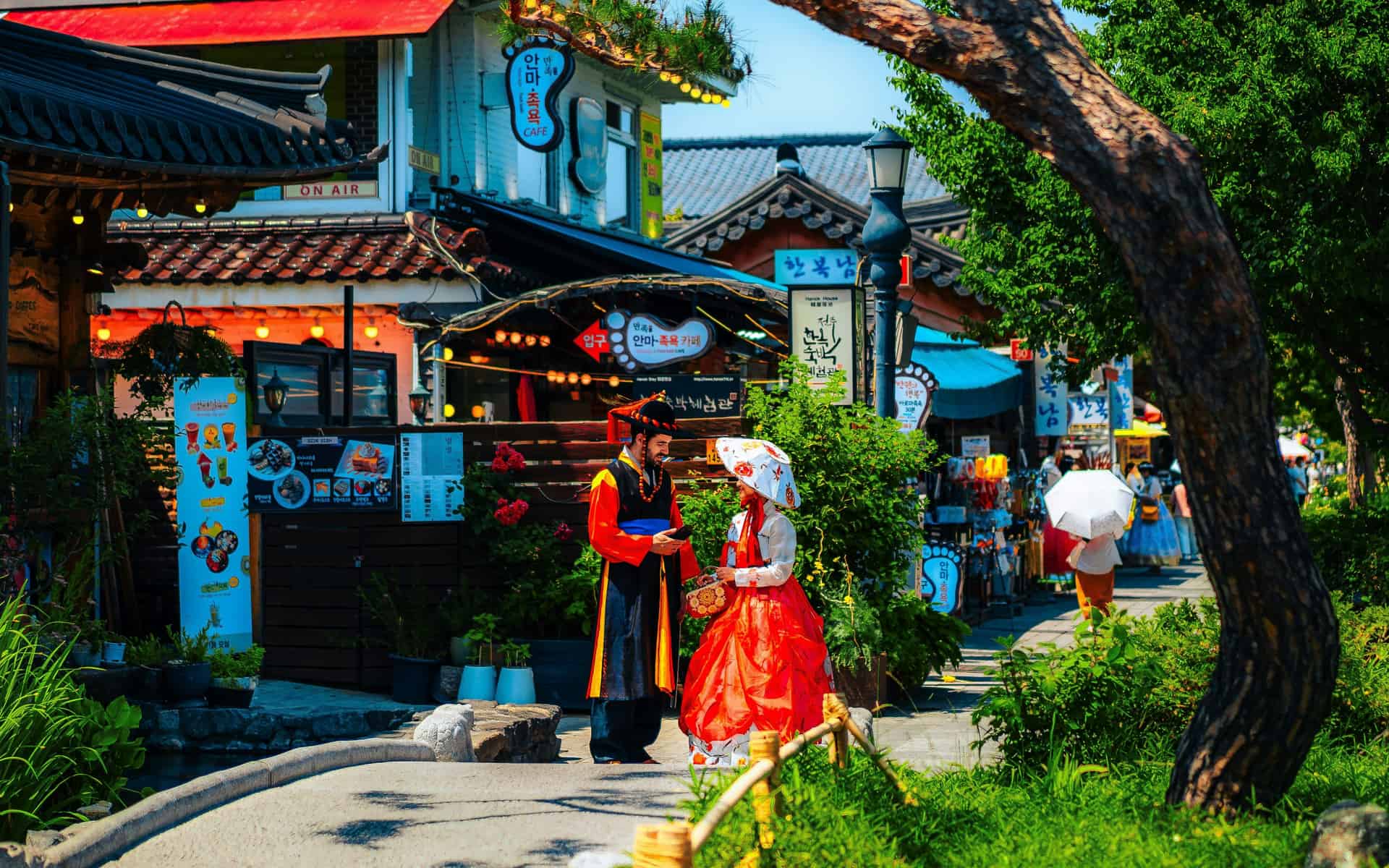
Best: Late March to April, or November Cherry blossom season creates the most romantic atmosphere in South Korea — lantern-lit temples, hanbok photoshoots, and evening walks through blossomed streets. Late November offers a quieter, more intimate version of the same magic with autumn leaves.
Family Travel
Best: May or September May avoids the April peak crowds but keeps the mild weather and lingering late blossoms. September has the best temperatures of the year (clear, low humidity), no school holiday congestion, and comfortable conditions for children on long walking days.
Budget-Conscious Travelers
Best: January–February or June January and February offer the lowest flight fares from India and the cheapest hotel rates — often 25–35% lower than spring peak. June is the best warm-weather budget month — before monsoon fully sets in, with lower demand than April or October.
Photography & Nature
Best: First week of April (cherry blossoms) or last week of October (foliage) Both windows are short — 7–10 days of peak visual reward. For cherry blossoms, time your trip so Days 3–7 fall in late March to early April (check the annual forecast). For autumn foliage, the last week of October into early November is typically the most saturated colour across Seoul and Gyeongju.
K-Culture & Entertainment (K-pop, K-drama, Food)
Best: Any season — but June and September offer the best combination of good weather and manageable crowds. Major K-pop concerts and festivals cluster in spring and autumn; check your favourite artists' schedules and plan around them.
When Indian Holidays Align with South Korea Travel
Indian travelers face a specific planning challenge: aligning with Indian school holidays and long weekends while also hitting the best South Korea season.
Indian Holiday Period | South Korea Season | Verdict |
| Holi long weekend (March) | Early spring; Jeju blossoms beginning | Good — early cherry blossoms in Jeju if timing aligns |
| Ram Navami / school holidays (April) | Peak cherry blossom season | Excellent — but book 2–3 months ahead; prices spike |
| Summer school holidays (May–June) | Late spring / pre-monsoon | Good — May is ideal; June is budget-friendly |
| Dussehra / Diwali (Oct–Nov) | Peak autumn foliage | Excellent — often the best alignment of Indian holiday and South Korea season |
| Christmas / New Year (Dec–Jan) | Winter | Good for budget; Seoul has strong festive atmosphere; ski resorts active |
The Diwali window (October) is the single best alignment for Indian travelers — Indian long weekend + South Korea's most comfortable walking weather + autumn foliage at or near peak = the closest thing to a perfect timing combination.
How Season Affects Flight Prices from India
Flight fares from India to Seoul (Incheon) fluctuate significantly by season. Here is what to expect:
Season | Period | Fare Range (Round Trip) | Demand Level |
| Peak spring | Late March – April | ₹55,000–₹90,000 | Very High |
| Late spring | May | ₹42,000–₹70,000 | High |
| Pre-monsoon | June | ₹35,000–₹55,000 | Medium |
| Monsoon | July – August | ₹38,000–₹60,000 | Medium |
| Shoulder autumn | September | ₹40,000–₹62,000 | Medium |
| Peak autumn | October | ₹48,000–₹75,000 | High |
| Late autumn | November | ₹38,000–₹60,000 | Medium |
| Winter | Dec – Feb | ₹32,000–₹52,000 | Low–Medium |
Booking lead time matters more than the season: A flight booked 8–10 weeks in advance in April will consistently cost less than the same route booked 2 weeks out in October. For spring travel, start searching in January–February. For Diwali/October travel, search in July–August.
Festivals & Events Worth Planning Around
Jinhae Gunhangje Cherry Blossom Festival (Late March – Early April)
South Korea's largest cherry blossom festival is held in Jinhae (near Busan). The entire city fills with cherry trees lining streets, canals, and train tracks. Hundreds of thousands of visitors attend over 10 days. Book accommodation 3–4 months in advance.
Jeju Cherry Blossom Festival (Mid–Late March)
Jeju's blossoms appear 1–2 weeks before Seoul's. The King Cherry Blossoms of Jeju (Wangbeot-namu) at Jeju Jeongseok Airport and Noksan Road are particularly famous.
Lotus Lantern Festival, Seoul (May – Buddha's Birthday)
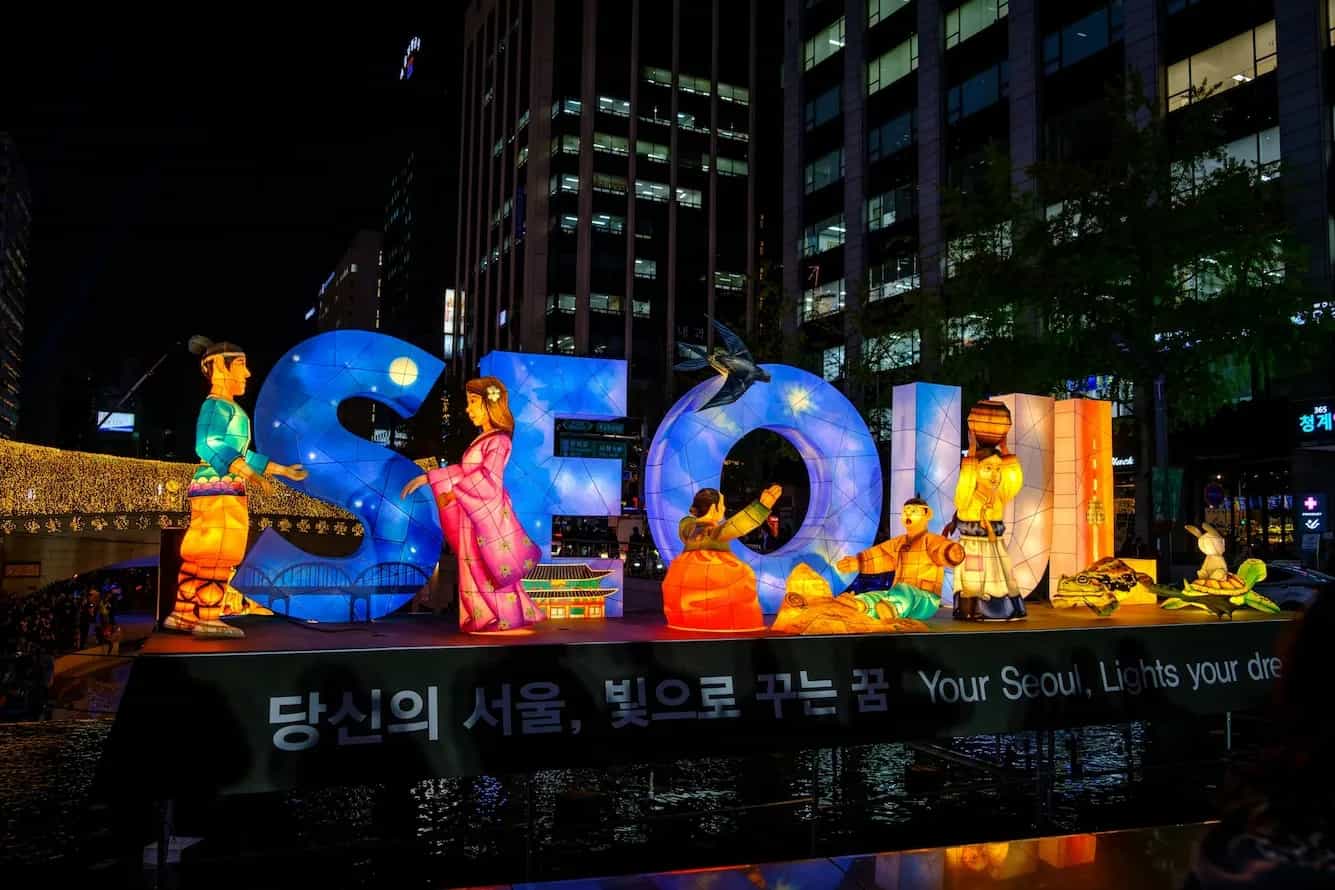
Thousands of colourful lotus lanterns are hung across Jogyesa Temple and Cheonggyecheon Stream. A candlelit lantern parade through central Seoul is one of the most atmospheric events in the city. Exact date shifts annually based on the lunar calendar (typically May).
Boryeong Mud Festival (July)
A beach festival 2 hours south of Seoul where the local mineral-rich mud becomes the main attraction — mud pools, slides, and wrestling. Popular with younger travelers. Held annually in Boryeong over 2 weekends in July.
Chuseok — Korean Thanksgiving (September or October)
South Korea's most important national holiday — a 3-day period (plus surrounding weekend) when Koreans return to hometowns to celebrate with family. Cities like Seoul become noticeably quieter. Some restaurants and smaller shops close. Transport is extremely congested in both directions on the first and last day. For Indian travelers: Chuseok can be culturally fascinating or logistically frustrating depending on your itinerary — check dates before booking.
Seoul Lantern Festival (November)
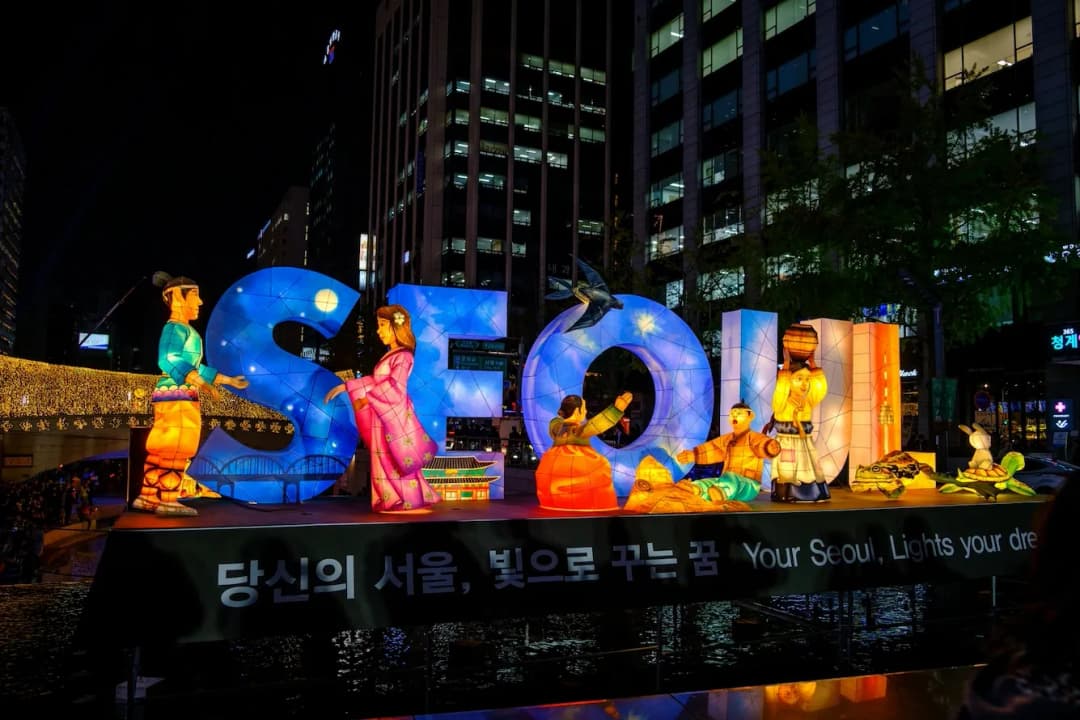
Cheonggyecheon Stream in central Seoul is lined with elaborate lantern installations for two weeks in November. Free to walk through. One of the most beautiful evening experiences in Seoul, with tens of thousands of lanterns reflected in the stream.
Christmas in Seoul (December 24–25)
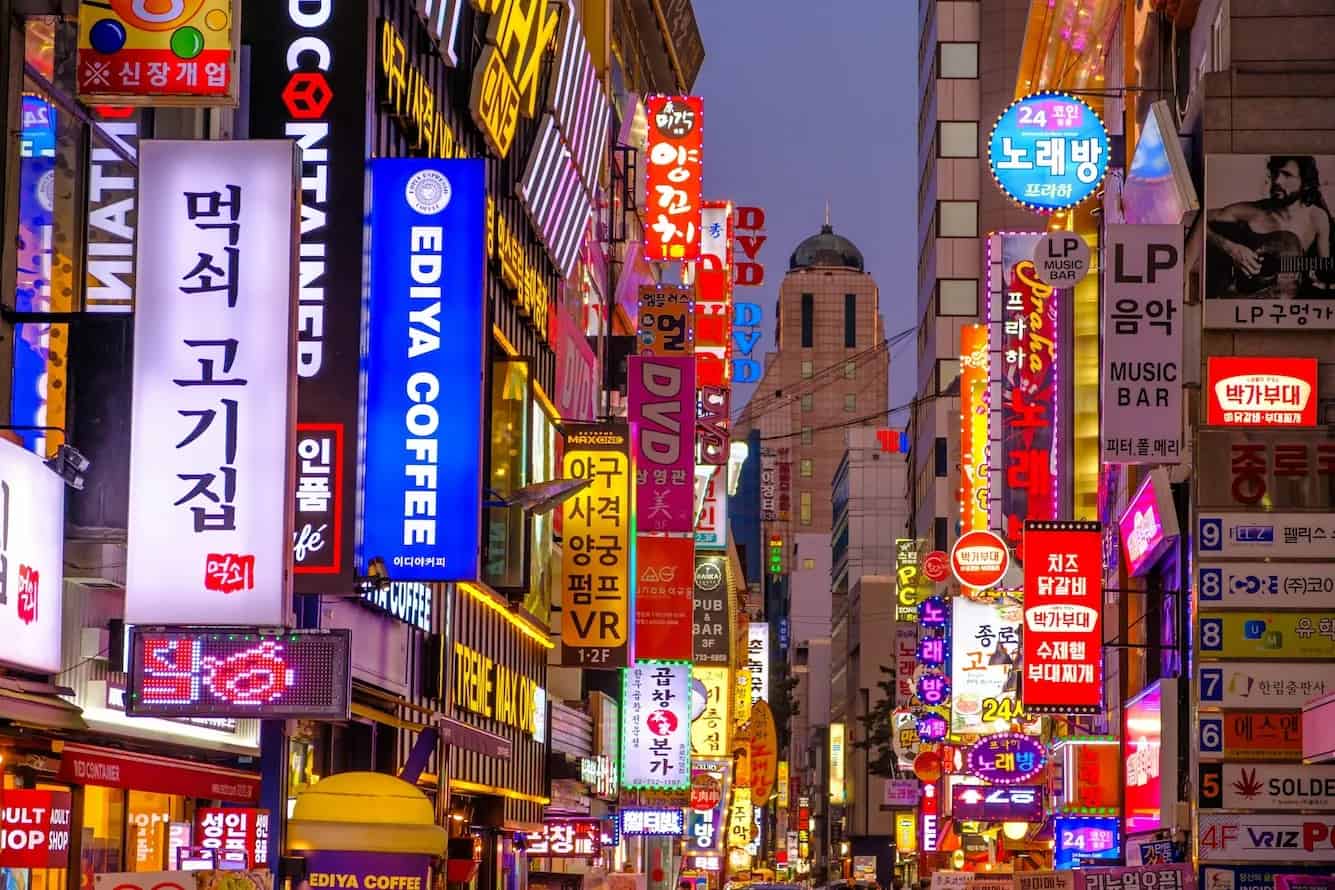
Seoul's commercial areas (Myeongdong, Gangnam) are heavily decorated for Christmas. A genuinely festive atmosphere that surprises most visitors expecting a more reserved Asian holiday. Department stores do elaborate window displays; Everland theme park near Seoul does a major Christmas festival.
When to Avoid South Korea
There is no season that is genuinely bad for South Korea travel. However, certain specific periods create avoidable friction:
Seollal (Lunar New Year — January or February) South Korea's most important traditional holiday. The exact dates shift each year. On the day before, the day of, and the day after Seollal: intercity trains and buses are fully booked weeks in advance; many family-run restaurants close for 2–3 days; tourist attractions may have reduced hours. Seoul feels quieter than usual — which can be pleasant if you're expecting it, disorienting if you're not.
Chuseok congestion days The day before Chuseok begins and the day it ends are the two highest-traffic days in the South Korean calendar. Avoid scheduling intercity travel or airport connections on these days. Mid-Chuseok days in Seoul are actually pleasant.
Late July monsoon peak If heavy rain is going to affect your South Korea trip, it is most likely in the last week of July. Outdoor-heavy itineraries (Hallasan hike, Seoraksan, Jeju coastal walks) are most at risk. Build flexibility into plans if travelling during this window.
Weekends during cherry blossom peak at Yeouido The Yeouido cherry blossom festival draws enormous weekend crowds to a relatively small stretch of riverside path. If you are visiting in peak bloom week, go to Yeouido on a weekday morning rather than a weekend. Weekday visits before 9 AM are dramatically different from weekend afternoons.
Written by the Desh Videsh Travels team · Specialists in South Korea tours from India
Explore South Korea tour packages →