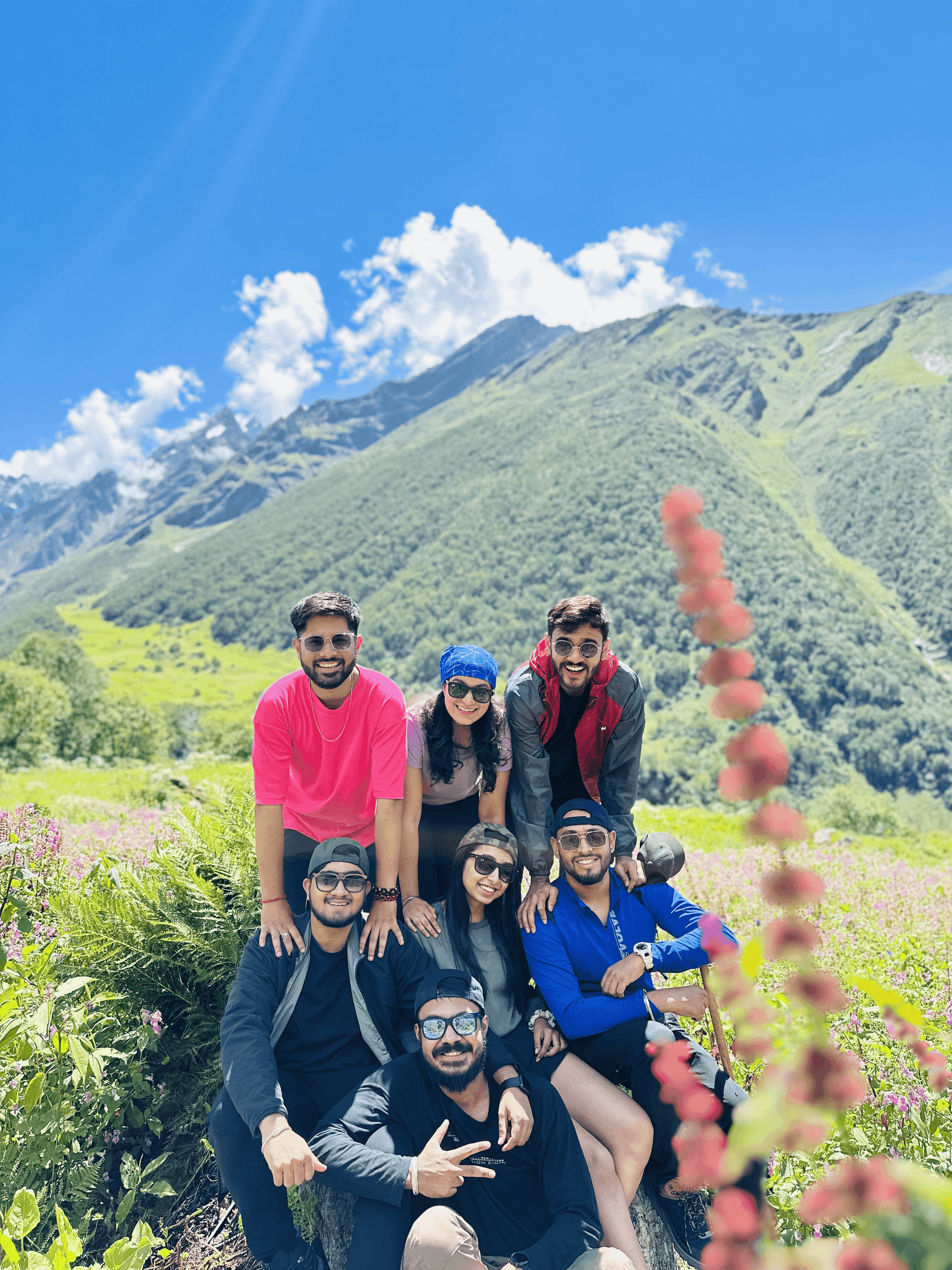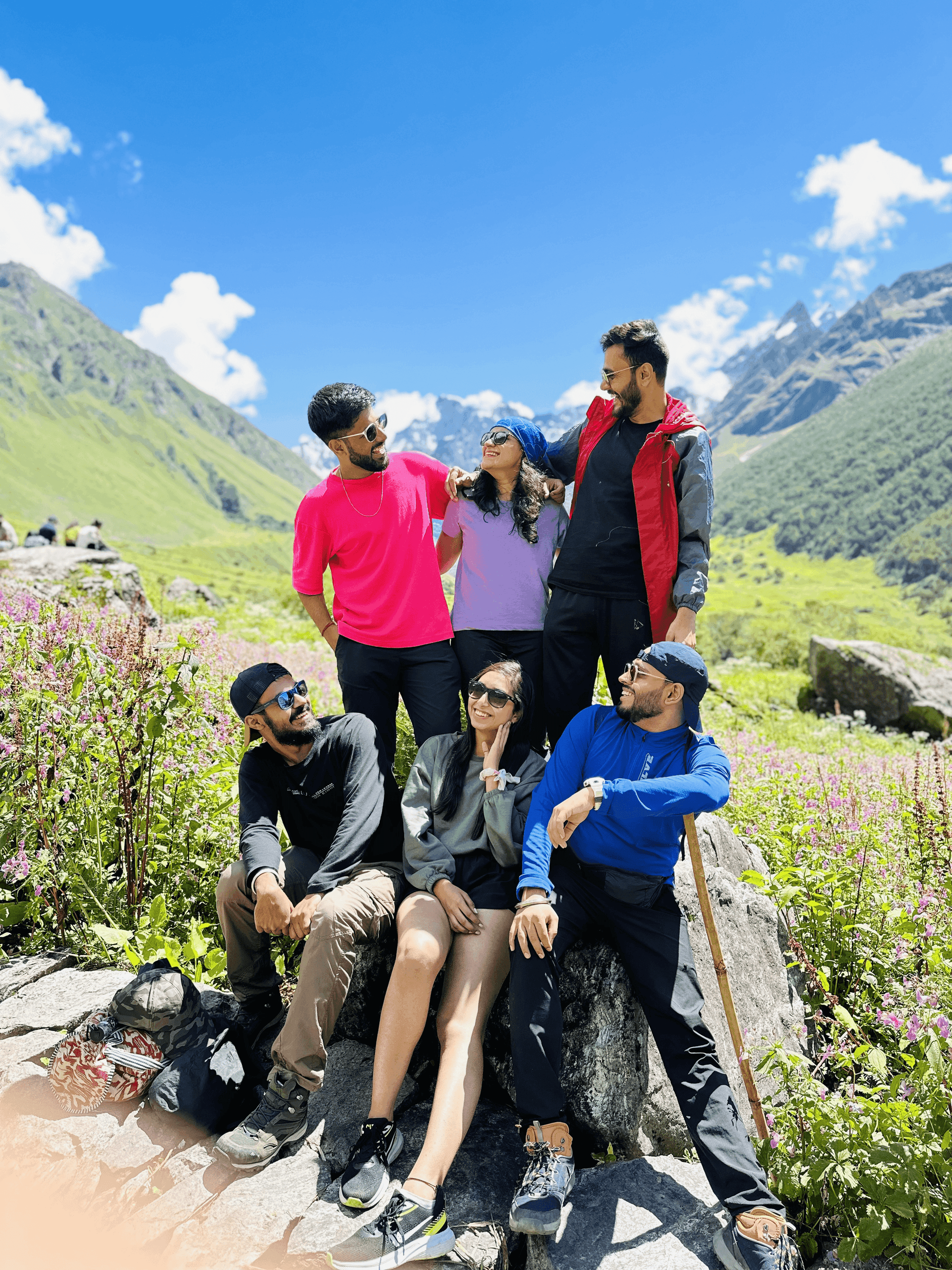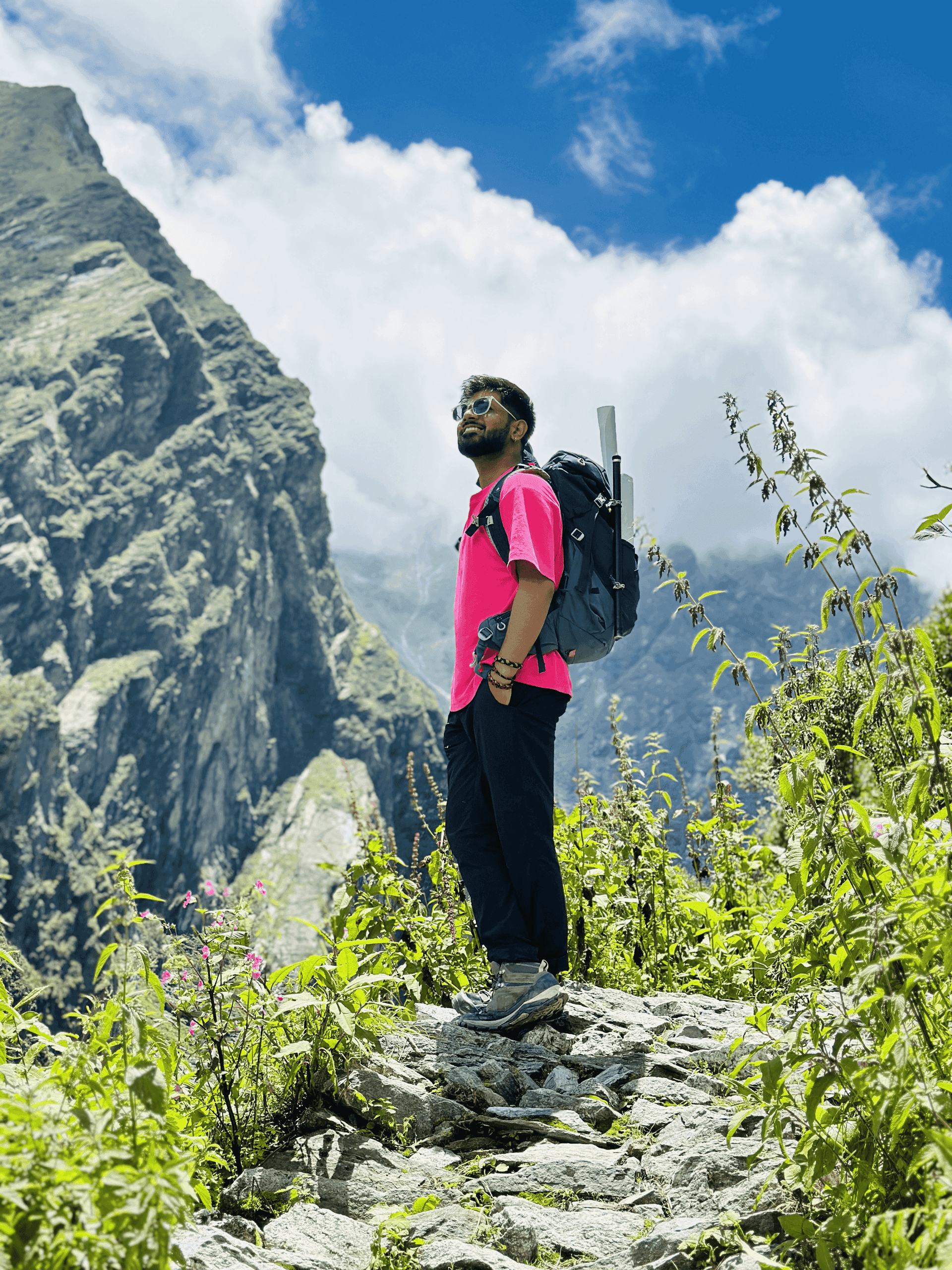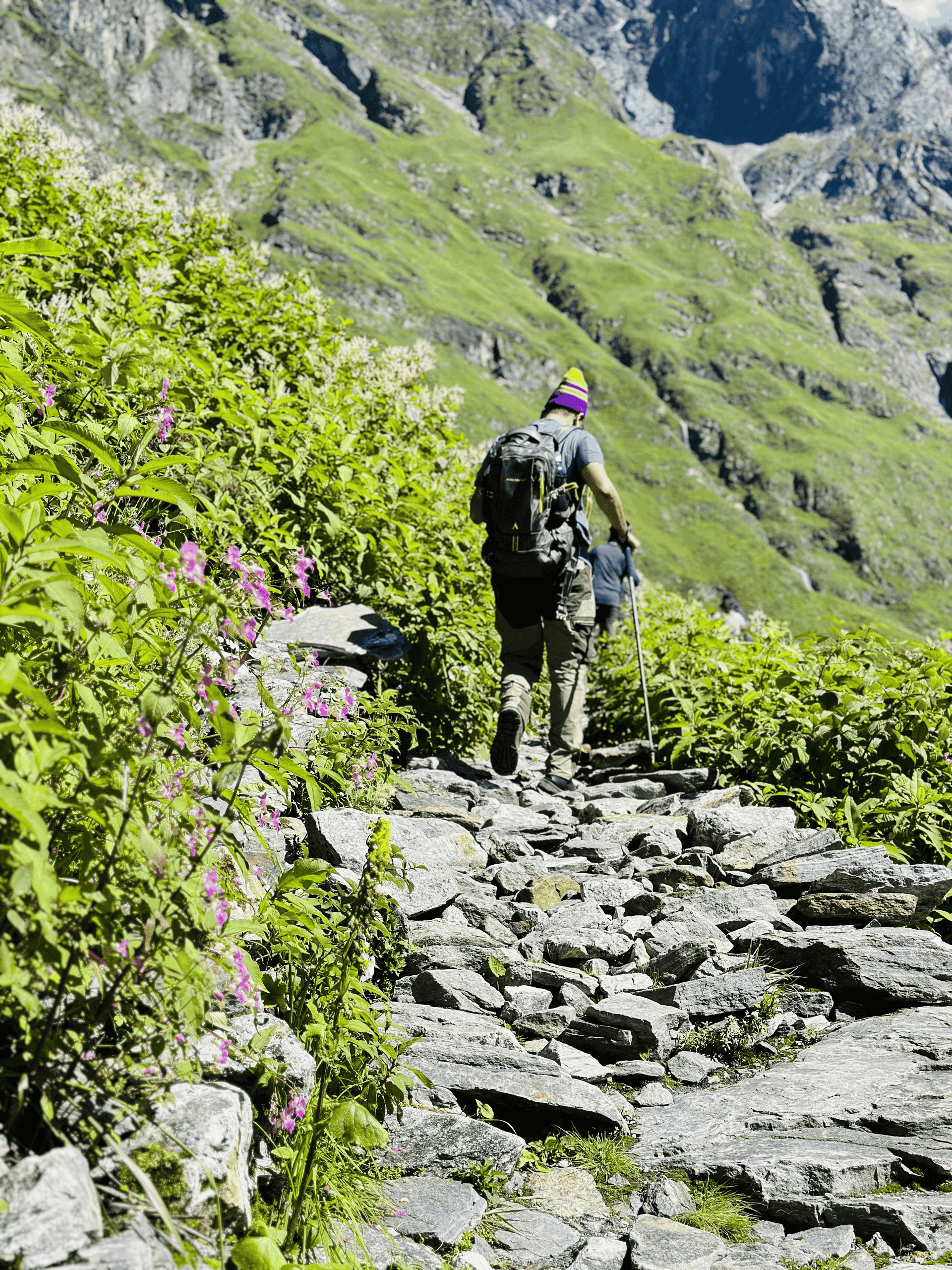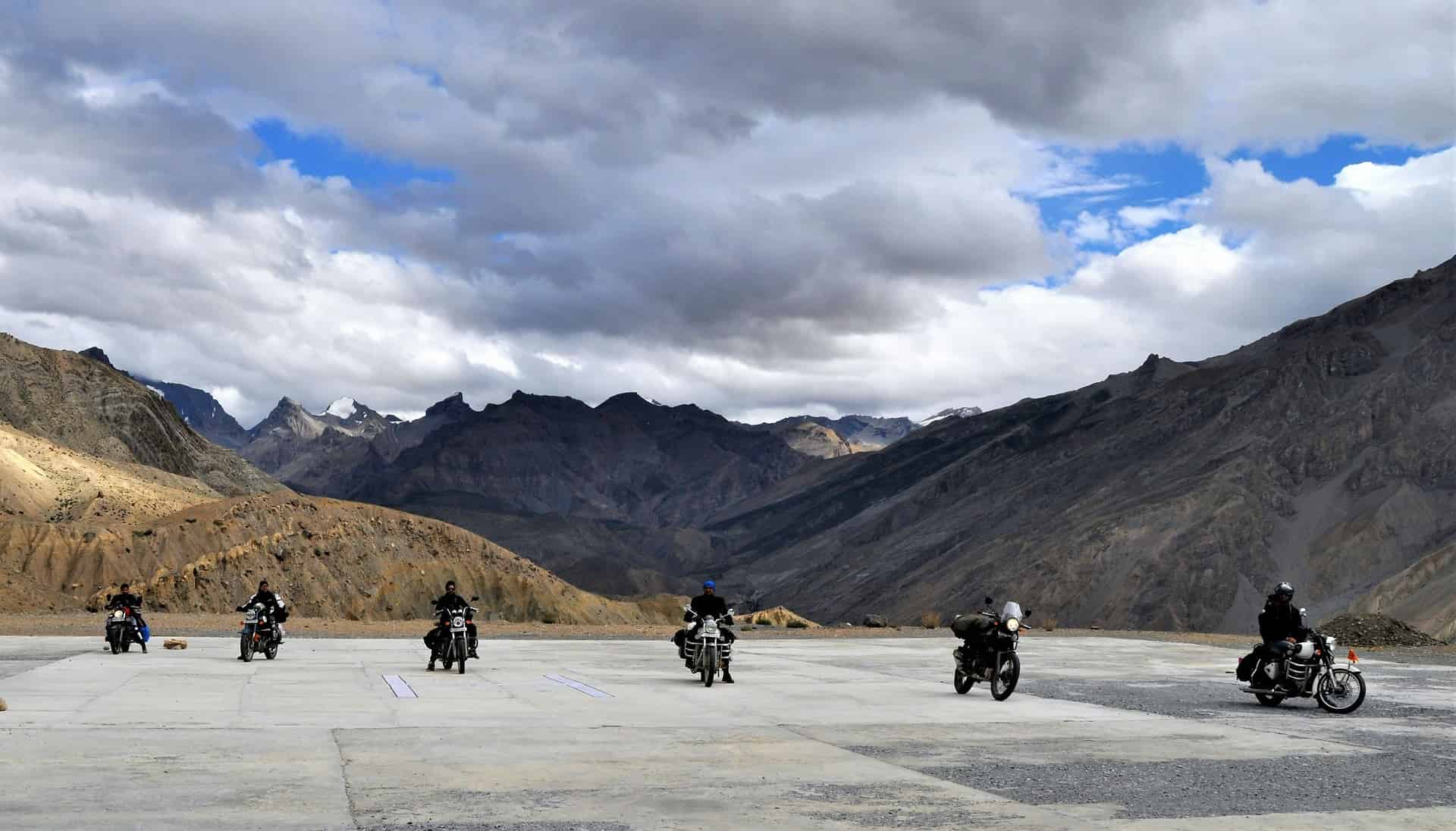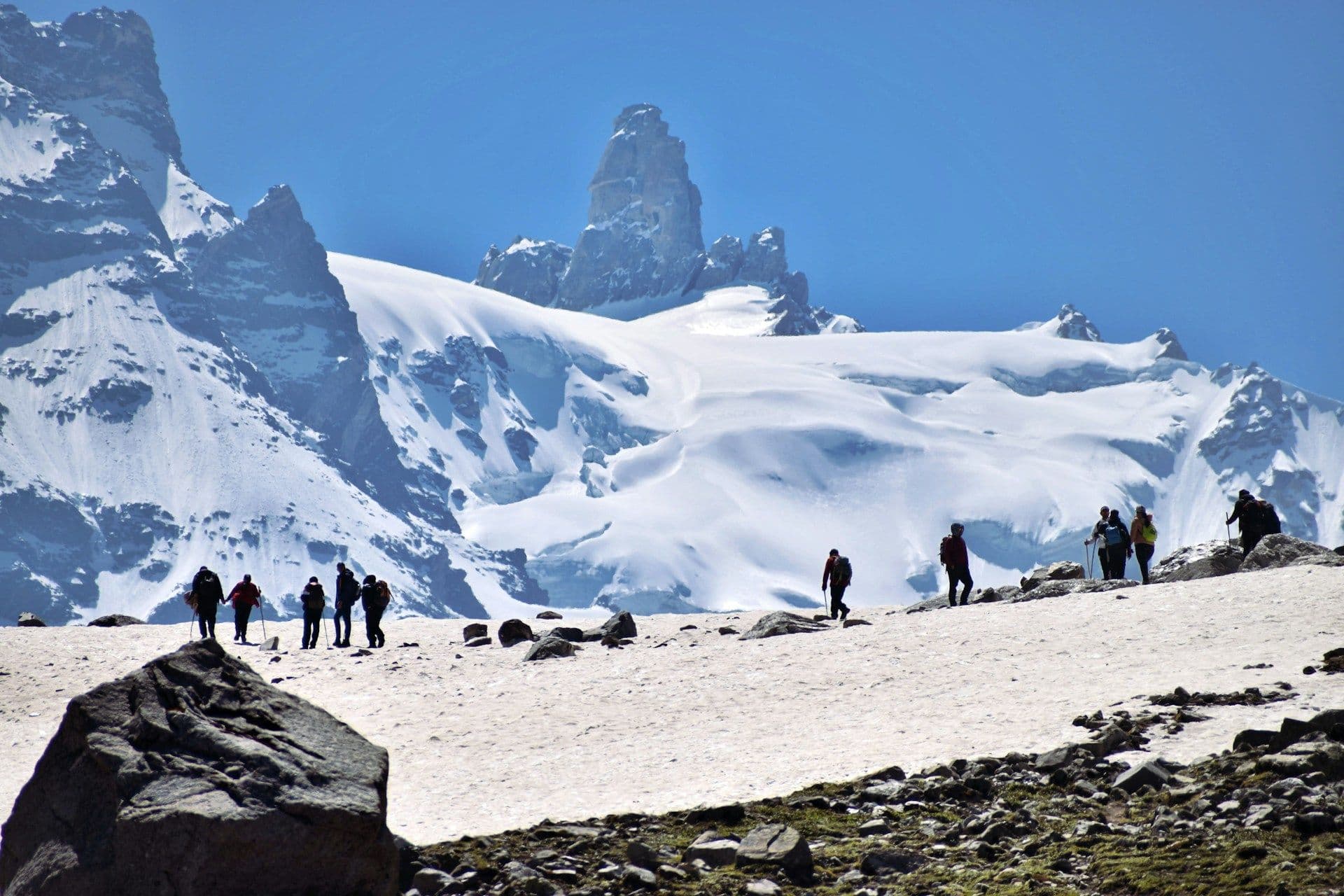
The Hampta Pass Trek is a high-altitude crossover trek in Himachal Pradesh that connects the greener landscapes of the Kullu Valley with the dry, rugged terrain of Lahaul. The route reaches Hampta Pass at around 4,270 meters, with the biggest attraction being the dramatic change in landscape during the crossing.
The standard trek begins at Jobra, near Manali, and passes through Chika and Balu Ka Ghera before crossing Hampta Pass and descending toward Shea Goru and Chatru. Chandratal Lake can be added as an optional road extension after the trek, depending on the itinerary and road conditions.
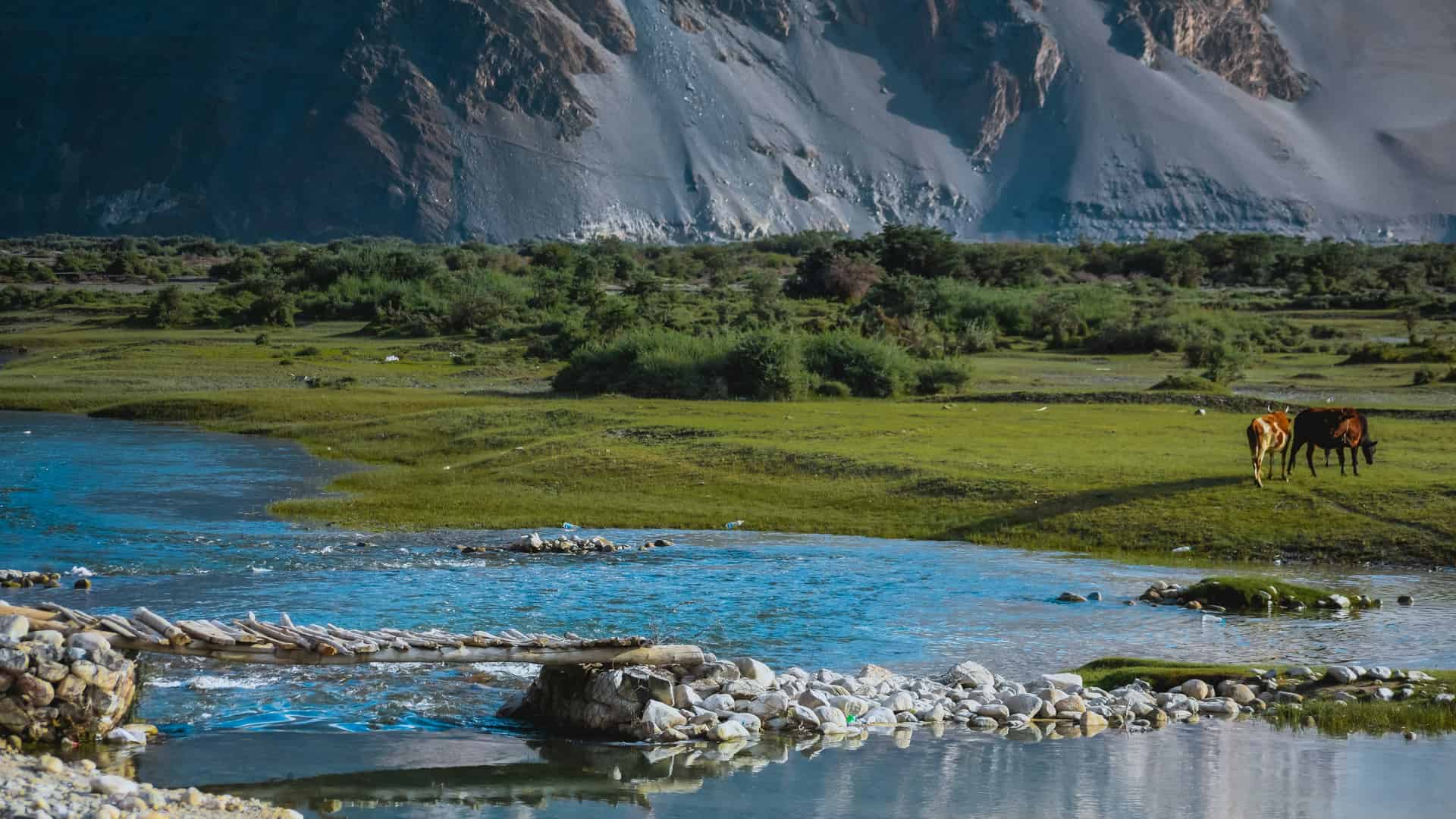
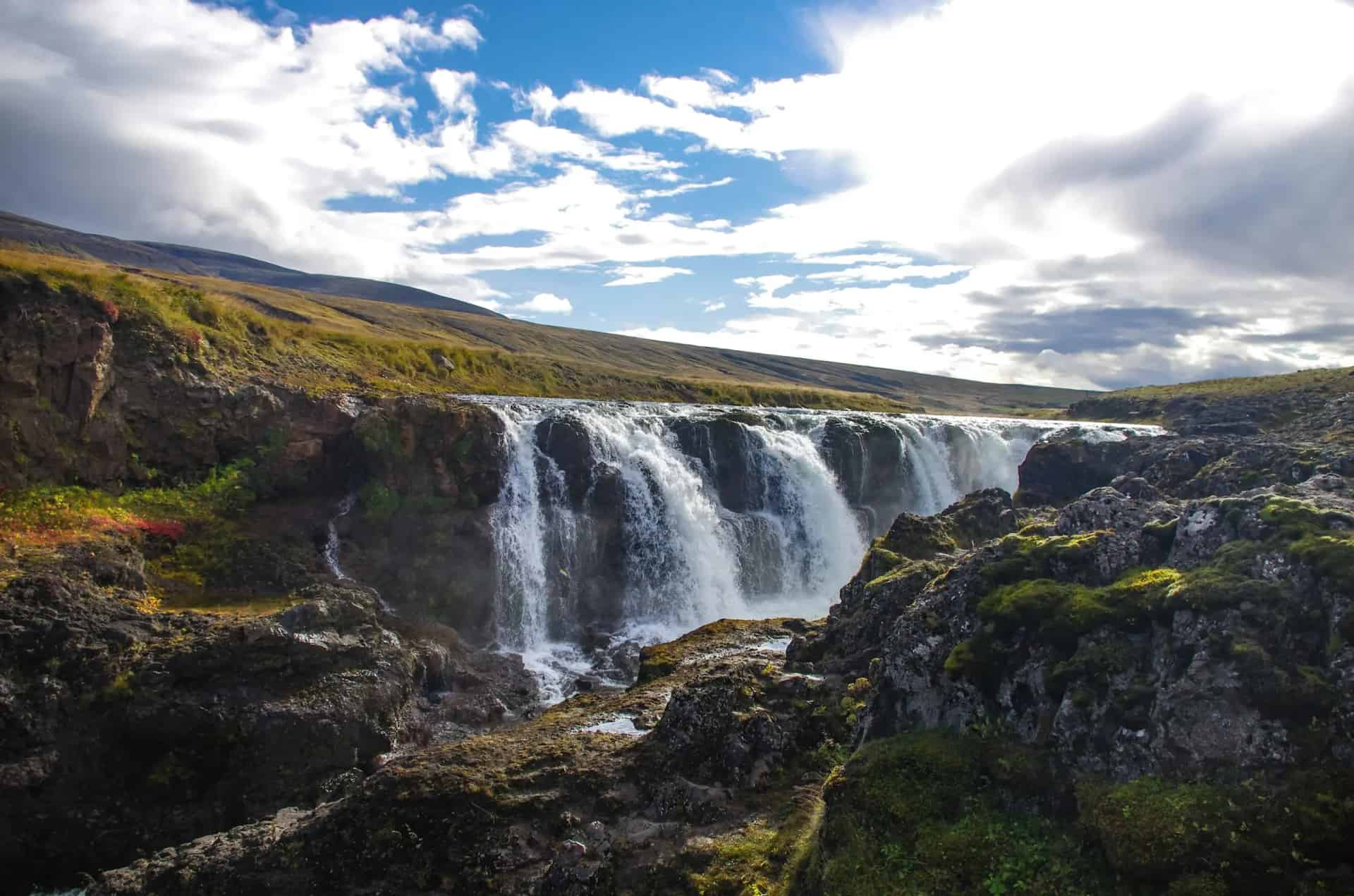
Unlike a summit-focused trek, Hampta Pass is about moving between two very different Himalayan environments. The Kullu side is greener, with forests, meadows and streams, while the Lahaul side becomes much drier, rockier and more open.
For more trekking options across the state, explore our Best Treks in Himachal Pradesh guide.
Hampta Pass Trek at a Glance
Category | Details |
| Location | Kullu Valley to Lahaul, Himachal Pradesh |
| Starting Point | Jobra |
| Starting Altitude | Approximately 2,980 m |
| Highest Point | Hampta Pass, approximately 4,270 m |
| End Point | Chatru |
| Trek Distance | Approximately 26–35 km, depending on itinerary |
| Difficulty | Moderate |
| Typical Duration | 4–5 days |
| Best Time | June to September |
| Optional Extension | Chandratal Lake |
| Base Town | Manali |
Hampta Pass Trek Route
The standard trekking route follows:
Manali → Jobra → Chika → Balu Ka Ghera → Hampta Pass → Shea Goru → Chatru
The trekking section begins at Jobra, reached by road from Manali.
The first part of the route moves through the greener Hampta Valley, with forests, meadows and streams. As you gain altitude, the terrain becomes more open and rocky.
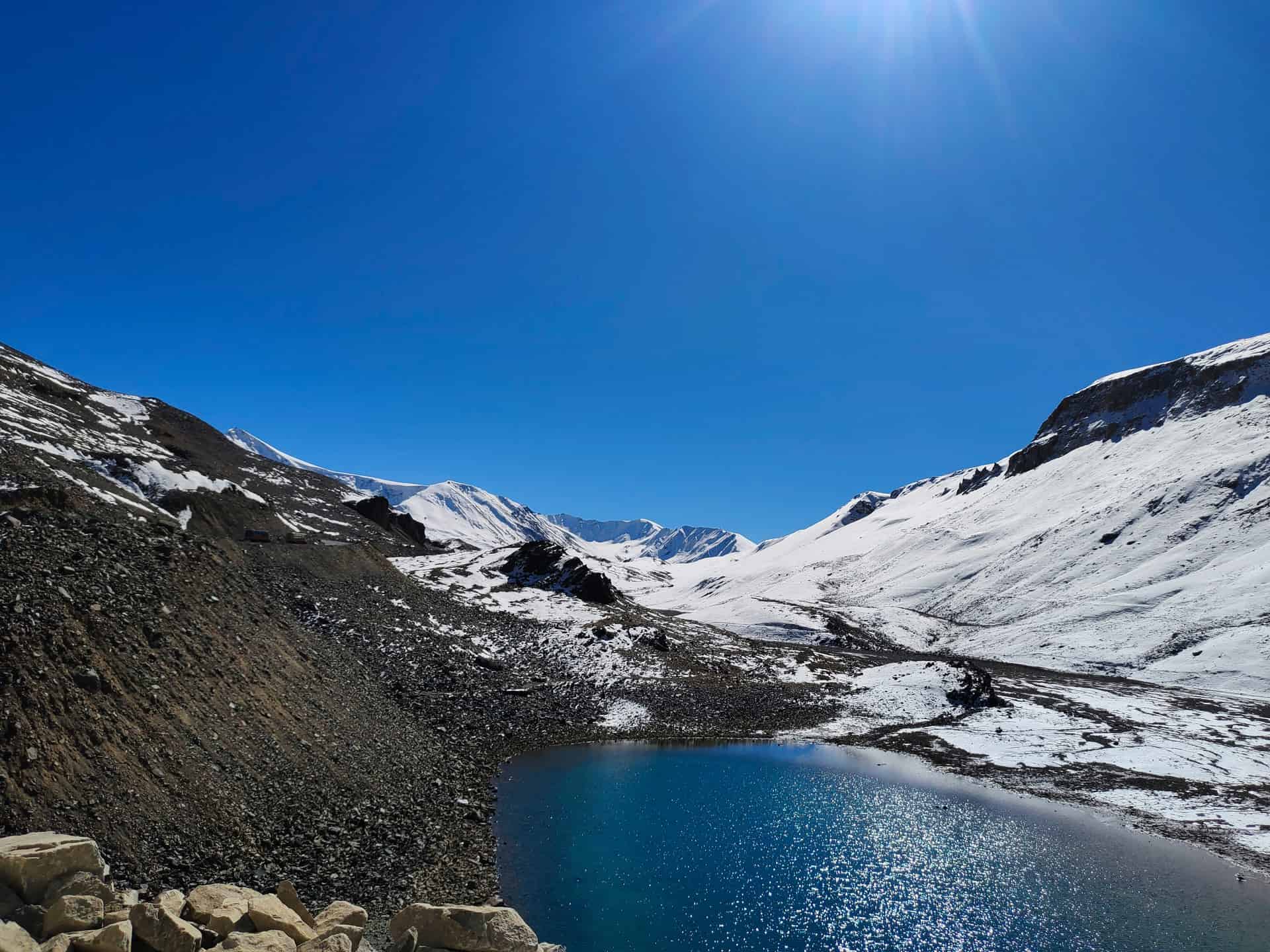
From Balu Ka Ghera, the trail climbs toward Hampta Pass. This is the key crossing of the trek and the point where the landscape changes most dramatically.
After crossing the pass, the trail descends toward Shea Goru on the Lahaul side. The greener Kullu landscape gives way to a much drier and more barren mountain environment.
The trek continues toward Chatru, where the main walking section generally ends.
What Makes the Hampta Pass Trek Different?
The biggest attraction of Hampta Pass is the dramatic change in landscape during a single trek.
On the Kullu side, you experience greener valleys, meadows and streams. After crossing the pass, the terrain becomes dry, rocky and distinctly different.
This makes Hampta Pass feel like a journey between two Himalayan environments rather than a trek focused on reaching a single summit.
The optional Chandratal Lake extension adds another major attraction, but it should be treated separately from the actual Hampta Pass crossing because Chandratal is reached by road from the Chatru side.
Best Time to Visit Hampta Pass
The main trekking season for the Hampta Pass Trek is June to September. Conditions can vary during this period, particularly around the pass and on the Manali side of the route.
Season | What to Expect |
| June | Snow can remain around the higher sections |
| July–August | Green valleys, but monsoon can affect the trail |
| September | Cooler conditions and generally clearer mountain views |
| October–May | Winter conditions make regular trekking access unsuitable |
Early in the season, trekkers may encounter more snow around the pass. During July and August, rainfall and stream levels can affect the trail. September generally brings cooler trekking conditions, although the higher sections can still be challenging.
The final trekking window depends on actual trail, weather and road conditions.
Is the Hampta Pass Trek Right for You?
The Hampta Pass Trek is generally considered moderate and can work for reasonably fit beginners with proper preparation.
You should be comfortable with:
- Several consecutive days of trekking
- Sustained uphill walking
- Steep sections near the pass
- Uneven and rocky terrain
- Stream crossings
- High-altitude conditions
- Possible snow around the higher sections
The trek does not normally require technical mountaineering skills, but reaching approximately 4,270 meters makes altitude an important consideration.
For beginners, the biggest adjustment is usually not one particular climb but spending several consecutive days on the trail.
Hampta Pass Trek Itinerary
A typical Hampta Pass itinerary takes 4–5 days, depending on the operator and whether Chandratal is included.
Day | Route | Main Highlight |
| Day 1 | Manali → Jobra → Chika | Forests and meadows |
| Day 2 | Chika → Balu Ka Ghera | Upper Hampta Valley |
| Day 3 | Balu Ka Ghera → Hampta Pass → Shea Goru | Main pass crossing |
| Day 4 | Shea Goru → Chatru | Descent into Lahaul |
| Day 5 | Chandratal → Manali | Optional road extension |
Day 1: Manali to Jobra to Chika
Drive from Manali to Jobra, where the trekking section begins.
The trail continues toward Chika, passing through forested terrain and open mountain landscapes.
Route: Manali → Jobra → Chika
Overnight camping is generally planned around the Chika area.
Day 2: Chika to Balu Ka Ghera
Continue deeper into the Hampta Valley toward Balu Ka Ghera.
The landscape becomes more open as you gain altitude, with rocky sections, streams and mountain slopes becoming more prominent.
Route: Chika → Balu Ka Ghera
Day 3: Balu Ka Ghera to Hampta Pass to Shea Goru
This is the main pass-crossing day.
The trail climbs toward Hampta Pass before crossing over to the Lahaul side and descending toward Shea Goru.
Route: Balu Ka Ghera → Hampta Pass → Shea Goru
This is generally the longest and most demanding day, with the crossing potentially taking 8–10 hours depending on trail and weather conditions.
An early start is important because conditions around the higher sections can become more difficult later in the day.
Day 4: Shea Goru to Chatru
The route descends from Shea Goru to Chatru, where the main trekking section generally ends.
Route: Shea Goru → Chatru
From Chatru, you can either continue your onward journey or add the Chandratal road extension.
Altitude on the Hampta Pass Trek
Hampta Pass reaches approximately 4,270 meters, making altitude an important consideration even though the trek is generally rated moderate.
Some trekkers may experience symptoms of acute mountain sickness (AMS) such as:
- Headache
- Nausea
- Dizziness
- Unusual fatigue
- Loss of appetite
- Shortness of breath
If symptoms become severe or continue to worsen, inform your trek leader immediately rather than assuming they are a normal part of trekking.
If you have concerns about altitude sickness or preventive medication, consult a qualified medical professional before the trek.
River Crossings & Trail Conditions
Stream crossings are one of the practical challenges of Hampta Pass, particularly when snowmelt or rainfall increases water levels.
Conditions can change considerably, so a crossing that is manageable on one day may become more difficult after heavy rain or rapid snowmelt.
Follow your trek leader's instructions rather than attempting a crossing independently. If substantial water crossings are expected, secure trekking sandals or quick-dry footwear can be useful.
Do not rely on a fixed water depth or assume that a particular crossing will always have the same conditions.
Chandratal Extension: What You Need to Know
Chandratal Lake is an optional road extension after the Hampta Pass trek, rather than part of the actual pass-crossing trail.
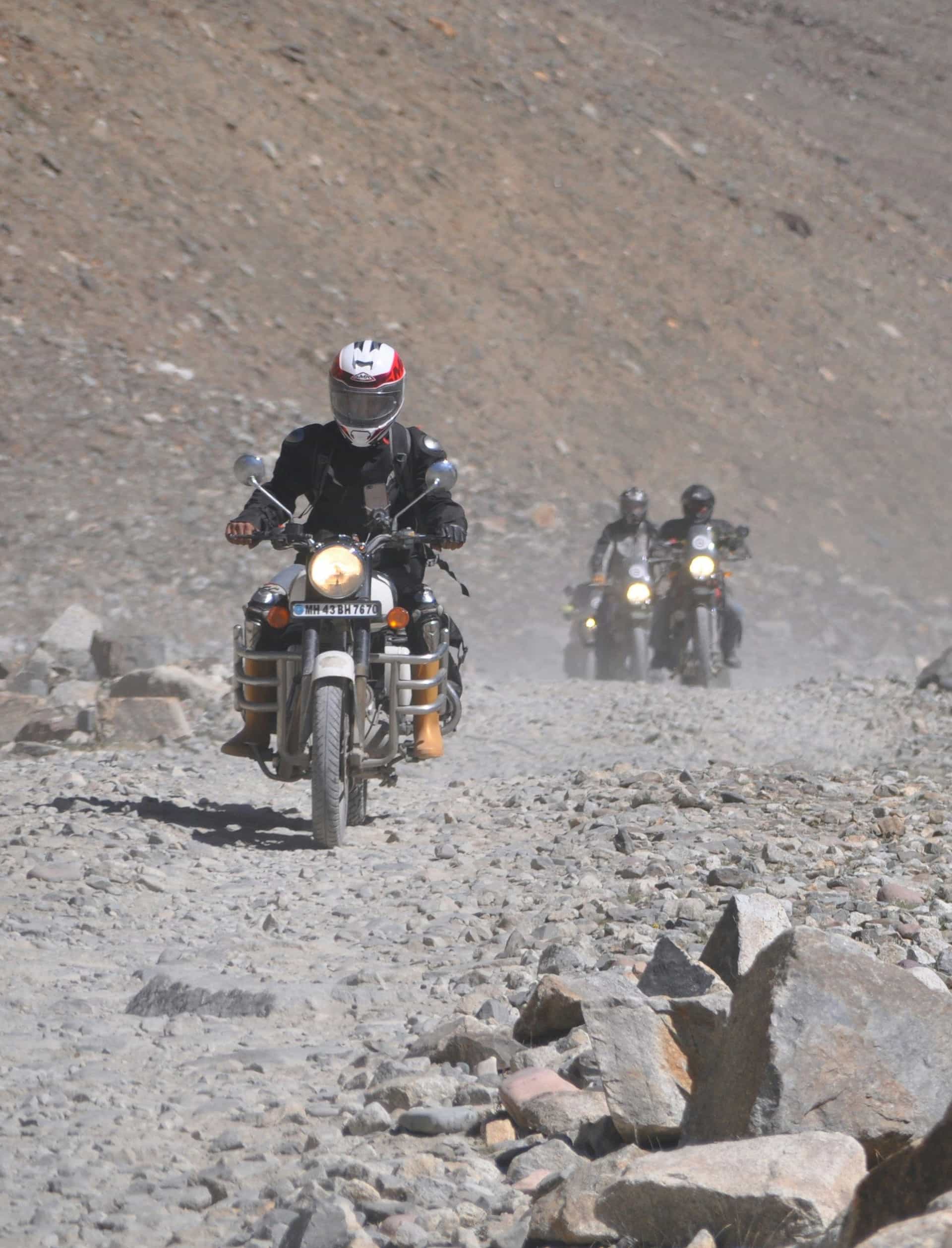
From Chatru, the route toward Chandratal follows a rugged mountain road. During the monsoon, water crossings and road conditions can cause delays or temporary access restrictions.
If Chandratal is important to your trip, allow extra time rather than planning a tightly timed return to Manali.
Before traveling, confirm:
- Whether the Chandratal road is currently open
- Current road conditions
- Whether the extension is included in your trek package
- The expected return time to Manali
This is particularly important during July and August, when rainfall and water crossings can affect road access.
How to Reach Hampta Pass
Manali is the main base for the Hampta Pass Trek. From Manali, the trekking route is accessed through Jobra.
From Delhi
The most common option is to travel to Manali by overnight bus or private vehicle and then arrange the transfer to Jobra.
From Chandigarh
Travel by road to Manali and continue toward Jobra.
By Air
Bhuntar Airport near Kullu is the nearest airport for travelers arriving by air. From there, continue by road to Manali before starting the trek.
Manali to Jobra
The Manali–Jobra transfer is an important part of the trek logistics. If you are booking an organized trek, confirm whether this transfer is included in the package and check the pickup time before departure.
Where to Stay Before and During the Trek
Manali
Most trekkers stay in Manali before starting the trek. It is also the easiest place to arrange last-minute supplies and complete any required trek formalities.
During the Trek
Accommodation on the trail is generally through camps, with overnight stops typically around:
- Chika
- Balu Ka Ghera
- Shea Goru
Facilities are basic once you are on the trekking route. If you are booking an organized trek, confirm whether tents, sleeping bags, meals and camping support are included.
Hampta Pass Trek Cost
The cost varies depending on the operator, inclusions and whether Chandratal is included.
For a standard organized Hampta Pass trek from Manali, current package prices should be checked before booking because rates vary by season and operator.
Expense | Approximate Cost |
| Organized trek package | ₹6,500–₹10,500 per person |
| Forest/permit charges | Around ₹150–₹200 per person per day, where applicable |
| Manali–Jobra transfer | Usually included or separately arranged |
| Camping & meals | Usually included in organized packages |
| Chandratal transfer | Included in some packages; confirm before booking |
When comparing packages, check whether the quoted price includes food, tents, guides, permits, Manali–Jobra transfer and Chandratal transfer.
A lower headline price may exclude some of these services.
Mobile Network on the Hampta Pass Trek
Mobile connectivity becomes unreliable once you move beyond the initial Manali–Jobra section.
Rather than depending on network access during the trek, inform family or friends about your itinerary before leaving Manali.
Carry important information offline, including:
- Emergency contacts
- Trek operator details
- Accommodation information
- Transport details
- Maps or itinerary information
Network availability can vary by location and conditions, so do not plan the trek around regular calls or mobile data.
What to Pack for the Hampta Pass Trek
Hampta Pass involves changing weather, cold conditions, high altitude and possible stream crossings. Focus on weather protection, suitable footwear and essential trekking gear rather than carrying an unnecessarily heavy backpack.
Category | What to Carry |
| Footwear | Sturdy waterproof trekking shoes with good grip |
| Stream Crossings | Secure trekking sandals or quick-dry footwear |
| Warm Layers | Fleece and insulated jacket |
| Rain Protection | Waterproof jacket or poncho and backpack rain cover |
| Trekking Gear | Trekking poles and headlamp |
| Sun Protection | UV-protection sunglasses and sunscreen |
| Water | Reusable water bottles or hydration system |
| Personal Essentials | Essential medication |
If you are trekking early in the season, confirm with your trek operator whether snow-specific equipment is required based on current trail conditions.
Plan Your Hampta Pass Trek
Hampta Pass can be planned as a standalone trek from Manali or combined with a wider Himachal itinerary.
Before booking, compare the itinerary, inclusions, Manali–Jobra transfer, Chandratal arrangements and current trail conditions rather than looking only at the package price.
For broader trip planning, explore our Himachal Pradesh Travel Guide and Himachal Tour Package.