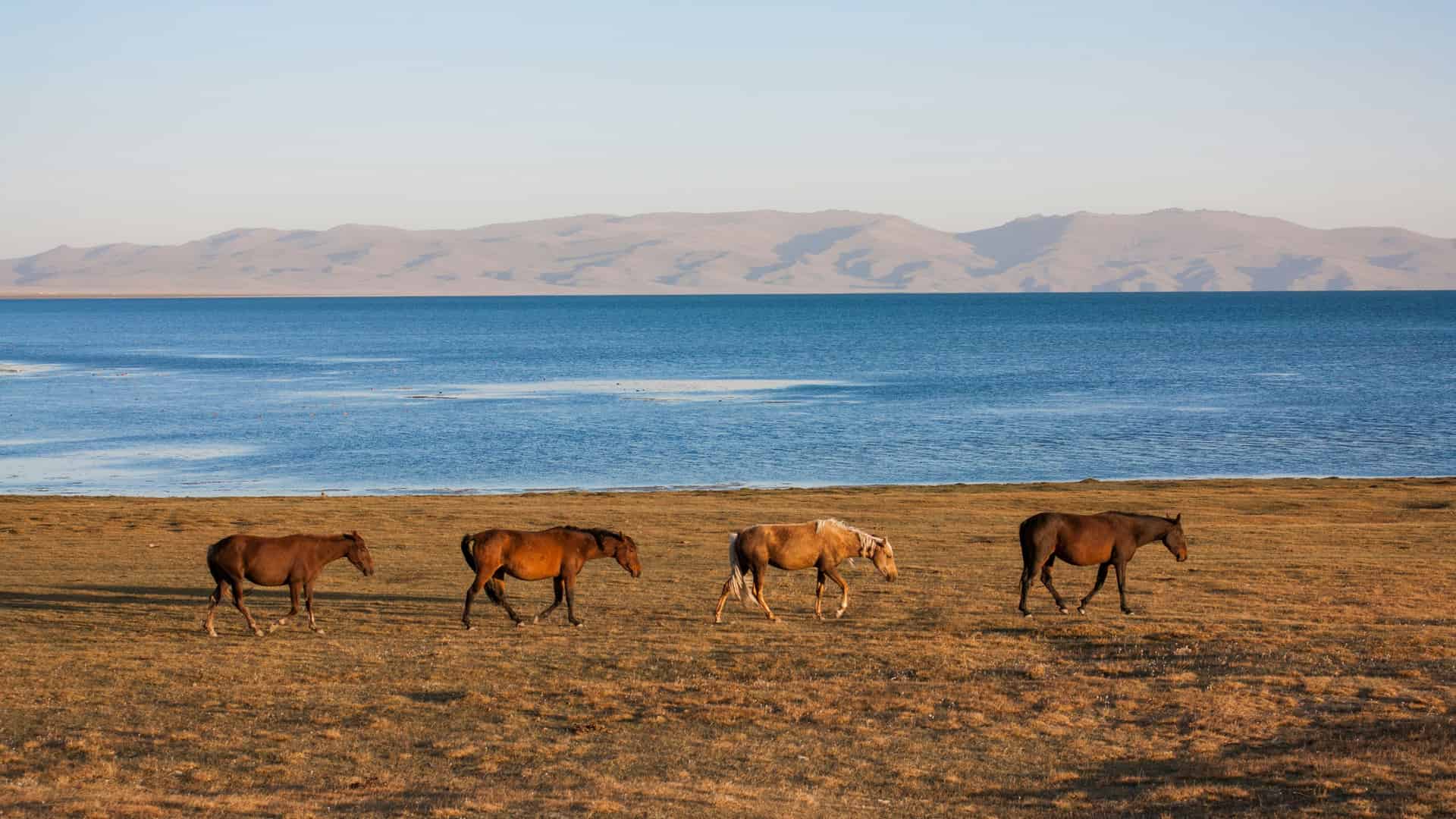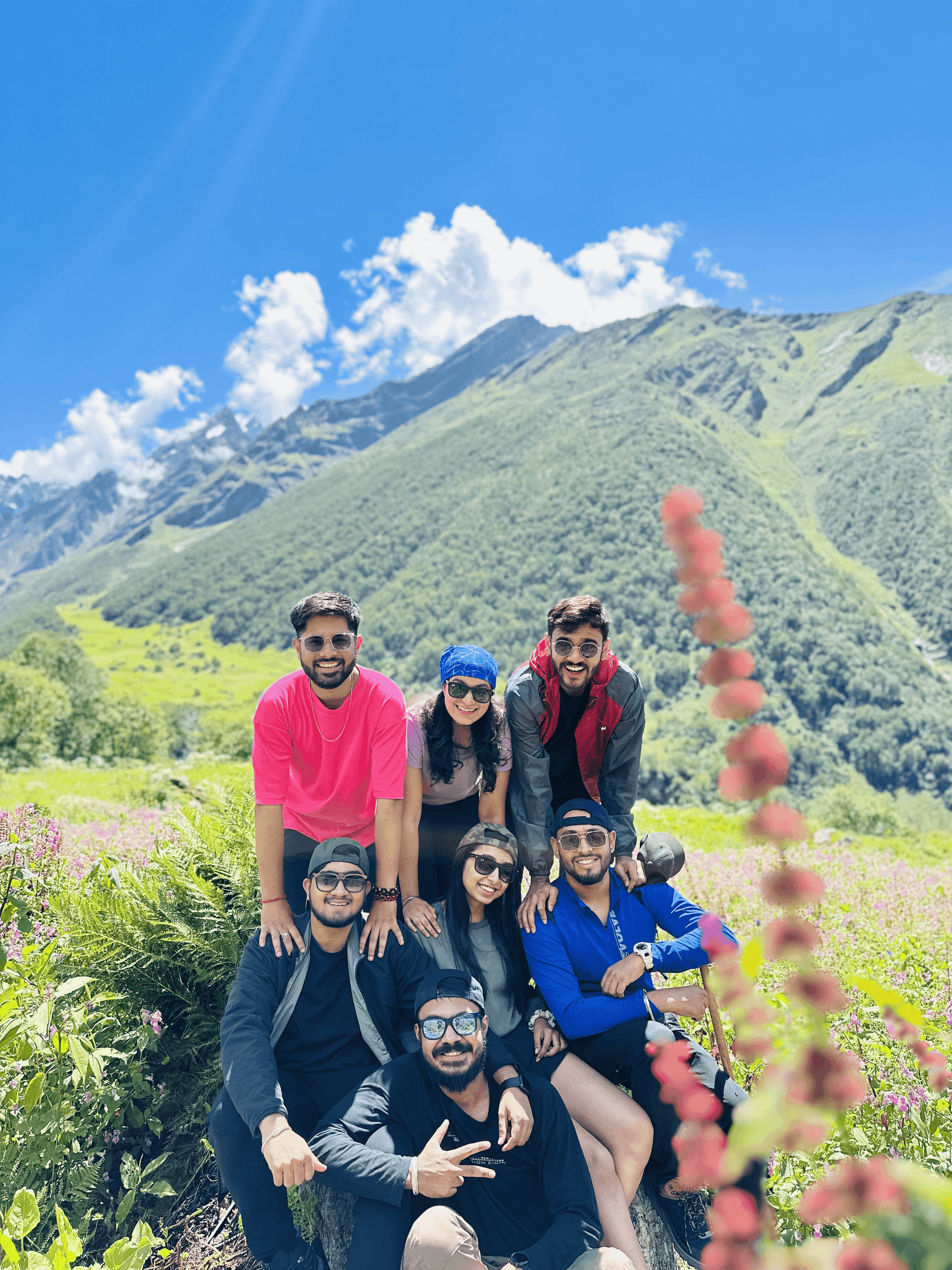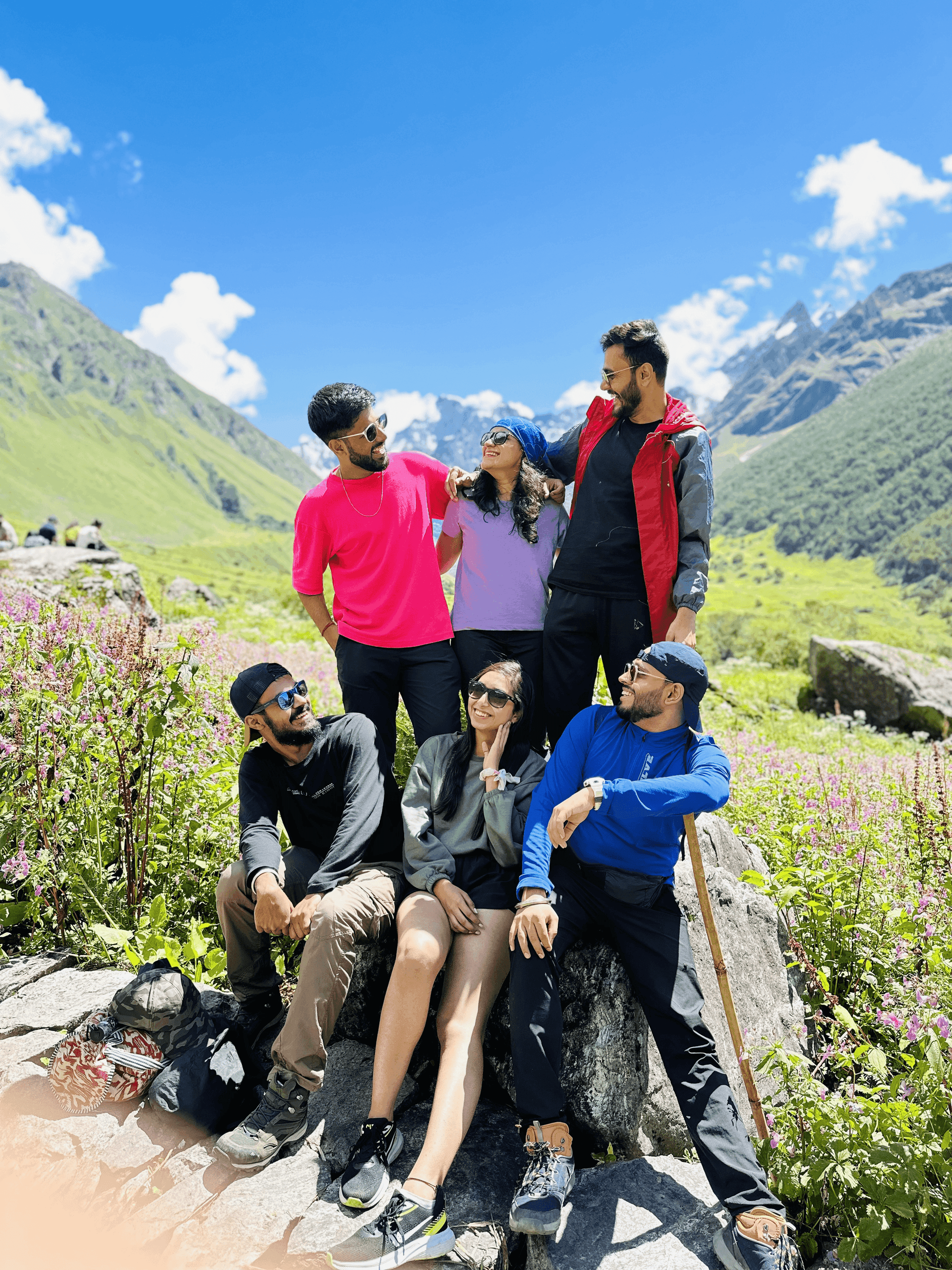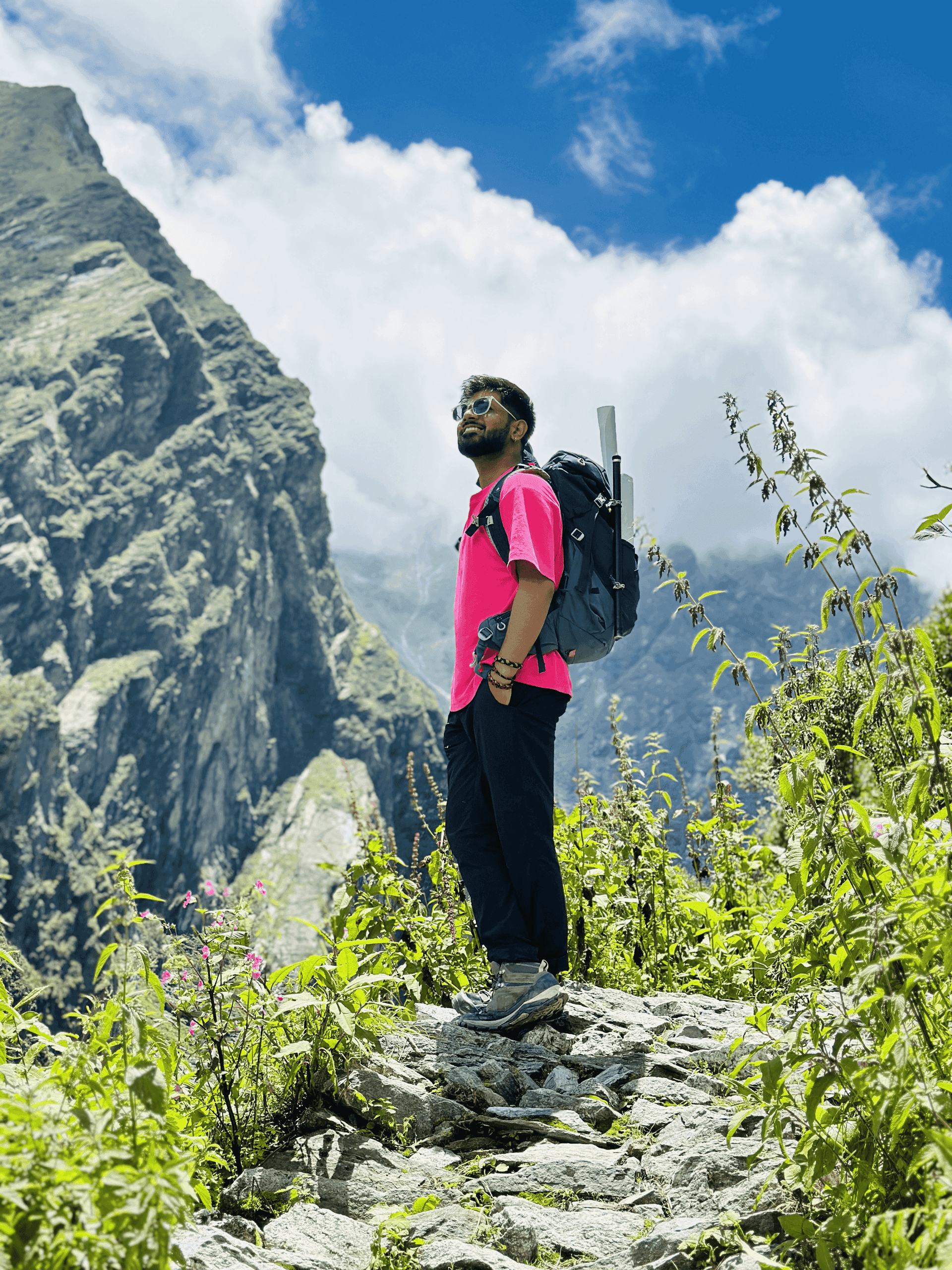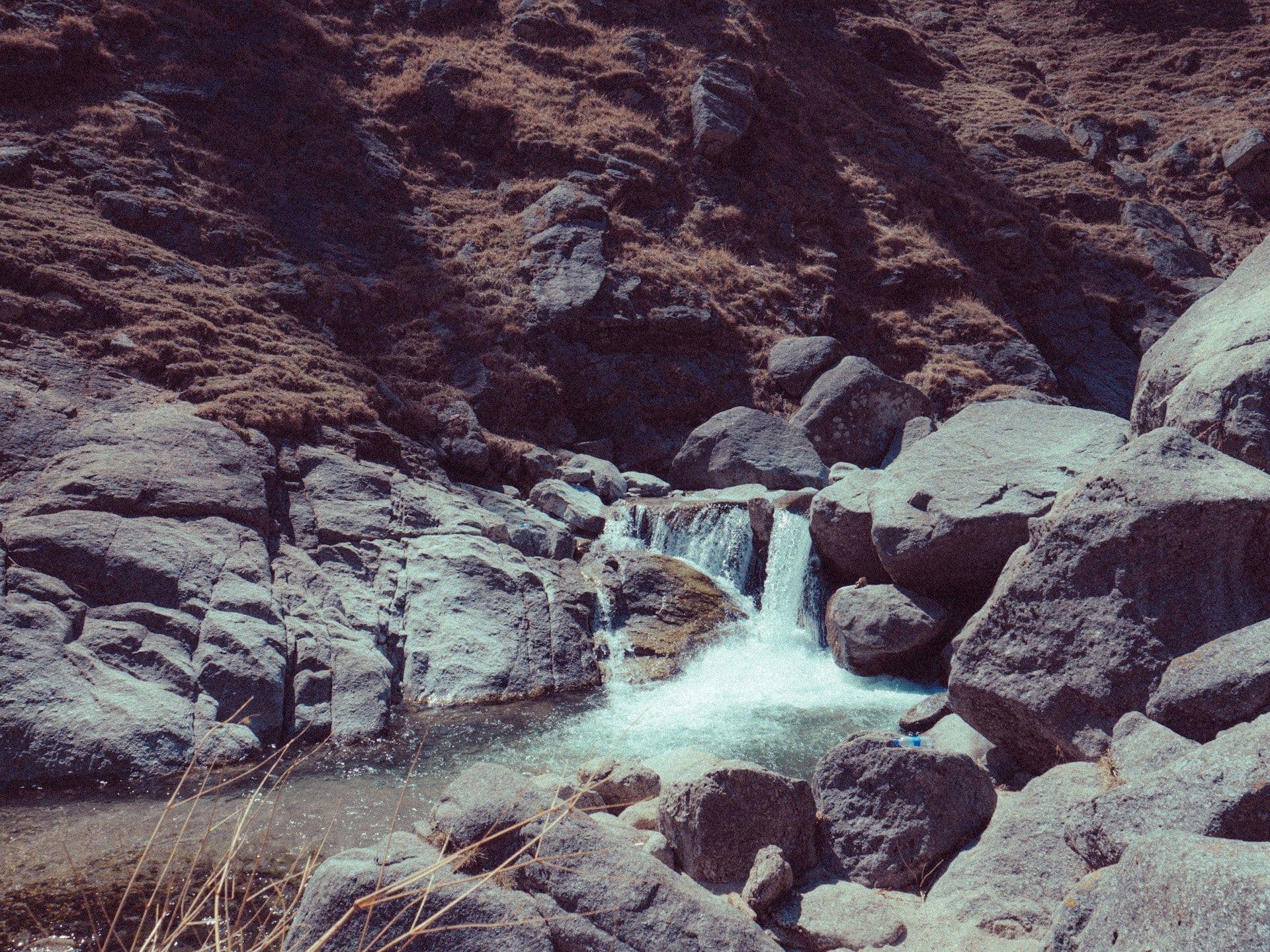
The Kareri Lake Trek is a high-altitude trek in Himachal Pradesh that begins from Kareri Village near Dharamshala and follows the Nyund stream through forests, stone pathways and mountain terrain before reaching Kareri Lake.
Kareri Lake sits at approximately 2,934 metres, while the trek starts from Kareri Village at around 1,800 metres, giving the route an elevation gain of roughly 1,100 metres. The approximately 13 km one-way journey makes it a proper multi-hour trek rather than a short hike.
The route is known for its changing terrain, from forested sections near Kareri Village to more open mountain terrain and increasingly rocky sections closer to the lake. Kareri Lake is also considered a sacred site, adding a cultural element to the trekking experience.
Kareri Lake Trek at a Glance
Category | Details |
| Location | Kangra district, Himachal Pradesh |
| Starting Point | Kareri Village |
| Starting Altitude | Approximately 1,800 m |
| Lake Altitude | Approximately 2,934 m |
| Elevation Gain | Approximately 1,100 m |
| One-Way Distance | Approximately 13 km |
| Difficulty | Moderate |
| Typical Duration | 2–3 days |
| Best Time | May–June and September–November |
| Base Areas | Dharamshala / McLeod Ganj |
| Trek Type | High-altitude lake trek |
What Makes the Kareri Lake Trek Different?
The Kareri Lake Trek combines forest walking, mountain trails, stream crossings and a high-altitude lake into a relatively compact multi-day route.
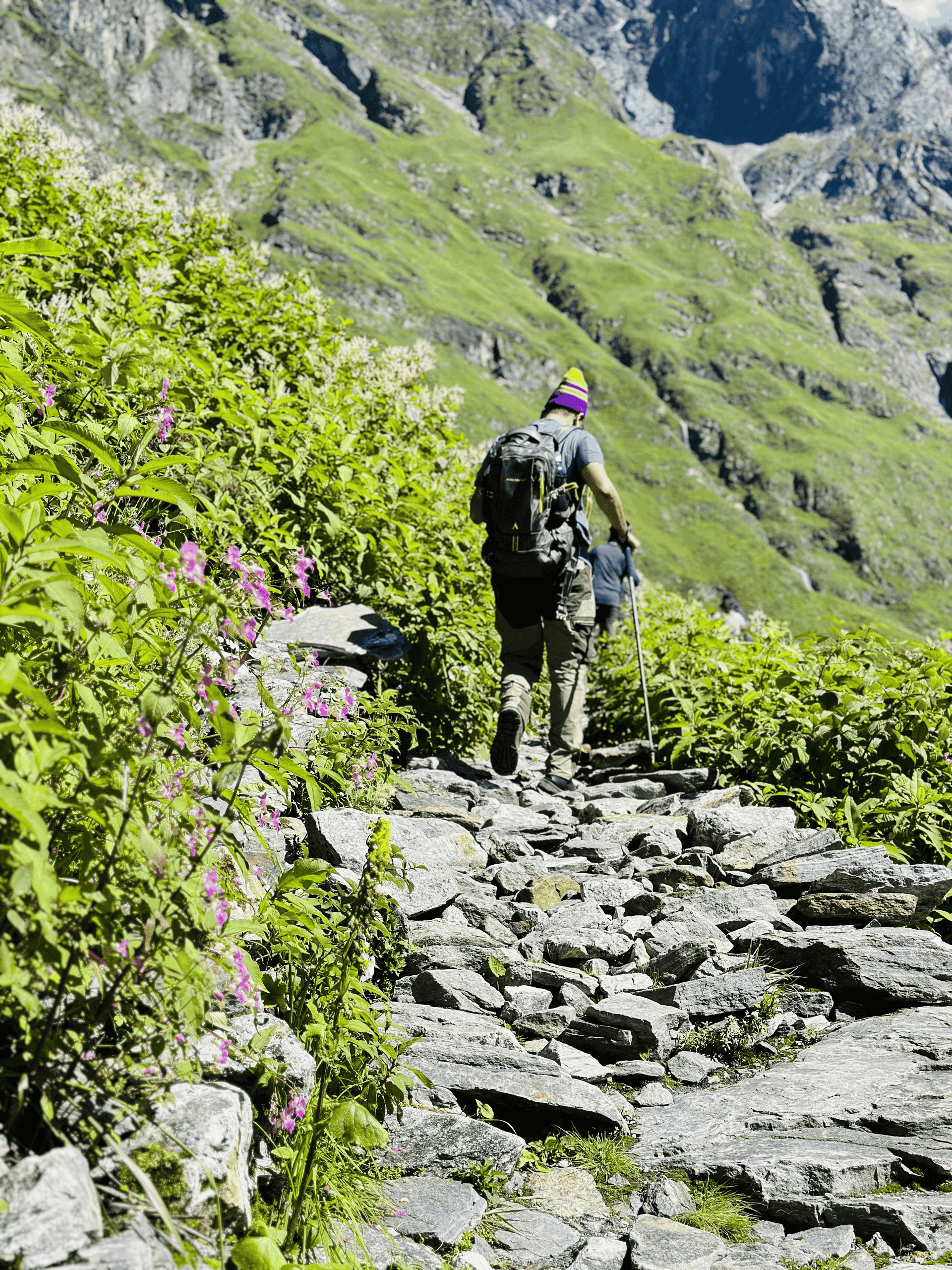
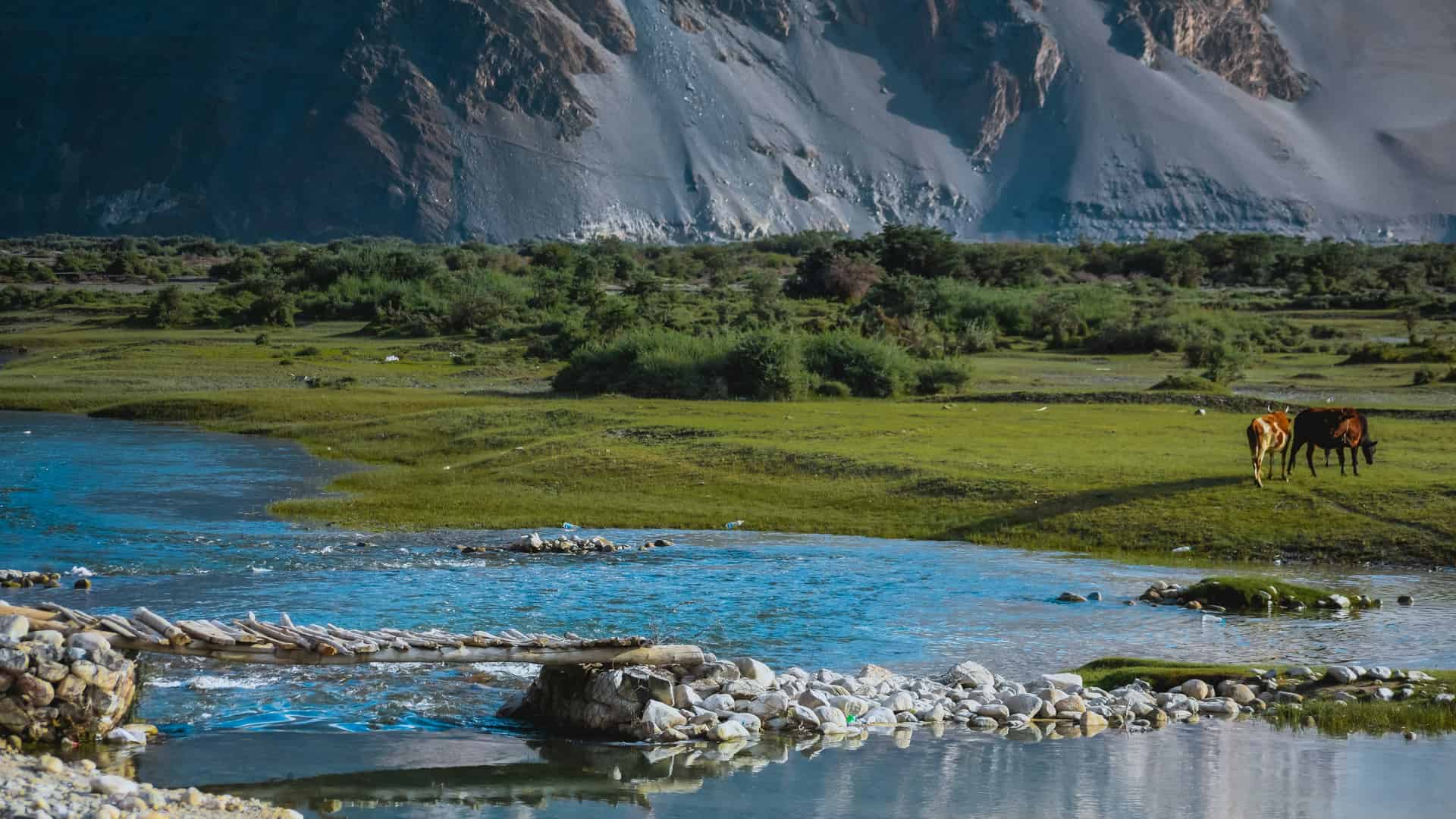
The trail follows the Nyund stream for much of the journey, while sections of the route feature handcrafted stone steps and rocky terrain. These steps make the route easier to follow but can become tiring, particularly during the descent.
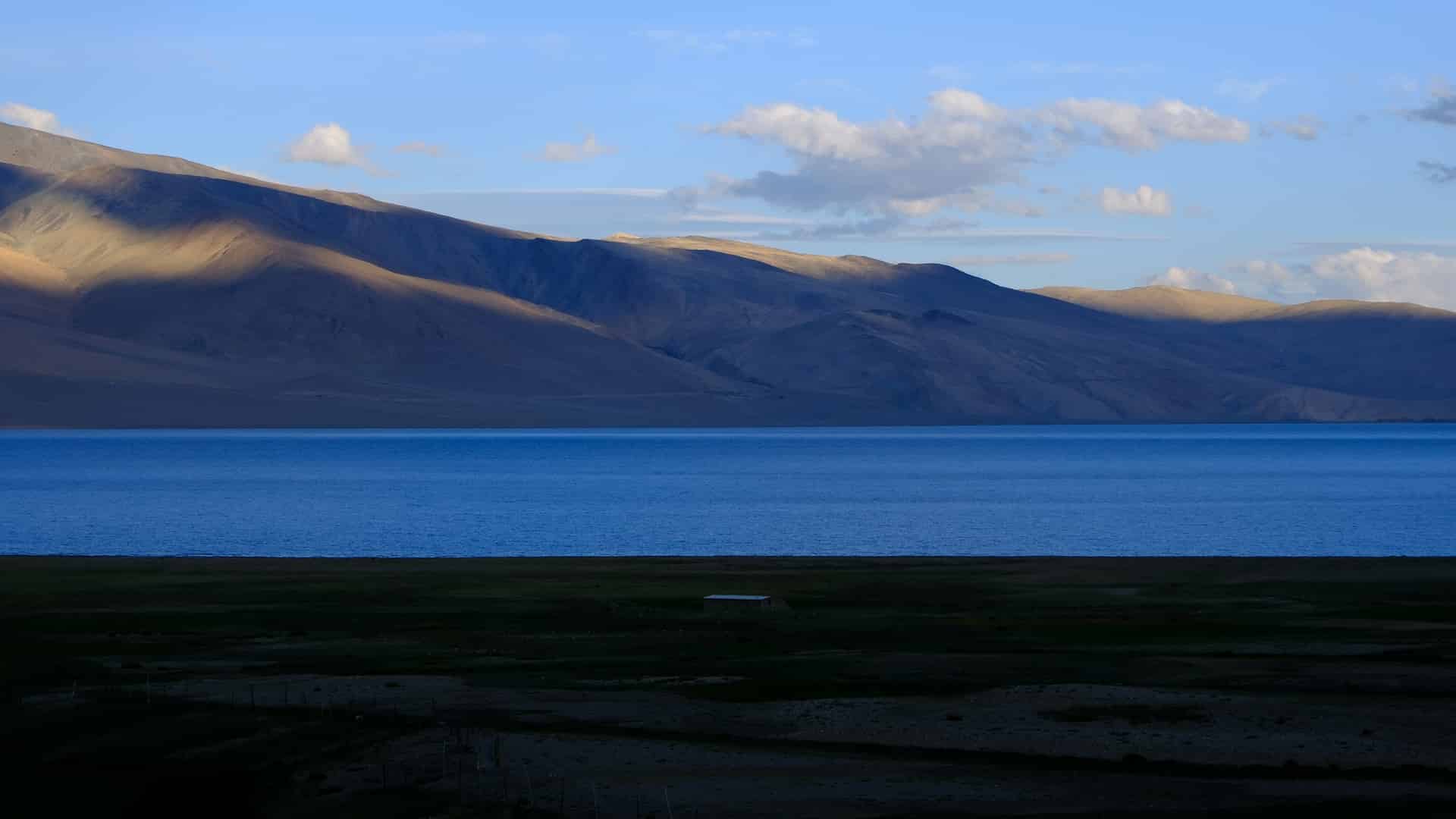
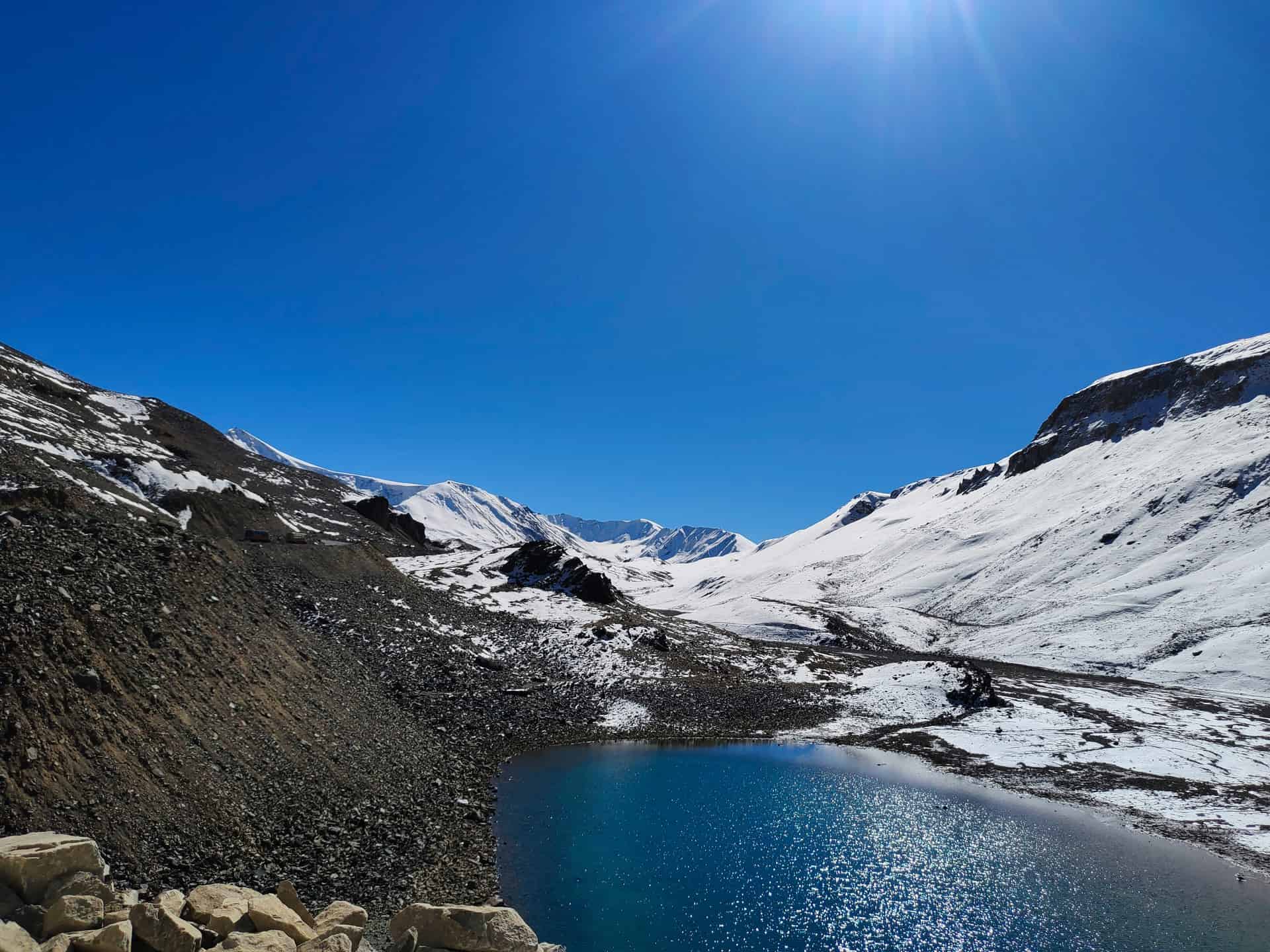
Kareri Lake itself is a shallow, glacially fed lake surrounded by the Dhauladhar mountains. A small temple near the lake also reflects its religious significance to the local community.
The route therefore offers more than simply reaching a scenic lake: the changing trail surface and sustained ascent are an important part of the trekking experience.
Kareri Lake Trek Route
The standard route follows:
Dharamshala → Kareri Village → Reoti → Kareri Lake → Reoti/Kareri Village → Dharamshala
The trekking section begins at Kareri Village.
From the village, the trail follows the Nyund stream through forested terrain and gradually climbs towards Reoti, a common overnight camping point.
From Reoti, the route continues towards Kareri Lake, with the terrain becoming more rocky and exposed as you approach the lake.
After visiting the lake, trekkers descend through the same general route towards Kareri Village before continuing by road to Dharamshala.
Best Time to Visit Kareri Lake
The best periods for the Kareri Lake Trek are generally May to June and September to November. Conditions change considerably through the year, particularly during the monsoon and winter.
Period | What to Expect |
| May–June | Pleasant trekking conditions, with snow possible around higher sections early in the season |
| July–August | Lush surroundings, but monsoon rain can make the trail slippery and stream crossings more challenging |
| September–October | Cooler weather, clearer mountain views and generally favourable trekking conditions |
| November–April | Colder conditions, with snow potentially affecting the higher trail and access |
For generally clearer and more comfortable trekking conditions, September and October are particularly suitable. During the monsoon, rainfall can increase water levels along the route and make sections of the trail more difficult.
How Difficult Is the Kareri Lake Trek?
The Kareri Lake Trek is generally considered moderate.
The main challenges come from the approximately 1,100-metre elevation gain, long walking distance, stone steps, rocky sections and stream crossings rather than technical climbing.
Expect:
- Long uphill sections
- Continuous stone and cobbled steps
- Rocky terrain closer to the lake
- Multiple stream crossings
- A demanding descent that can put additional strain on the knees
The route does not normally require technical mountaineering skills, but reasonable fitness is important because the trek involves several hours of walking each day.
Can Beginners Do the Kareri Lake Trek?
Yes, reasonably fit beginners can undertake the Kareri Lake Trek.
It can be a suitable introduction to multi-day trekking around Dharamshala if you are comfortable with sustained uphill walking and uneven terrain.
The main consideration for beginners is the length of the route rather than technical difficulty. Regular walking, stairs and some uphill exercise before the trek can help prepare for the ascent and particularly the long descent.
Kareri Lake Trek Itinerary
A typical Kareri Lake Trek takes 2–3 days, depending on the camping and return arrangement.
Day 1: Dharamshala → Kareri Village → Reoti
Drive from Dharamshala to Kareri Village and begin the trek towards Reoti, the usual overnight camping point.
Route: Dharamshala → Kareri Village → Reoti
Stay: Reoti
Day 2: Reoti → Kareri Lake → Reoti
Start early for the trek to Kareri Lake and return to Reoti after visiting the lake.
Route: Reoti → Kareri Lake → Reoti
Stay: Reoti
The lake approach is the main uphill section, while the return involves a long descent over stone sections.
Day 3: Reoti → Kareri Village → Dharamshala
Descend from Reoti to Kareri Village and continue by road to Dharamshala.
Route: Reoti → Kareri Village → Dharamshala**
How to Reach the Kareri Lake Trek
Dharamshala is the main base for the Kareri Lake Trek, while Kareri Village is the usual starting point for the trekking section.
From Delhi
The most convenient option is to travel to Dharamshala by overnight bus or private vehicle. From Dharamshala, continue by road towards Kareri Village.
From Chandigarh
Travellers can reach Dharamshala by road from Chandigarh and then arrange a taxi or local transport to Kareri Village.
By Air
The nearest airport is Kangra Airport (Gaggal). From there, continue by road to Dharamshala and then towards Kareri Village.
Dharamshala to Kareri Village
A taxi is the most convenient option if you want to start the trek early. Shared local transport can be cheaper, but timings may not always suit a trekking schedule.
If you're booking an organised trek, check whether the Dharamshala–Kareri transfer is included in the package.
Camping & Accommodation on the Kareri Lake Trek
Kareri Village
If you arrive a day before the trek, you can stay in basic local homestays or accommodation around Kareri Village.
This allows you to start trekking early the following morning without having to travel from Dharamshala on the same day.
Reoti
Reoti is a common overnight camping point on the route. Basic tents and food arrangements may be available during the main trekking season, while organised treks generally include camping equipment and meals.
Facilities remain basic, so don't expect hotel-style accommodation on the trail.
There is no conventional hotel accommodation at Kareri Lake, so plan the overnight stay around camping arrangements.
Kareri Lake Trek Cost
The total cost depends on whether you join an organised trek or arrange transportation, camping and a guide independently.
Expense | Approximate Cost |
| Organised 2-day trek package | ₹2,800–₹4,500 per person |
| Dharamshala/McLeod Ganj → Kareri Village taxi | ₹1,500–₹2,200 one way |
| Tent stay with basic meals | ₹800–₹1,200 per person per night |
| Guide | Usually included in organised packages |
| Camping equipment | Usually included in organised packages |
Before booking, check whether the package includes transport, guide support, tents, sleeping bags, meals and applicable charges.
For independent travellers, sharing transport and guide costs with a group can reduce the overall per-person expense.
Trail Conditions on the Kareri Lake Trek
The trail surface changes as you gain altitude, with forest paths giving way to long stone sections and increasingly rocky terrain closer to the lake.
The stone sections are manageable during the ascent but can become tiring during the descent. Repeated steps and uneven surfaces can put additional strain on the knees, making trekking poles particularly useful on the return journey.
Monsoon Conditions
During July and August, heavy rainfall can increase water levels along the Nyund stream and make stream crossings and stone sections more difficult.
If trekking during the monsoon, allow enough flexibility for changing trail conditions rather than planning the route around a very tight schedule.
Kareri Lake: Local Customs & Responsible Trekking
Kareri Lake has religious significance for the local community, so visitors should treat the lake and its surroundings respectfully.
When visiting:
- Do not swim or enter the lake.
- Avoid polluting the water.
- Do not leave plastic or other waste around the lake.
- Follow local instructions around the temple and lake.
- Respect the surrounding environment and local customs.
Kareri Lake is more than a trekking viewpoint, so responsible behaviour is an important part of the experience.
Can You Trek Beyond Kareri Lake?
Experienced trekkers can use Kareri Lake as a base for routes towards Minkiani Pass, which reaches approximately 4,250 metres.
The extension is considerably more demanding than the standard Kareri Lake Trek because of the greater altitude and more challenging terrain. It is better suited to trekkers with previous high-altitude experience.
For most travellers, Minkiani Pass should remain an optional extension rather than part of the standard Kareri Lake itinerary.
Water Availability on the Kareri Lake Trek
The Nyund stream runs alongside much of the route, but trekkers should not assume that every natural water source is safe to drink directly.
Carry sufficient water for each day's trek and use a reliable purification method if collecting water from natural sources.
For the higher sections, it is better to start with enough water rather than depend entirely on the lake or stream for refills.
Mobile Network on the Kareri Lake Trek
Mobile connectivity becomes unreliable as you move beyond Kareri Village and deeper into the trekking route.
Before starting the trek:
- Complete important calls in Dharamshala or Kareri Village.
- Save your itinerary and accommodation details offline.
- Keep important contact numbers accessible without mobile data.
- Carry some cash rather than depending entirely on UPI.
Do not plan the trek assuming continuous mobile network or digital payment access.
What to Pack for the Kareri Lake Trek
Kareri Lake involves stone sections, stream crossings and changing mountain weather, so focus on practical trekking essentials rather than carrying an unnecessarily heavy backpack.
Category | What to Carry |
| Footwear | Sturdy trekking shoes with good grip |
| Rain Protection | Waterproof jacket or poncho and backpack rain cover |
| Warm Layers | Fleece or light insulated jacket |
| Sun Protection | Sunglasses, sunscreen and lip balm |
| Trekking Gear | Trekking poles and headlamp |
| Water | Reusable water bottle or hydration system |
| Personal Essentials | Essential medication and basic first-aid supplies |
If you're trekking during the monsoon, waterproofing your backpack and protecting your footwear becomes particularly important.
Is the Kareri Lake Trek Worth It?
Yes, if you want a moderate multi-day trek with a mix of forest trails, stone pathways, stream crossings and a high-altitude lake near Dharamshala.
Kareri Lake is a good choice for travellers who are comfortable with several hours of walking and want a trek that combines natural scenery with a more traditional mountain-route experience.
It may not be the right choice if you are looking for a very short hike, minimal elevation gain or comfortable accommodation throughout the route.
For more trekking options, explore our Best Treks in Himachal Pradesh guide.
Plan Your Kareri Lake Trek
The Kareri Lake Trek can be planned as a standalone experience from Dharamshala or combined with a wider Himachal Pradesh trip.
For broader trip planning, explore our Himachal Pradesh Travel Guide and the Himachal Tour Package.