Most travelers add the living root bridges to their Meghalaya itinerary, thinking it is just another stop. Something you visit, click photos and move on.
It is not.
This is one of the few experiences in Meghalaya that actually demands effort. And that is exactly where most people get it wrong. The challenge is not just reaching the bridge, but understanding what the trek involves and whether it fits your travel style.
Quick Answer
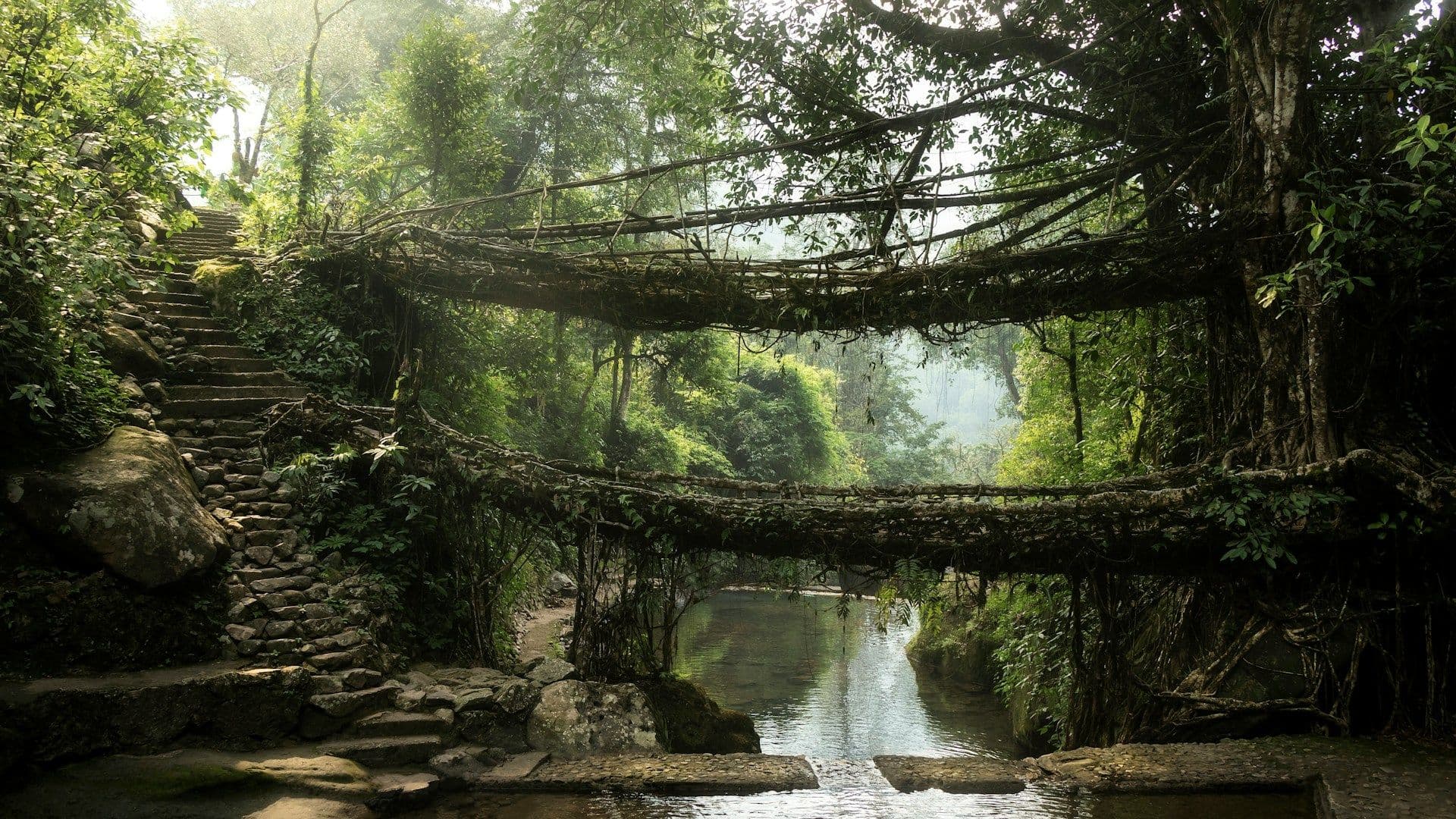
The living root bridges in Meghalaya are naturally grown bridges made from tree roots, mainly found near Cherrapunji. The most famous one is the Double Decker Root Bridge in Nongriat, which requires a trek of around 3,500 steps one way.
If you are planning your full trip, placing this trek correctly inside a structured Meghalaya itinerary makes a huge difference in how manageable it feels.
The 3,500 Step Reality: How Difficult Is the Nongriat Trek
The Nongriat trek is not technically complex, but it is physically demanding. The real challenge is not going down, but coming back up.
You will be dealing with:
- around 3,500 steps one way
- steep stair sections
- humid conditions
- multiple hanging iron bridges along the route
The climb back up is where most people struggle. Many experience heavy leg fatigue or even DOMS the next day, which can affect the rest of the trip.
Weather and humidity also play a major role here. Choosing the best time to visit Meghalaya can make this trek significantly easier and more comfortable.
Living Root Bridge Comparison: Which One Fits Your Travel Style
Feature | Nongriat (Double Decker) | Riwai (Mawlynnong) | Pynursla (Longest) |
| Effort Level | High (hard on knees) | Very Easy | Moderate |
| Step Count | ~3,500 steps | ~100 steps | ~500 steps |
| Time Needed | 6–8 hours | 30 minutes | 2–3 hours |
| Entry Fee | ~₹50 (+ camera charges) | ~₹40 | ~₹50 |
| Crowd Level | Very High | High | Low |
Most travelers assume all root bridges are similar, but the experience varies completely depending on which one you choose.
Double Decker vs Riwai: Which One Should You Choose
If you are looking for a quick and easy experience, Riwai near Mawlynnong is the better option. It requires minimal walking and fits well into relaxed itineraries.
The Double Decker Root Bridge, on the other hand, is about the journey. It demands time, energy, and patience, but rewards you with a far more immersive experience.
By the time you reach the bridge, the effort fades into the background. What stays with you is the sound of flowing water, the quiet surroundings and the feeling that you actually earned your way there.
What Actually Affects Your Experience
As you go through this trek, a few factors play a major role in how it feels.
- Starting early makes the climb significantly easier
- Carrying extra weight makes the return climb harder
- Humidity increases fatigue faster than expected
- The stairs are continuous, not gradual
- Small breaks help more than pushing continuously
These are the details most people overlook.
How to Avoid the Return Climb Burnout
This is where most people struggle the most.
- Start the trek early, ideally around 7:30 AM
- Rent a bamboo stick at the base, it helps reduce pressure on your knees
- Carry only essentials
- Take breaks while climbing back instead of rushing
- Consider staying overnight in Nongriat
This one decision can completely change how the experience feels.
The Rainbow Falls Time Trap Most People Don’t See Coming
Rainbow Falls is often added as an extension to the Double Decker trek, but many travelers misjudge the effort.
It takes an additional 60 to 90 minutes one way beyond Nongriat. Starting this late in the day can lead to returning in low light, which makes the climb much harder.
If you plan to include it, start early or stay overnight. Trying to squeeze it into a late schedule is where most plans go wrong.
Staying in Nongriat: What to Know Before You Go Down
Staying overnight in Nongriat changes the experience completely. It removes the pressure of finishing everything in one day and allows you to explore at a slower pace.
- Homestays typically cost around ₹800 to ₹1500 per night
- Most bookings are handled directly, often via WhatsApp
- Mobile network is nearly unavailable once you descend
Booking in advance is important because you cannot rely on connectivity once the trek begins.
The Blue Lagoon Stop (Worth Knowing)
On the way toward Rainbow Falls, there is a spot often referred to as the Blue Lagoon. It is a great place to pause, cool down and take a break before continuing further.
For many travelers, this becomes an unexpected highlight of the trek.
Mistake That Ruins This Experience
Trying to complete the Nongriat trek as a rushed day trip from Shillong.
It leads to exhaustion, limited time at the bridge and a stressful climb back. The experience starts feeling like a task instead of something you enjoy.
Practical Way to Plan This
If you want to do this properly:
- Stay in Cherrapunji the night before
- Start early for the trek
- Keep this as a dedicated day
- Combine waterfalls on a separate day
If you are planning your route, aligning this with your Meghalaya waterfalls guide helps you avoid overloading your itinerary.
Who This Experience Is Actually For
Ideal For
- Travelers who enjoy trekking
- Slow and immersive travel
- Nature and photography
Not Ideal For
- Luxury-focused trips
- Travelers with knee issues
- Those looking for quick sightseeing
Final Thought
The living root bridges are not just something you visit. They are something you work your way toward.
And that effort is exactly what makes the experience memorable.
Most travelers underestimate this trek and end up planning it poorly. If you want a trip that balances effort, comfort, and proper pacing, choosing a well-structured Meghalaya tour package can make the entire experience far more manageable.