Most travelers come to Meghalaya with a checklist of waterfalls to cover. It feels like the obvious way to explore a place known for endless cascades. But by the end of the trip, many realize they have seen a lot without actually experiencing much.
The problem is not the number of waterfalls. It is not knowing which ones actually matter and how to approach them. In Meghalaya, the experience depends more on timing, patience and route planning than on how many places you visit.
If you’re deciding between destinations, this Meghalaya vs Sikkim guide helps you understand which experience suits you better.
Quick Answer
Meghalaya has some of the most beautiful waterfalls in India, mainly in and around Cherrapunji, Shillong, and the Jaintia Hills. The best way to explore them is to follow a region-based route and focus on fewer waterfalls with better timing.
If you are planning your trip, building a proper Meghalaya itinerary helps avoid unnecessary travel and makes the experience far more relaxed.
The Smart Way to Plan Your Waterfall Route
One of the biggest mistakes travelers make is trying to visit waterfalls randomly. On the map, everything looks close, but in reality distances and terrain make travel slower than expected. This often leads to long days on the road and very little time spent at each stop.
A better approach is to group waterfalls by region:
Cherrapunji Side
- Nohkalikai Falls
- Seven Sisters Falls
- Dainthlen Falls
- Wei Sawdong
Shillong Side
- Elephant Falls
- Spread Eagle Falls
Jaintia Hills Side
- Krang Suri Falls
- Phe Phe Falls
Planning your route this way reduces backtracking and allows you to spend meaningful time at each location instead of rushing through them.
Nohkalikai Falls: Fog Timing and Best View Windows

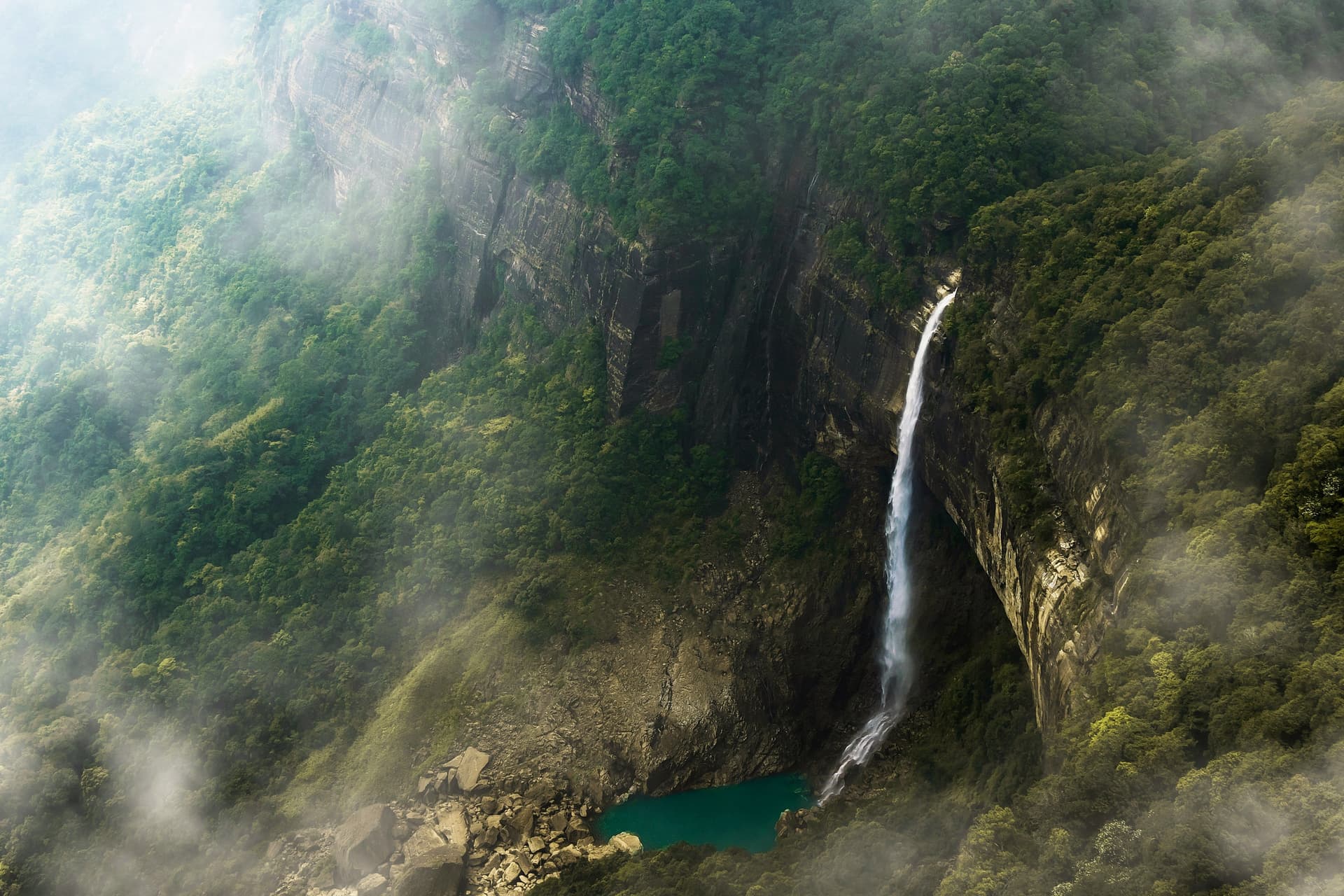
Nohkalikai Falls is the most iconic waterfall in Meghalaya, but the experience here depends heavily on visibility. Many travelers arrive at the viewpoint only to find the entire valley covered in fog, which can feel disappointing at first.
What makes this place special is how quickly that can change. Waiting for even fifteen to twenty minutes can completely transform the view, revealing the dramatic drop and the blue pool below. Early mornings usually offer better chances of clear visibility, making timing an important factor.
The entry fee is minimal, but the real value here comes from patience. Visibility changes quickly here, which is why choosing the best time to visit Meghalaya makes a big difference.
Wei Sawdong Falls: The 300 Step Descent and Safety Reality

Wei Sawdong is often described as a hidden gem, but reaching it requires effort. The descent involves steep steps that can be slippery, especially in humid conditions, and the climb back up can feel demanding.
Because of this, it is not suitable for young children or travelers who prefer easy access spots. However, those who make the effort are rewarded with one of the most visually striking waterfalls in Meghalaya, with its layered structure and clear water.
Swimming is generally restricted for safety reasons, and in areas where access is allowed, life jackets are required.
Krang Suri Falls: The One You Actually Experience
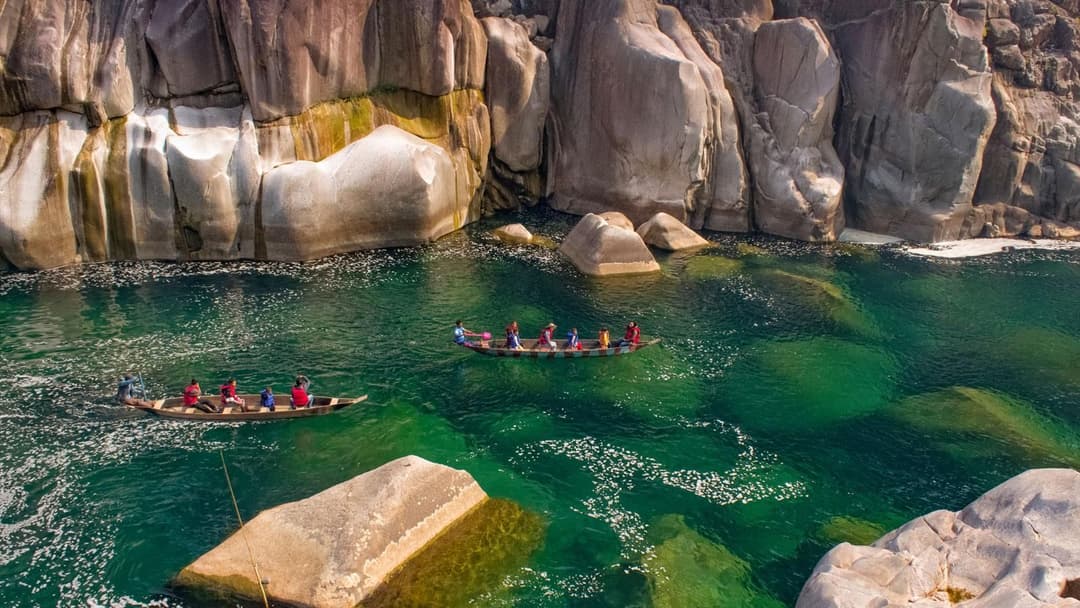
Krang Suri offers a very different experience compared to most waterfalls in Meghalaya. Instead of just viewing it from a distance, you can get close to the water and spend time around it.
The first thing that stands out is the color of the water, which appears almost unreal when you see it up close. The environment feels more immersive, allowing you to slow down and actually enjoy the setting.
Swimming is allowed in designated areas, but life jackets are mandatory. Since reaching this location takes time, it is best planned as a dedicated visit rather than part of a rushed schedule.
Seven Sisters Falls: Why Timing Matters More Than the Place

Seven Sisters Falls changes dramatically depending on the season. During monsoon, it becomes a powerful multi-stream waterfall that spreads across a wide cliff, creating a striking visual.
Outside of monsoon, the flow reduces significantly, which often leads to disappointment for travelers who visit without considering timing. This makes it a place where when you visit matters more than simply including it in your plan.
Phe Phe Falls: The One Most People Miss

Phe Phe Falls in Jaintia Hills is still relatively less explored, which makes it ideal for travelers looking for a quieter experience. Reaching it involves a moderate trek, but that effort helps preserve its natural setting.
The environment here feels calmer and less crowded, with clear streams and a more immersive atmosphere. It is not as easily accessible as other waterfalls, but that is exactly what makes it rewarding.
Meghalaya Waterfall Comparison (Quick Planning Table)
If you are unsure which waterfalls fit your travel style, this comparison makes it easier to decide.
Waterfall | Region | Difficulty | Best For |
| Nohkalikai | Cherrapunji | Easy | Dramatic views |
| Wei Sawdong | Cherrapunji | Hard | Tiered blue pools |
| Krang Suri | Jaintia Hills | Moderate | Swimming experience |
| Seven Sisters | Cherrapunji | Easy | Monsoon views |
| Phe Phe | Jaintia Hills | Moderate | Adventure and fewer crowds |
Most travelers end up enjoying two or three waterfalls properly rather than rushing through all of them.
What Actually Affects Your Experience
As you explore multiple waterfalls, certain patterns become clear. These details may seem small, but they have a big impact on how your trip feels.
- Entry fees are usually around ₹50 per stop
- Life jackets are mandatory at places like Krang Suri
- Fog can block views and then clear suddenly
- Some areas feel quieter on Sundays
- Travel times, especially to Jaintia Hills, are longer than expected
Being aware of these factors helps you plan better and avoid unnecessary frustration.
Mistake That Ruins Most Trips
Trying to cover Shillong, Cherrapunji, Dawki and multiple waterfalls in a short trip often leads to constant travel and very little actual experience. The journey becomes rushed instead of enjoyable.
Practical Hack That Changes Everything
Starting early from Shillong can completely improve your experience:
- Begin around 7 AM
- Cover the Cherrapunji side in one route
- Spend more time at fewer waterfalls
- Keep buffer time for weather changes
This simple shift makes the trip feel smoother and less exhausting.
Meghalaya Waterfalls in Winter
Winter offers a different experience. While the waterfalls are not at their strongest, the water becomes clearer and the surroundings feel calmer.
For travelers who prefer better visibility and fewer crowds, this can be a more enjoyable time to visit.
Who This Experience Is Actually For
This type of trip suits travelers who enjoy nature and do not mind some level of physical activity.
Ideal For
- First time Meghalaya travelers
- Nature lovers
- Photographers
Not Ideal For
- Luxury focused travel
- Travelers who prefer minimal walking
Final Thought
Meghalaya is not a destination where you rush from one place to another. It is a place where the experience unfolds slowly, shaped by timing, weather and how present you are.
The waterfalls are not just places to visit. They are experiences that change depending on how you approach them.
Most travelers struggle with planning routes and deciding how much to cover in a day. Structuring the trip properly can make the difference between a rushed itinerary and a memorable experience.
If you’re unsure how to combine all this into a smooth plan, a structured Meghalaya trip makes the experience far more relaxed.