Your first real memory of South Korea will probably not be a temple or a palace. It will be something you ate.
Maybe it is the sound of pork belly sizzling on a charcoal grill at a table you are sharing with strangers who have somehow become friends by the second round of soju. Or the surprise of a ₹300 convenience store meal at midnight that tastes better than it has any right to. Or the moment you realize that the simple bowl of bibimbap you ordered on a whim is one of the best things you have eaten all year.
Korean food is not just fuel. It is the experience itself.
This guide covers everything an Indian traveler needs to know — what to order, what to avoid if you are vegetarian, how much things cost in rupees, where to eat by city, and the specific hidden pitfalls (anchovy broth, we are looking at you) that catch most Indian travelers off guard.
Quick Reference: Must-Try Dishes & Prices in ₹
Dish | What It Is | Where to Find | Price (₹) |
| Samgyeopsal | Grilled pork belly BBQ | BBQ restaurants everywhere | ₹1,200–₹2,200/person |
| Bibimbap | Rice bowl with veg, egg & gochujang | Any Korean restaurant | ₹450–₹900 |
| Tteokbokki | Spicy chewy rice cakes | Street stalls, pojangmacha | ₹200–₹350 |
| Sundubu jjigae | Soft tofu stew, bubbling hot | Local restaurants | ₹550–₹950 |
| Japchae | Glass noodles stir-fried with veg | Restaurants & banchan | ₹400–₹800 |
| Hotteok | Sweet filled pancake | Street stalls | ₹130–₹200 |
| Korean corn dog | Mozzarella-filled, deep-fried | Street stalls | ₹230–₹380 |
| Gyeran ppang | Egg bread, warm & sweet | Street stalls | ₹130–₹180 |
| Convenience store meal | Kimbap + ramen + drink | GS25, CU, 7-Eleven | ₹300–₹600 |
| Chimaek (fried chicken + beer) | Crispy Korean fried chicken | Chicken restaurants | ₹900–₹1,600/person |
Must-Try Korean Dishes Explained
Kimchi (김치)
Every meal in South Korea comes with kimchi. It is not optional — it is the foundation. Fermented napa cabbage with chili, garlic, ginger, and salted shrimp, kimchi tastes sharper and more complex than most visitors expect. It ranges from fresh and mild (geotjeori) to deeply aged and funky.
For Indian travelers: Kimchi normally contains salted shrimp or fish sauce — it is not vegetarian in most restaurants. Vegan kimchi exists at temple food restaurants and some dedicated vegan eateries. Ask specifically: "이 김치는 해산물이 없나요?" ("Does this kimchi have no seafood?")
What makes it worth trying: Korean meals are built around kimchi the way Indian meals are built around pickle and chutneys — it is a condiment, a side dish, and a flavour anchor all at once. Give it a fair chance on day one.
Bibimbap (비빔밥)
A bowl of rice topped with seasoned vegetables, a fried or raw egg, optional beef, and a spoonful of gochujang (fermented red pepper paste). Everything gets mixed together before eating. The result is earthy, slightly spicy, and deeply satisfying.
For vegetarians: Bibimbap is one of the safest dishes to order. Ask for no meat: "고기 빼주세요" ("Please remove the meat"). The vegetable toppings — spinach, bean sprouts, mushrooms, julienned carrots, bracken fern — are what make bibimbap special.
Best versions: Jeonju bibimbap (from Jeonju, the dish's home city) is considered the gold standard. In Seoul, look for restaurants specifically advertising Jeonju-style bibimbap. Cost: ₹500–₹900 at a proper restaurant.
Tteokbokki (떡볶이)
Chewy cylindrical rice cakes cooked in a deeply spiced red sauce made from gochujang and gochugaru (chili flakes). The sauce is sweet, spicy, and slightly sticky — addictive from the first bite. Commonly found at street stalls everywhere, especially in Myeongdong, Hongdae, and Gwangjang Market.
Variations to try:
- Rose tteokbokki — the red sauce mixed with cream, creating a milder pink sauce; widely popular and excellent for spice-sensitive eaters
- Cheese tteokbokki — a thick layer of melted mozzarella on top
- Soupy tteokbokki (jeuksuk tteokbokki) — a broth-based version, less sticky, often served with fish cake and ramen noodles added
Watch out: Standard tteokbokki sauce is made with anchovy broth as a base. Technically not vegetarian — see the vegetarian section below.
Sundubu Jjigae (순두부찌개)
Soft silken tofu in a fiery red broth with vegetables, mushrooms, and usually egg and seafood or pork. Served still bubbling in a stone pot with a bowl of plain rice and an array of banchan side dishes. One of the most comforting meals in Korean cuisine — especially on cold days.
For vegetarians: Order haemul (seafood) or gogi (meat) version out — ask for vegetable-only: "채소만 넣어주세요". Note that the broth base often still contains anchovy or dashima (kelp) — see the vegetarian section for how to navigate this.
Japchae (잡채)
Glass noodles (made from sweet potato starch) stir-fried with spinach, carrots, mushrooms, onion, and sesame oil. Slightly sweet, chewy, and lighter than most Korean dishes. Often served as a banchan (side dish) at BBQ restaurants or as a standalone dish. One of the most naturally vegetarian-friendly dishes in Korean cuisine.
Samgyetang (삼계탕)
A whole small chicken stuffed with sticky rice, ginseng root, jujubes, and chestnuts, slow-simmered in a clear, deeply nourishing broth. A complete meal in one earthenware pot. Popular year-round but especially consumed on the three hottest days of summer (Boknal days) — a Korean tradition of eating hot food to combat the heat.
Best in Seoul: Tosokchon Samgyetang in Gyeongbokgung neighbourhood is one of Seoul's most famous restaurants for this dish, and consistently has a queue. Arrive before 11 AM or after 2 PM to minimise wait. Price: ₹1,000–₹1,800.
Chimaek (치맥) — Fried Chicken + Beer
Chimaek is not a dish — it is a cultural institution. Korean fried chicken is double-fried for an exceptionally crispy batter, then served in several styles: plain (huraideu), soy-garlic glazed (gangjung), or spicy (yangnyeom). Eaten with beer (maekju) — hence "chimaek" — and pickled radish on the side.
Korean fried chicken restaurants (chicken chains like BBQ Chicken, Kyochon, Nene Chicken) are everywhere across Seoul, Busan, and Jeju. Delivery is also massive — you can order to most accommodation via the Baemin or Coupang Eats apps.
For Indians: Soy-garlic flavour (gangjung) is the mildest and arguably most universally loved option. Spicy (yangnyeom) is genuinely spicy — comparable to a medium-hot Indian dish.
Korean BBQ: How It Works & What to Order
Korean BBQ (gogigui) is the most iconic South Korean dining experience — and for good reason. You grill your own meat at a charcoal or gas grill built into the centre of your table, and eat it wrapped in perilla leaves or lettuce with kimchi, roasted garlic, and a variety of dipping sauces.
What to Order
Samgyeopsal (삼겹살) — Thick pork belly slices, the standard choice. Fatty, flavourful, and slightly smoky from the grill.
Chadolbaegi (차돌박이) — Very thin sliced beef brisket that cooks in seconds on a hot grill. Lighter and leaner than pork belly.
Galbi (갈비) — Beef short ribs, marinated in a sweet soy and sesame sauce. Slightly more expensive but deeply flavourful.
Dwaeji Galbi (돼지갈비) — Pork ribs marinated the same way as beef galbi. Cheaper and excellent.
Dakgalbi (닭갈비) — Spicy stir-fried chicken with rice cakes and vegetables, cooked on a flat griddle at your table. A great alternative to standard BBQ and often cheaper.
How Korean BBQ Works
- You are seated at a table with a grill built in (charcoal or gas depending on the restaurant)
- Banchan (free side dishes) arrive immediately — kimchi, pickled vegetables, sliced garlic, lettuce/perilla leaves, dipping sauces
- You order your meat cuts — typically 200g portions per person
- The server (or you) grills the meat. In most restaurants staff will grill for you; in some you grill yourself
- You eat the meat wrapped in a lettuce or perilla leaf with a small smear of ssamjang (thick soy-chili paste), a slice of garlic, and kimchi
- Doenjang jjigae (fermented soybean paste stew) is often included or ordered as an accompaniment
Budget: Plan for ₹1,200–₹2,200 per person for a full BBQ meal including meat, banchan, rice, and stew. Popular tourist-area restaurants (Myeongdong, Insadong) tend to be 20–30% more expensive than the same meal in a local neighbourhood.
Best Areas for Korean BBQ
- Mapo-gu (Mapo district), Seoul — known for high-quality samgyeopsal restaurants; popular with locals
- Hongdae & Sinchon — good options at student-friendly prices
- Seomyeon, Busan — excellent BBQ restaurants that feel more local and less touristy than Seoul's tourist zones
- Anywhere with a queue — in South Korea, a queue outside a BBQ restaurant is always a reliable quality signal
Korean Street Food: What to Eat & Where
Korean street food is one of the most accessible and affordable parts of the entire trip. Most items cost ₹130–₹400 and can be eaten while walking.
The Essential Street Foods
Tteokbokki (떡볶이) — Already covered above. The single most popular street food in Korea. ₹200–₹350 per portion.
Hotteok (호떡) — A thick, doughy pancake filled with a mixture of brown sugar, cinnamon, and crushed peanuts. Pressed flat on a griddle until the outside is crisp and caramelised. One of the best street foods for cold weather. ₹130–₹200.
Korean Corn Dog (핫도그) — Nothing like an American corn dog. A skewered mozzarella stick (or half mozzarella, half sausage) dipped in batter, rolled in panko or crushed ramen chips, deep-fried, and served with your choice of toppings and sauces. Stretchy cheese pull optional but enthusiastically expected. ₹230–₹380.
Gyeran Ppang (계란빵) — A small oval-shaped bread baked with a whole egg inside, slightly sweet, warm. One of Seoul's most iconic winter street foods. ₹130–₹180.
Odeng / Eomuk (어묵) — Fish cake skewers simmered in a light savory broth, sold from large pots at street stalls. The broth is given for free in a small cup — slightly salty and deeply warming. ₹80–₹160 per skewer. Note: fish cake is made from fish paste — not vegetarian.
Bungeoppang (붕어빵) — Fish-shaped waffle pastry filled with sweet red bean paste (or cream or custard in modern versions). A classic winter street food. ₹100–₹180 for two pieces.
Twigim (튀김) — Korean-style deep-fried items: vegetables, squid, sweet potato, tofu. Sold at the same carts as tteokbokki, often eaten together. The vegetable and sweet potato versions are vegetarian. ₹150–₹300 per piece.
Best Street Food Areas
Myeongdong (Seoul) — The most tourist-focused street food area in Seoul. Extremely high density of vendors but slightly higher prices. Best for trying everything in one place. Active from 6 PM onwards.
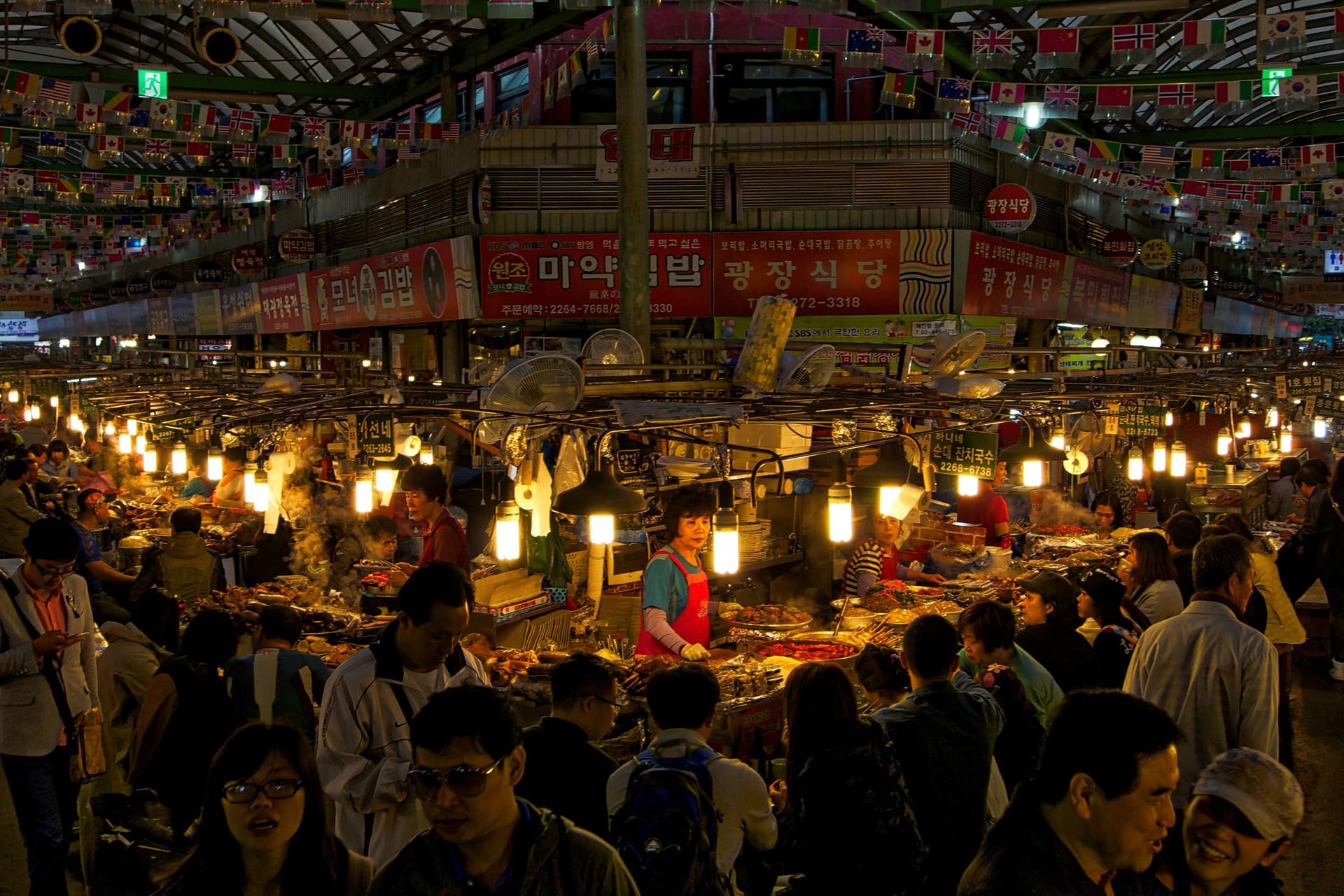
Gwangjang Market (Seoul) — Seoul's oldest traditional market. More authentic than Myeongdong, popular with locals. Famous for bindaetteok (mung bean pancakes), fresh mayak kimbap (sesame mini rolls), and yukhoe (raw beef — skip if not your thing). Open from early morning.
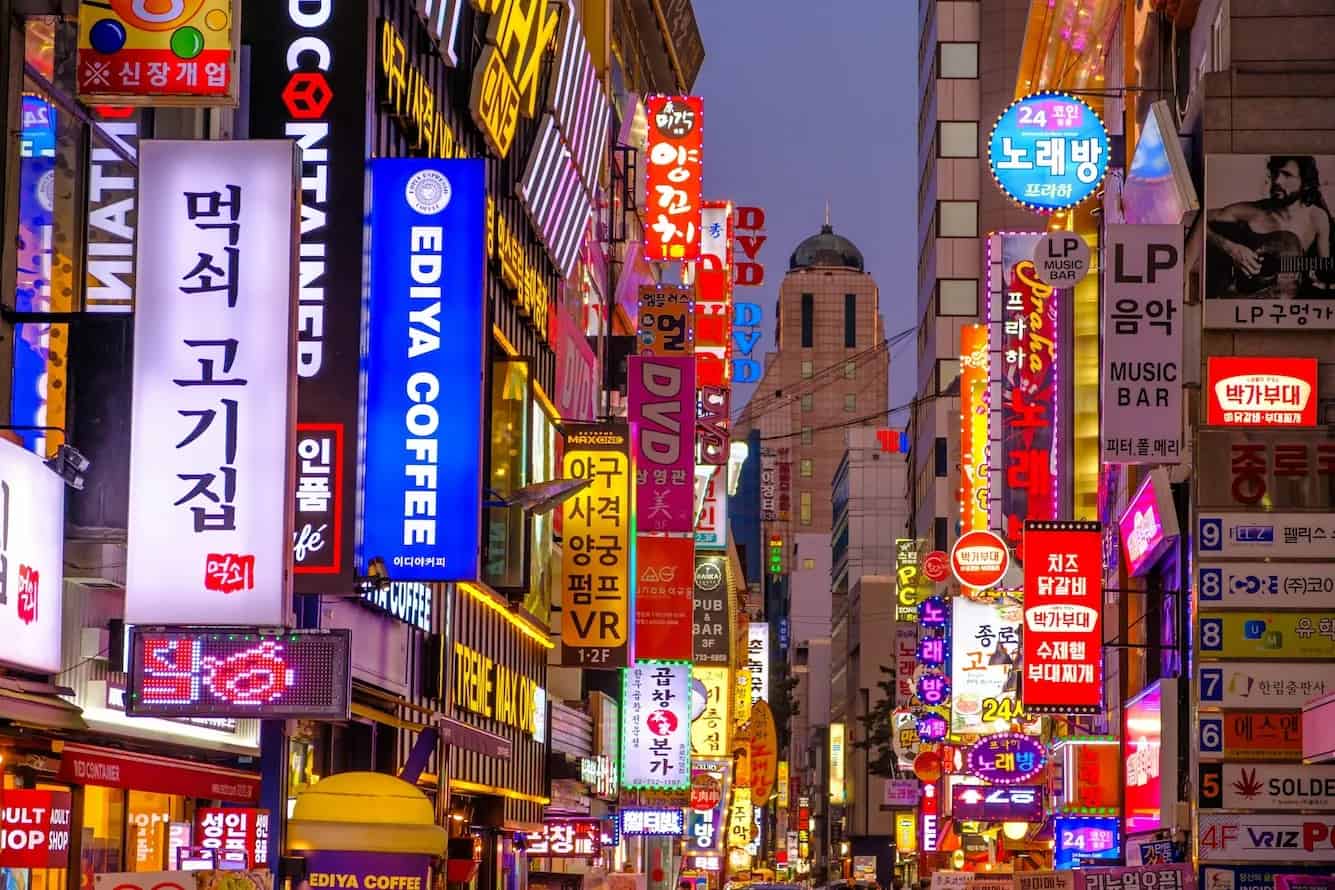
Hongdae Street (Seoul) — Late-night street food culture. Vendors set up from 8 PM and run until 2–3 AM on weekends. Good mix of trendy new items and classic snacks. Popular with young Koreans.
Nampo-dong, Busan — Busan's street food corridor. Famous for ssiat hotteok (hotteok filled with seeds and honey rather than sugar) — considered the original version of the dish.
Dongmun Market, Jeju — The main traditional market in Jeju City. Specialises in local Jeju ingredients: hallabong tangerine sweets, black sesame snacks, abalone porridge, and Jeju black pork.
Convenience Store Food: The Complete Hack Guide
South Korea's convenience stores — GS25, CU, 7-Eleven, Emart24 — are not just for snacks. They are a legitimate and genuinely enjoyable part of the travel food experience. Every store has a microwave, hot water dispenser, and seating area.
The Best Convenience Store Items
Triangle Kimbap (삼각김밥) — Rice balls in triangular packaging, filled with tuna mayo, spicy pork, kimchi, or vegetables. ₹100–₹160 per piece. Fast, filling, and surprisingly good.
Cup Ramen — Dozens of varieties. The most popular brands are Shin Ramyun (spicy beef — not vegetarian), Buldak series (extremely spicy), and Samyang Carbonara (a milder, creamy option). Use the hot water dispenser in store. ₹130–₹250 per cup.
Egg Sandwich / Baguette Sandwich — Korean convenience store sandwiches are far better than their Western equivalents. Egg salad sandwiches in particular are a cult favourite. ₹200–₹350.
Dosirak (도시락) — Pre-packaged meals with rice, protein, and side dishes. Microwaveable. Some are surprisingly good — look for ones with rice, bulgogi or tofu, and vegetables. ₹350–₹550.
Korean Fried Chicken Strips — GS25 and CU both sell single-serve fried chicken at the counter. Genuinely crispy, hot, and around ₹200–₹300 per serving.
The Famous "Mark Meal" Ramen Hack
This went viral on social media and is worth trying exactly once:
- Buy Buldak Carbonara ramen (the pink packet)
- Add one tuna mayo triangle kimbap, torn into pieces
- Add one slice of string cheese
- Prepare the ramen, stir in the kimbap and cheese
- Microwave for 30 seconds
Total cost: under ₩5,000 (~₹310). Tastes significantly better than it sounds.
Convenience Store Drinks Worth Trying
- Banana Milk (바나나우유) — An iconic Korean drink in a round yellow bottle. Sweet, milky, nostalgic. ₹130–₹160.
- Sikhye (식혜) — Traditional Korean sweet rice punch. Lightly sweet with floating rice grains. Canned, available at every store. ₹130–₹180.
- Barley Tea (보리차) — Nutty, naturally caffeine-free, served cold. Very popular with locals. ₹130–₹160.
- Georgia Coffee — The canned coffee brand that dominates Korean vending machines. The original "Georgia Max Coffee" is rich and sweet; the black coffee version is strong. ₹130–₹180.
Vegetarian Survival Guide for Indian Travelers
This section is the most important part of this guide for Indian travelers. Korean cuisine is heavily meat and seafood-based — but it is far more navigable than most guides suggest, if you know the specific issues in advance.
The Hidden Anchovy Problem
This catches almost every Indian vegetarian off guard.
Anchovy broth (myeolchi yuksu / 멸치육수) is the base of most Korean soups, stews, noodle broths, and even tteokbokki sauce. It is used the way Indians use water when cooking dals — it is invisible as an ingredient but present in almost everything.
Dishes that commonly contain anchovy broth:
- Most soups and jjigae (stews)
- Tteokbokki sauce
- Guk-bap (rice soup)
- Naengmyeon (cold noodle) broth
- Doenjang jjigae (fermented soybean stew)
- Many banchan (side dish) preparations
How to ask: "멸치 육수 없이 만들어 주실 수 있나요?" ("Can you make this without anchovy broth?") — Screenshot this and show it to restaurant staff.
The Kimchi Issue
Most commercially made kimchi in South Korea contains salted shrimp (saeujeot) or fish sauce (aekjeot). This makes it technically not vegetarian. At standard restaurants, assume kimchi is not vegetarian unless specifically told otherwise.
Where to find vegan kimchi: Temple food restaurants, dedicated vegan restaurants in Seoul (Itaewon, Insadong, Mapo areas), and some modern health-food cafés.
What Indian Vegetarians Can Eat Comfortably
Temple Food (사찰 음식 / Sachal Eumsik) — Completely plant-based, no meat, no seafood, and usually no garlic or onion (in keeping with Buddhist precepts). The flavours are subtle and deeply balanced. Balwoo Gongyang (발우공양) in Seoul's Insadong area is the most famous temple food restaurant — book in advance. A full meal costs ₹2,500–₹4,500.
Bibimbap without meat — Widely available. Say "고기 빼주세요" ("Please remove the meat"). The vegetable base of bibimbap is naturally filling and satisfying.
Japchae — Glass noodles with vegetables. Often naturally vegetarian in cheaper restaurants when ordered as banchan.
Twigim (vegetable varieties) — Deep-fried sweet potato, mushroom, and vegetable twigim are vegetarian. Confirm before ordering.
Dubu jorim (두부조림) — Braised tofu in a spicy sauce. Available at many restaurants and in banchan. Check that the braising sauce does not contain anchovy.
Convenience store staples — Vegetable triangle kimbap, plain rice, boiled corn, baked sweet potato, and plain banana milk are reliably vegetarian.
Juk (죽) — Korean porridge — Vegetable or mushroom juk at dedicated porridge restaurants (jukjip) is a good vegetarian option, often available at breakfast.
Essential Korean Phrases for Vegetarians
What to Say | Korean | When to Use |
| Please remove the meat | 고기 빼주세요 | Bibimbap, noodles, stir-fries |
| No meat, no fish, no seafood | 고기, 생선, 해산물 없이 주세요 | Any restaurant |
| Is there anchovy broth? | 멸치 육수 들어가나요? | Soups, stews, tteokbokki |
| I am vegetarian | 저는 채식주의자예요 | General explanation |
| No eggs either | 계란도 빼주세요 | If you are vegan |
Screenshot these before your trip and keep them accessible on your phone.
The HappyCow App
Download HappyCow before arriving in South Korea. It lists vegetarian and vegan restaurants filtered by city and neighbourhood. Seoul has a growing number of dedicated vegan restaurants — especially in Itaewon, Insadong, Hongdae, and the university areas.
What to Eat by City
Seoul
Seoul is South Korea's most diverse food city — every type of Korean food is available, plus international options in every price range.
Must-eat in Seoul specifically:
- Gwangjang Market bindaetteok (mung bean pancakes) — crispy outside, soft inside, eaten with makgeolli rice wine
- Noryangjin Fish Market — buy fresh seafood from wholesale stalls and have it prepared upstairs
- Tosokchon Samgyetang — the best ginseng chicken soup in the city
- Myeongdong street food corridor — the full range of Korean street food in one place
- Hongdae late-night street food — active until 3–4 AM on weekends
Busan
Busan's food identity is built almost entirely around seafood. The city sits on the ocean and the gap in quality between Busan's fresh seafood and Seoul's shows.
Must-eat in Busan specifically:
- Jagalchi Fish Market (자갈치시장) — South Korea's largest fish market. Buy live seafood from the ground floor and have it cleaned and served as hweh (raw fish) at the restaurants on the floors above. Arrive by 8–9 AM for the widest selection.
- Milmyeon (밀면) — Busan's signature cold wheat noodle dish, served in a clean, slightly spiced broth with a half-boiled egg and cucumber. Lighter and more refreshing than Seoul ramen. ₹550–₹900.
- Ssiat Hotteok — The original version of the sweet pancake, filled with black sesame seeds, sunflower seeds, and pumpkin seeds rather than plain sugar. The Nampo-dong stall that first created it (around Gukje Market) is legendary.
- Haeundae raw fish restaurants — Restaurants near Haeundae Beach specialising in fresh local fish platters.
Jeju Island
Jeju's food culture is slower, more ingredient-focused, and built around the island's unique marine and agricultural products.
Must-eat in Jeju specifically:
- Jeju black pork (흑돼지) — The island's own breed of pig, smaller and darker than mainland pork. Grilled over charcoal, the flavour is noticeably richer. Restaurants throughout Jeju City and Seogwipo.
- Abalone porridge (전복죽) — Creamy rice porridge with sliced fresh abalone and sesame oil. A genuine delicacy. ₹1,600–₹3,200 per bowl at a proper jeonbok-juk restaurant.
- Haemultang (해물탕) — Jeju seafood hotpot with enormous portions of shellfish, prawns, and squid in a rich spicy broth. Shared between 2–4 people. ₹2,200–₹4,000 per pot.
- Hallabong (한라봉) — Jeju's famous tangerine-orange hybrid fruit. In season January–March; available year-round in juice, jam, chocolate, and candy form.
Most travelers who plan at least a few food stops in advance enjoy South Korea more, without wasting time searching for options. If you want to explore these areas efficiently and plan your routes better, this detailed Seoul travel guide will help you navigate food spots and neighborhoods with ease.
Best Food Markets in South Korea
Gwangjang Market (Seoul) 광장시장
Seoul's oldest traditional market, established in 1905. Located in Jongno-gu near Jongno 5-ga station. The food section runs through the centre — stalls line both sides of a covered arcade, each selling a speciality.
What to eat here:
- Bindaetteok (mung bean pancakes) — ₹600–₹900 per serving
- Mayak kimbap (sesame-coated mini rice rolls) — ₹300–₹500
- Yukhoe (raw beef seasoned with sesame, pear, and egg yolk) — ₹900–₹1,500
Best time: 10 AM–2 PM for the widest stall selection and freshest food. The market slows in the afternoon.
Myeongdong Night Market (Seoul) 명동
Not a traditional market — more of a pedestrianised shopping street that transforms into a street food corridor from 5 PM onwards. Hundreds of vendors line the pavements with everything from tteokbokki to lobster tails.
Best for: First-time visitors who want to try everything in one place. Prices are slightly higher than local markets.
Namdaemun Market (Seoul) 남대문시장
One of South Korea's largest traditional markets, open 24 hours. More focused on goods and wholesale than food, but the surrounding streets have excellent local restaurants. Famous for kalguksu (knife-cut noodle soup) at very low prices. ₹400–₹700 per bowl.
Jagalchi Fish Market (Busan) 자갈치시장
South Korea's largest seafood market, on Busan's waterfront. The ground floor is the wholesale fish auction and retail area — live fish, shellfish, sea cucumbers, and varieties you will not recognize. The upper floors have restaurants where you can eat what you bought below.
How it works: Pick your seafood from the retail vendors on the ground floor → agree on a price → they clean and prepare it → take it upstairs to one of the restaurants who will serve it as hweh (raw fish) for a small service fee. Cost: ₹800–₹2,500 per person depending on what you select.
Dongmun Market (Jeju) 동문시장
The main traditional market in Jeju City. Combines elements of a traditional market, fresh produce market, and street food hub. Best for Jeju-specific items: hallabong tangerines, black sesame products, dried seafood, and the famous abalone porridge stalls.
Korean Café Culture: Beyond Just Coffee
South Korea has one of the most developed café cultures in the world — and Korean cafés are worth visiting even if you do not drink coffee.
What Makes Korean Cafés Different
Many Korean cafés are designed as visual and experiential destinations. Some occupy converted warehouses, renovated hanok (traditional houses), rooftop spaces, or themed concept spaces. The food and drink are secondary to the atmosphere in some places — ordering a matcha latte is partially a ticket to spend an hour in a beautiful space.
Areas for Café Hopping
Seongsu-dong (Seoul) — South Korea's most hyped café neighbourhood. Former industrial warehouses converted into specialty coffee shops, concept stores, and gallery cafés. The aesthetic is raw concrete + warm light + expensive lattes. New cafés open here every month.
Insadong (Seoul) — Traditional atmosphere. Tea houses serving traditional Korean teas (omija, barley, chrysanthemum) in renovated hanok buildings. More culturally interesting than Seongsu for first-time visitors.
Hongdae (Seoul) — Younger, more experimental café culture. Themed cafés (some with cats, puppies, or specific K-pop themes), late-night options, and very Instagram-driven.
Gamcheon, Busan — Small cafés tucked into the colourful hillside neighbourhood. Quieter and more intimate than Seoul's café scenes.
Drinks and Desserts Worth Ordering
- Dalgona coffee — Whipped instant coffee foam on top of milk. The drink that went viral globally. Available at most cafés. ₹350–₹600.
- Bingsu (빙수) — Korean shaved ice dessert topped with red bean paste, sweetened condensed milk, fresh fruit, and various toppings. A full serving is enormous and meant to share. ₹900–₹2,200. Injeolmi bingsu (coated in roasted soybean powder) is particularly popular.
- Injeolmi toast — A thick toast sandwich filled with injeolmi rice cake pieces, red bean, and cream. Rich and filling. ₹600–₹1,000.
- Egg tart (에그타르트) — Korean bakeries do an excellent version — flaky pastry with a creamy egg custard filling. ₹180–₹300 each.
Food Budget Guide: How Much to Spend Per Day
Food Style | Daily Budget | What You Get |
| Convenience store meals only | ₹600–₹1,000 | Triangle kimbap, cup ramen, drinks — fully adequate for busy travel days |
| Street food + one sit-down meal | ₹1,200–₹2,000 | Street snacks throughout the day + one bibimbap or jjigae meal |
| Mix of restaurants + street food | ₹2,000–₹3,500 | Two proper restaurant meals + street food snacking |
| Korean BBQ dinner + normal meals | ₹3,000–₹5,000 | Full BBQ experience one evening + regular meals otherwise |
| High-end restaurants + BBQ | ₹5,000–₹10,000+ | Quality sit-down Korean cuisine with choice cuts |
The 3-meal structure most Indian travelers settle into: Convenience store breakfast (₹300–₹500) + street food or fast lunch (₹400–₹800) + sit-down Korean dinner (₹800–₹2,000) = ₹1,500–₹3,300 per day total. Very manageable.
Essential Food Tips for First-Time Visitors
Banchan is free and unlimited. The small side dishes that arrive before your meal — kimchi, pickled vegetables, steamed egg, spinach — are complimentary and can be refilled by asking. Eating banchan is not optional — it is part of the meal structure.
Shared meals are the default. Korean dining is communal. Dishes are often ordered to share between the table, not as individual portions. When in doubt, order 2–3 dishes for every 2 people and share.
Carry some cash for markets and stalls. Most restaurants in Seoul accept cards. Street food vendors and smaller traditional market stalls are frequently cash only. Keep ₩20,000–₩30,000 (~₹1,250–₹1,900) in cash for food-focused days.
Spice levels are real. Korean food at its standard preparation is genuinely spicy — at least medium-heat Indian equivalent. "Deol mage haejuseyo (덜 맵게 해주세요)" — "Please make it less spicy" — is useful in restaurants. Street food spice levels cannot be adjusted.
Eat at places with queues. Korean diners are discerning and time-poor. A queue outside a restaurant means the food is worth the wait. Follow the queue.
Water is free and always available. Korean restaurants bring cold water (or barley tea) without being asked, and it is always free. This is standard across price points.
Written by the Desh Videsh Travels team · Specialists in South Korea tours from India
Explore South Korea tour packages →