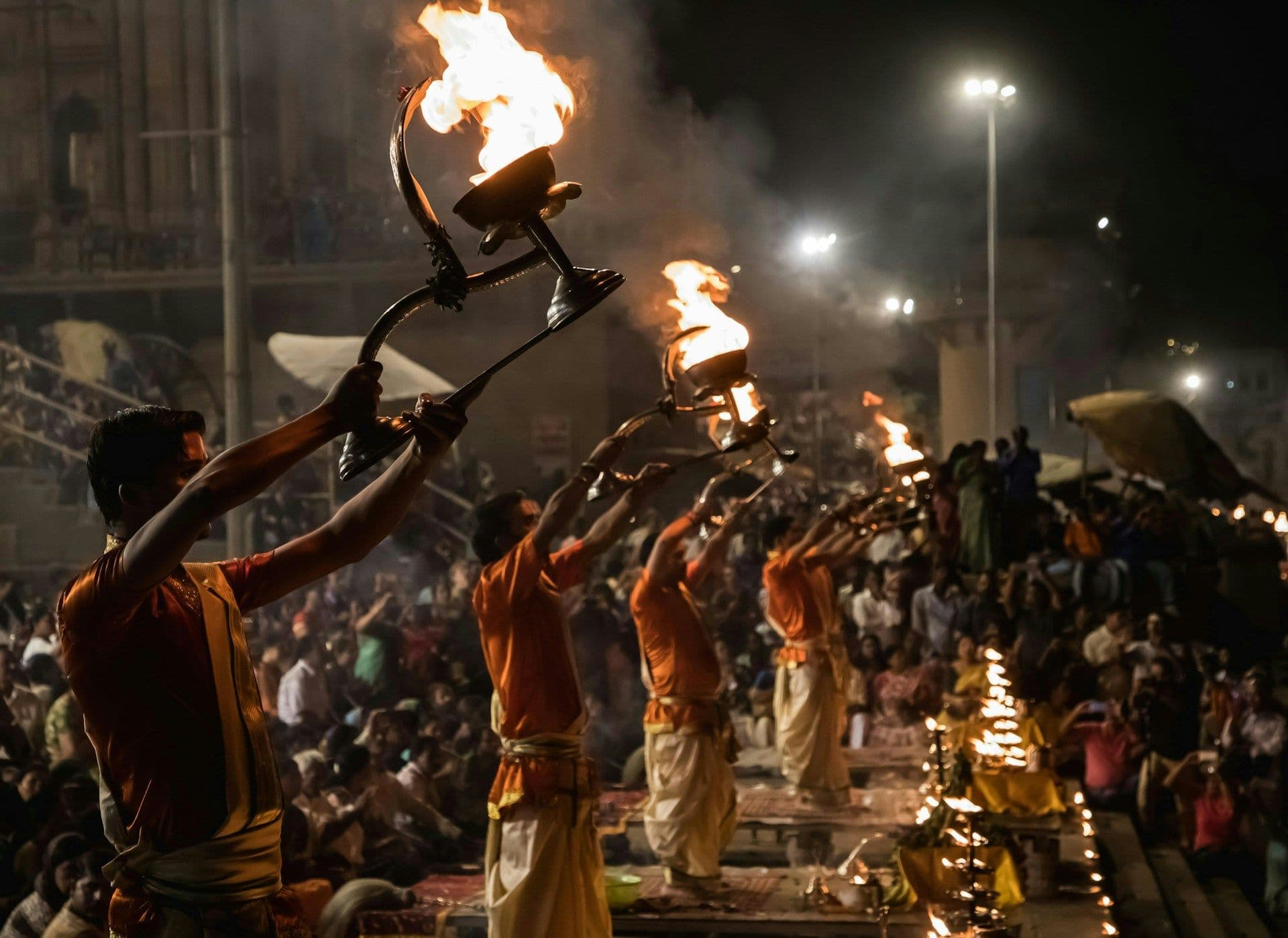
The ghats are where Varanasi feels most alive. From sunrise boat rides and morning prayers to evening Ganga Aarti and everyday life along the river, the waterfront offers a very different experience at different times of the day.
But Varanasi's ghats are not all the same. Dashashwamedh Ghat is the main center for Ganga Aarti, Assi Ghat is known for its early-morning atmosphere, Manikarnika Ghat is associated with cremation traditions, while ghats such as Kedar, Man Mandir, Tulsi and Lalita offer different aspects of the city's religious and cultural heritage.
This guide covers the most important Varanasi ghats, what each is known for, how to explore them on foot or boat and a practical south-to-north walking route to help you experience the riverfront without rushing through it.
If you are planning the wider trip, our Varanasi Travel Guide covers where to stay, how to reach the city, places to visit, trip costs and itinerary planning.
How Many Ghats Are There in Varanasi?
Varanasi has dozens of ghats along the Ganges, stretching across the city's riverfront. Each ghat has its own history, religious significance and character, but not all of them are equally relevant to a first-time visitor.
You do not need to visit every ghat to experience the riverfront. A carefully chosen group of ghats can give you a much better sense of Varanasi, especially when you combine walking with a boat ride.
The main ghats to know for a first trip include:
- Dashashwamedh Ghat: The main setting for the evening Ganga Aarti and one of the busiest central ghats.
- Assi Ghat: A popular starting point for sunrise experiences, morning walks and Subah-e-Banaras.
- Manikarnika Ghat: One of Varanasi's most important cremation ghats and a place that requires particular respect and sensitivity.
- Man Mandir Ghat: Known for its historic architecture and connection with the Man Mandir Palace and Jantar Mantar.
- Scindia Ghat: Notable for its partially submerged temple and distinctive riverfront setting.
- Kedar Ghat: Associated with Kedareshwar Temple and an important stop for visitors interested in Varanasi's religious heritage.
- Tulsi Ghat: A quieter southern ghat associated with the poet Tulsidas and the cultural history of Varanasi.
- Chet Singh Ghat: Known for its historic fortified structure and location along the southern-central riverfront.
- Lalita Ghat: A central ghat close to the Kashi Vishwanath area and known for the Nepali Temple.
For most visitors, the value is not in counting how many ghats they can cover. It is in understanding how the riverfront changes as you move from the quieter southern stretch toward the busy central ghats.
The sections below focus on what makes each of these ghats worth visiting and how you can combine them into a practical walking route.
Dashashwamedh Ghat: Best for Ganga Aarti
Dashashwamedh Ghat is the main hub for Varanasi's famous evening Ganga Aarti and one of the busiest ghats on the central riverfront. It is also a popular starting point for boat rides and a convenient stop when exploring the nearby old city.
The ghat is particularly lively around sunset, when visitors gather along the steps and boats on the Ganges for the evening ceremony. During the daytime, it is also worth visiting to see the riverfront without the evening crowds and to continue walking toward nearby ghats.
What to Experience at Dashashwamedh Ghat
- Ganga Aarti: The main evening attraction and one of the most popular experiences on the Varanasi riverfront.
- Riverfront views: A good place to watch boats, pilgrims, priests and everyday activity along the Ganges.
- Boat rides: Boats commonly pass or depart from this part of the riverfront, making it easy to combine a ghat visit with a river experience.
- Central location: The ghat connects naturally with the old city, Vishwanath Gali and other important central ghats.
When to Visit
For a quieter experience, visit earlier in the day. If you want to attend the Ganga Aarti, plan to reach the area well before the ceremony, as the ghat becomes increasingly crowded closer to the start.
If you are watching the Aarti from a boat, confirm the boat's fare, duration, boarding point and whether the price is per person or for the entire boat before getting in.
Dashashwamedh also works well as part of a walking route connecting the central ghats, rather than as an isolated stop.
Assi Ghat: Best for Sunrise & Morning Experiences
Assi Ghat is one of the most popular southern ghats in Varanasi, known for its sunrise atmosphere, morning activities and the Subah-e-Banaras cultural program. It offers a more relaxed start to exploring the riverfront before heading toward the busier central ghats.
Early morning is when Assi Ghat is at its most atmospheric. Visitors come for the sunrise, morning prayers, yoga, cultural activities and views across the Ganges.
What to Experience at Assi Ghat
- Sunrise: Arrive early for sunrise over the Ganges and a quieter riverfront experience.
- Subah-e-Banaras: A morning cultural program featuring spiritual and cultural activities.
- Riverfront walk: Explore the area around Assi before continuing north toward the other major ghats.
- Boat ride: Assi can be a convenient starting point for an early-morning boat ride along the Ganges.
Practical Tip
If you want to experience Subah-e-Banaras, check the current schedule before visiting because program timings can vary by season or occasion.
For a first-time visitor, Assi Ghat works particularly well as the starting point of an early-morning ghat experience, combining sunrise, a boat ride and a walk along the riverfront.
Manikarnika Ghat: Understanding Varanasi's Cremation Traditions
Manikarnika Ghat is one of Varanasi's most significant cremation ghats, where Hindu cremation rituals take place along the Ganges. It is an important part of understanding the city's religious traditions, but it should be approached with respect rather than treated as a conventional tourist attraction.
Located in the central section of the riverfront, Manikarnika is often visible from boats traveling along the Ganges. Visitors can observe the area from appropriate public spaces, but the cremation rituals themselves should not be treated as entertainment.
What Visitors Should Know
- Cremation rituals are ongoing: This is an active religious site, not a staged cultural experience.
- Avoid photography and recording: Do not photograph or record cremation ceremonies, grieving families, or people involved in the rituals.
- Respect restricted areas: Do not enter private or restricted areas, even if someone offers special access.
- Be careful with unsolicited requests for money: Visitors may be approached with requests related to donations, rituals or cremation arrangements. Do not feel pressured to hand over money. If you wish to make a religious donation, use a trusted and appropriate channel.
- Keep your behavior discreet: Avoid loud conversations, unnecessary posing or treating the cremation activity as a sightseeing spectacle.
How to Experience Manikarnika Ghat
For most first-time visitors, seeing the ghat from the river during a boat ride or from an appropriate public area provides enough context without interfering with ongoing rituals.
Manikarnika is best understood as part of Varanasi's living religious landscape. A respectful visit means observing the significance of the place while giving families and religious activities the privacy they deserve.
Man Mandir Ghat: Best for History & Riverfront Architecture
Man Mandir Ghat is one of the historic central ghats of Varanasi, known for its ornate architecture, river views, and connection with the historic Man Mandir Palace and Jantar Mantar observatory. It offers a different experience from the busy atmosphere of Dashashwamedh and the religious activity around Manikarnika.
The ghat is a good stop for travelers interested in Varanasi's royal and scientific history, particularly when exploring the central riverfront during the day.
What to See at Man Mandir Ghat
- Historic architecture: Look closely at the palace-style buildings and stonework overlooking the Ganges.
- Jantar Mantar: The historic observatory is associated with Maharaja Jai Singh II and adds an unusual scientific dimension to the riverfront.
- River views: The ghat offers a different perspective of the Ganges and the surrounding waterfront.
- Historic atmosphere: It provides a quieter contrast to some of the busier central ghats.
How to Visit
Man Mandir Ghat works best as part of a central ghat walk. Visit during daylight if you want to appreciate its architecture and historic surroundings.
If you are interested in visiting the observatory itself, check its current opening hours and entry arrangements separately before planning your visit.
Scindia Ghat: Best for Architecture & a Distinctive Riverfront View
Scindia Ghat is known for its distinctive riverfront architecture and the partially submerged Shiva temple visible near the Ganges. Its setting offers a different perspective from the more crowded ceremonial ghats around Dashashwamedh and Manikarnika.
What to See at Scindia Ghat
- Partially submerged temple: The Shiva temple near the river is one of the ghat's most recognizable features, although its visibility can change with the river level.
- Historic architecture: The surrounding buildings and riverfront structures offer a glimpse into Varanasi's older architectural character.
- River views: The ghat provides a different perspective of the Ganges and the waterfront.
- Boat perspective: The temple and surrounding architecture can be particularly interesting when viewed from the river.
How to Visit
Scindia Ghat is best visited during daylight when the architecture and riverfront are easier to appreciate.
Because the visibility of the submerged temple depends on the river level, its appearance can vary during different seasons and conditions.
Kedar Ghat: Best for Religious Heritage
Kedar Ghat is one of Varanasi's important southern-central ghats, known for Kedareshwar Temple and its religious atmosphere along the Ganges. It is a useful stop for visitors interested in Varanasi's Shiva traditions and the everyday religious activity along the riverfront.
What to See at Kedar Ghat
- Kedareshwar Temple: The main religious landmark associated with the ghat and an important Shiva temple in Varanasi.
- Riverfront setting: The steps and surrounding buildings offer a characteristic view of the Ganges and the older parts of the city.
- Religious activity: Observe pilgrims and local worshippers carrying out rituals along the riverfront.
- Architecture: The brightly colored buildings around the ghat add to its distinctive visual character.
How to Visit
Kedar Ghat works well during a daytime walk along the southern and central riverfront. If you plan to enter the temple, follow the site's current visitor rules and dress respectfully.
Tulsi Ghat: Best for Cultural & Literary Heritage
Tulsi Ghat is a southern ghat associated with the poet Tulsidas and the literary and devotional traditions of Varanasi. It offers a different perspective from the city's larger ceremonial ghats and is particularly relevant for travelers interested in Varanasi's cultural heritage.
What to See at Tulsi Ghat
- Tulsidas connection: The ghat is traditionally associated with Tulsidas, the poet and author of the Ramcharitmanas.
- Cultural heritage: Its connection with Tulsidas gives the ghat particular importance in Varanasi's literary and devotional history.
- Riverfront atmosphere: The ghat offers a quieter setting along the southern stretch of the Ganges.
- Local traditions: Religious and cultural activities may take place here depending on the season and local calendar.
How to Visit
Tulsi Ghat is best explored during a daytime walk along the southern riverfront. A short stop here can add cultural and historical context to your exploration of Varanasi's ghats.
Chet Singh Ghat: Best for History & Architecture
Chet Singh Ghat is a historic ghat on Varanasi's southern-central riverfront, known for its fortified structure and connection with Maharaja Chet Singh. It offers a different perspective on the city's history beyond its temples and religious ceremonies.
What to See at Chet Singh Ghat
- Chet Singh Fort: The fortified structure overlooking the Ganges is the ghat's most distinctive landmark.
- Historical significance: The site is associated with the conflict between Maharaja Chet Singh and the British East India Company in the 18th century.
- Riverfront architecture: The fort-like structure and surrounding buildings create a distinctive view from the river.
- Local riverfront activity: The ghat also provides a glimpse of everyday life along this section of the Ganges.
How to Visit
Chet Singh Ghat is best appreciated during daylight when the architecture and riverfront setting are easier to see. It is particularly useful for travelers interested in Varanasi's political and architectural history.
Lalita Ghat: Best for Temple & Cultural Heritage
Lalita Ghat is a historic central ghat known for its proximity to the Kashi Vishwanath area and the distinctive Nepali Temple near the riverfront. Its location makes it particularly useful for visitors exploring Varanasi's temples and central ghats.
What to See at Lalita Ghat
- Nepali Temple: The temple is known for its traditional architecture and is one of the distinctive landmarks near the ghat.
- Kashi Vishwanath area: Lalita Ghat provides access to the Kashi Vishwanath Dham area and the surrounding old-city lanes.
- Riverfront views: The ghat offers views across the Ganges and can also be seen from boats traveling along the river.
- Cultural heritage: The combination of temple architecture, riverfront activity and nearby religious sites makes this an interesting central stop.
How to Visit
Lalita Ghat is best explored during a daytime walk through the central ghats. If you plan to visit the nearby temples, check their current visitor rules and timings before your visit.
Which Varanasi Ghats Should You Visit?
For a first trip to Varanasi, you do not need to visit every ghat. Prioritize the ghats that match your interests, then use a walk or boat ride to experience the riverfront between them.
What you want to experience | Ghats to prioritize |
| Ganga Aarti | Dashashwamedh Ghat |
| Sunrise and morning atmosphere | Assi Ghat |
| Cremation traditions and religious heritage | Manikarnika Ghat |
| History and architecture | Man Mandir Ghat, Scindia Ghat |
| Shiva temples and religious heritage | Kedar Ghat |
| Literary and cultural heritage | Tulsi Ghat |
| Temple and cultural landmarks | Lalita Ghat |
| See several ghats from the river | Sunrise boat ride |
If You Have Limited Time
If you have only a few hours, prioritize Assi Ghat in the morning or Dashashwamedh Ghat around the evening Ganga Aarti, depending on your schedule.
With a full day, you can combine several of the major ghats by walking between them and use a boat ride to see the riverfront from the Ganges.
Once you know which ghats you want to see, use our Varanasi Itinerary guide to structure them into a practical 1, 2, 3 or 4-day trip.
How to Explore the Varanasi Ghats
The best way to experience Varanasi's ghats is to combine walking with a boat ride. Walking lets you explore the steps, temples, and riverfront activity up close, while a boat gives you a wider view of the ghats from the Ganges.
Explore the Ghats on Foot
Walking allows you to stop at individual ghats, explore nearby temples and lanes, and spend more time at places that interest you. For a first visit, focus on a manageable stretch rather than trying to cover the entire riverfront.
See the Ghats From the River
A boat ride offers a different perspective of Varanasi's riverfront and is particularly popular around sunrise.
Before boarding, confirm:
- Total fare
- Whether the price is per person or for the entire boat
- Boat type
- Ride duration
- Starting and ending points
- Which ghats the route covers
Clarifying these details before boarding can help avoid misunderstandings about the price or route.
The Best Approach for First-Time Visitors
For a more complete experience, combine an early-morning boat ride with a walk along selected ghats. The boat provides the river perspective, while walking lets you experience the ghats and surrounding areas more closely.
The next section gives you a practical south-to-north Varanasi ghat walking route with the key stops along the way.
Best Time to Visit the Varanasi Ghats
The best time to explore the Varanasi ghats depends mainly on what you want to experience. Early morning is best for sunrise and boat rides, while late afternoon and evening are better for the central riverfront and Ganga Aarti.
Time | Best for | What to expect |
| Early morning | Sunrise, boat rides, Assi Ghat | Cooler temperatures, softer light, morning rituals and a calmer riverfront atmosphere |
| Late morning | Selected ghats and temples | Better for specific stops rather than a long riverside walk, especially during hotter months |
| Late afternoon | Walking and riverfront exploration | More activity along the central ghats as the evening approaches |
| Evening | Ganga Aarti, Dashashwamedh Ghat | Busy riverfront, larger crowds and the main evening ceremony |
| October to March | Extended ghat exploration | Generally more comfortable outdoor conditions, although winter mornings can be cold or foggy |
| April to June | Shorter visits | High daytime temperatures make early morning and evening more comfortable |
| July to September | Flexible plans | Monsoon conditions can affect riverfront walks and boat rides, so check local conditions |
For a detailed month-by-month breakdown of weather, festivals and travel conditions, see our Best Time to Visit Varanasi guide.
Planning Your Varanasi Trip
The ghats are only one part of the Varanasi experience. Once you know which ones you want to explore, you can plan your travel dates, budget, places to visit and day-by-day schedule around them.
If you prefer a more organized experience, explore our Varanasi tour packages for curated itineraries and trip options designed to make planning your Varanasi trip easier.